#1
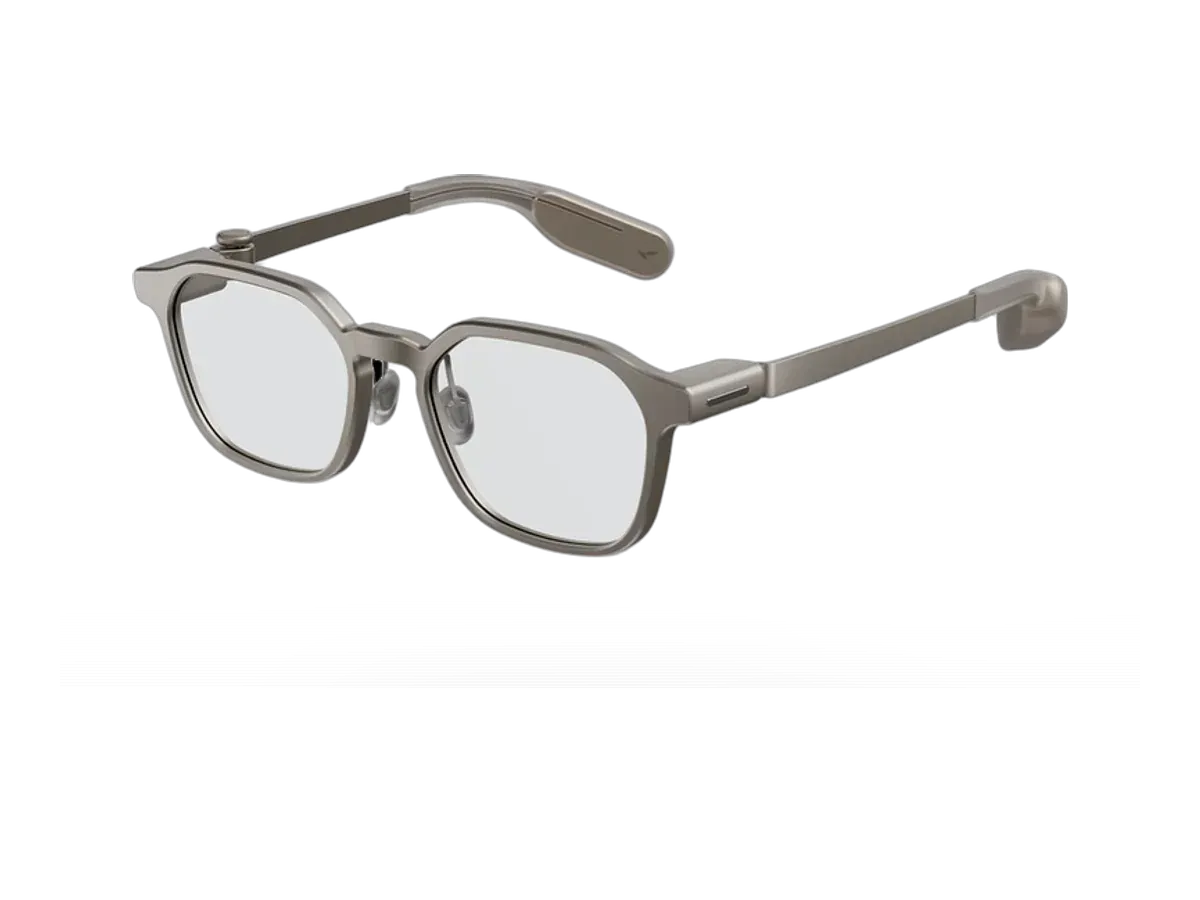
RayNeo
Why it ranks here:
- 33g on the nose (+287)
- 33g ultralight frame (+20)
- under 50g on the nose (+5)
Best of
Ranked gram-by-gram from recorded weights, lightest first.
Product data last updated
Weight is the spec that decides whether you actually keep smart glasses on your face all day, and it is the one our tabular data pins down exactly. Every pair here is ranked by its recorded weight, lightest first -- no other factor moves the order. The featherweights at the top disappear on your nose; the heavier picks lower down trade grams for a bigger display or more on-board hardware.
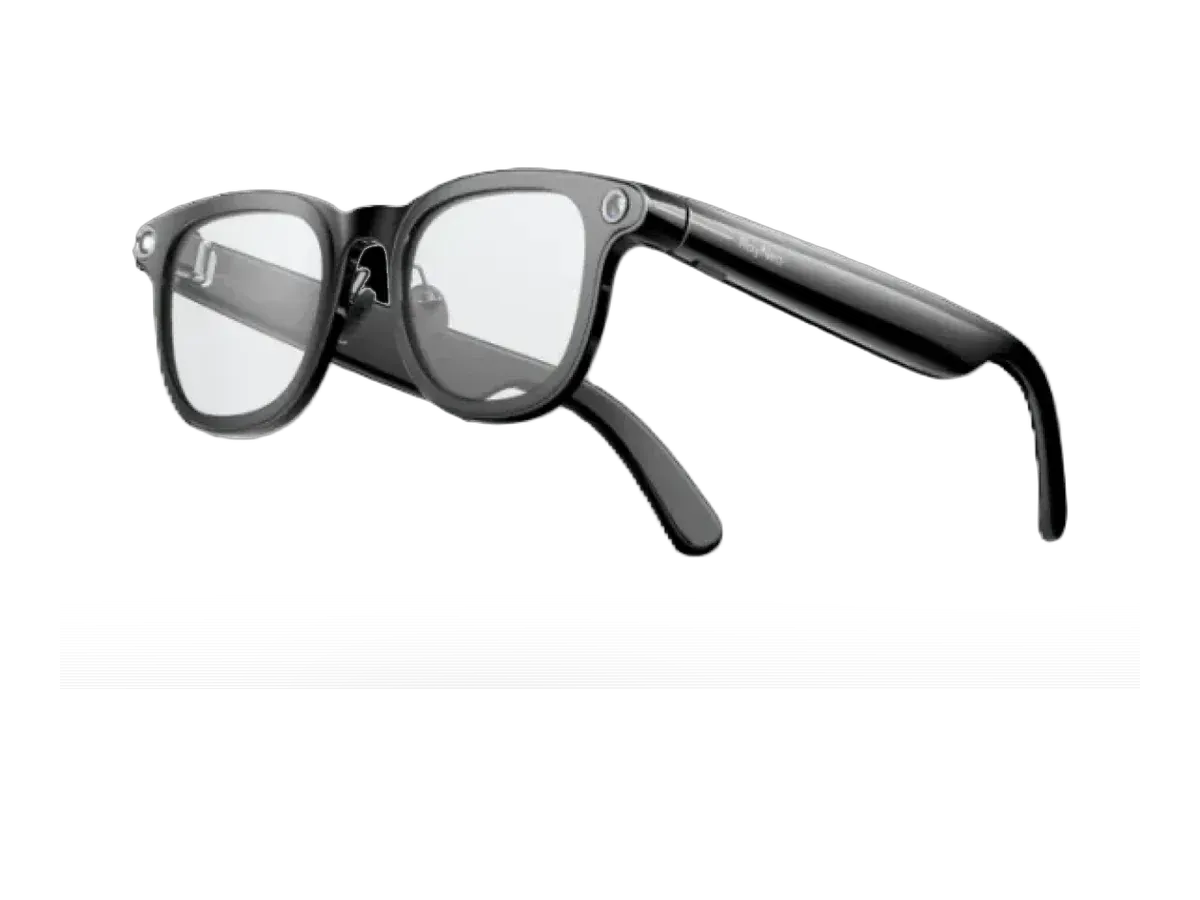
Our top pick for lightweight smart glasses is the RayNeo iO at $449.
Grams are the quiet dealbreaker of smart glasses. A pair that feels fine for five minutes in a store can leave marks on your nose after an hour, and the ones you reach for every day are almost always the lightest ones you own. That is why this page ignores every other spec when ordering the list: it ranks purely by recorded weight, lightest first, so you can see exactly where each model sits on the scale instead of guessing from marketing copy.
Lightness usually comes from leaving something out — a tethered display, a big battery, a second camera — so the featherweights at the top tend to be audio-and-assistant frames, while anything with a bright screen sits lower. Weight matters most to the people who never take their glasses off: prescription wearers already carry a frame from morning to night, and every extra gram rides on the same two pressure points all day, so the prescription smart glasses hub is the companion page if your lenses have to come along. If all-day comfort rather than raw grams is your real goal, the best everyday smart glasses hub weighs battery life and prescription support alongside weight; if you specifically want a screen, smart glasses with a display ranks that family, and the best budget picks hub covers the affordable end. You can also compare any two models to see the weight difference next to every other spec.
“Lightest” means two different races, so the ranking above mixes two families that are not really competing. Audio and AI frames carry their own battery and no tethered big-screen optics, which is how they get within shouting distance of ordinary eyewear; display glasses carry a full optical engine in the temples, which is why the very lightest of them still weighs roughly what the heaviest AI frame does. The tables below split the ten lightest in-stock models of each family, with every gram taken from the recorded spec. For scale, a typical acetate eyeglass frame weighs about 25–30 g; the delta column measures each pair against a 28 g reference. The last column says what each pair leaves out to get light, derived from the same records: no display, no camera, or no onboard battery on pairs that record a tether. Where a record claims none of those omissions, the cell stays quiet rather than guessing.
| Model | Recorded weight | vs a 28 g acetate frame | What it leaves out |
|---|---|---|---|
| RayNeo iO | 33 g | +5 g | no camera |
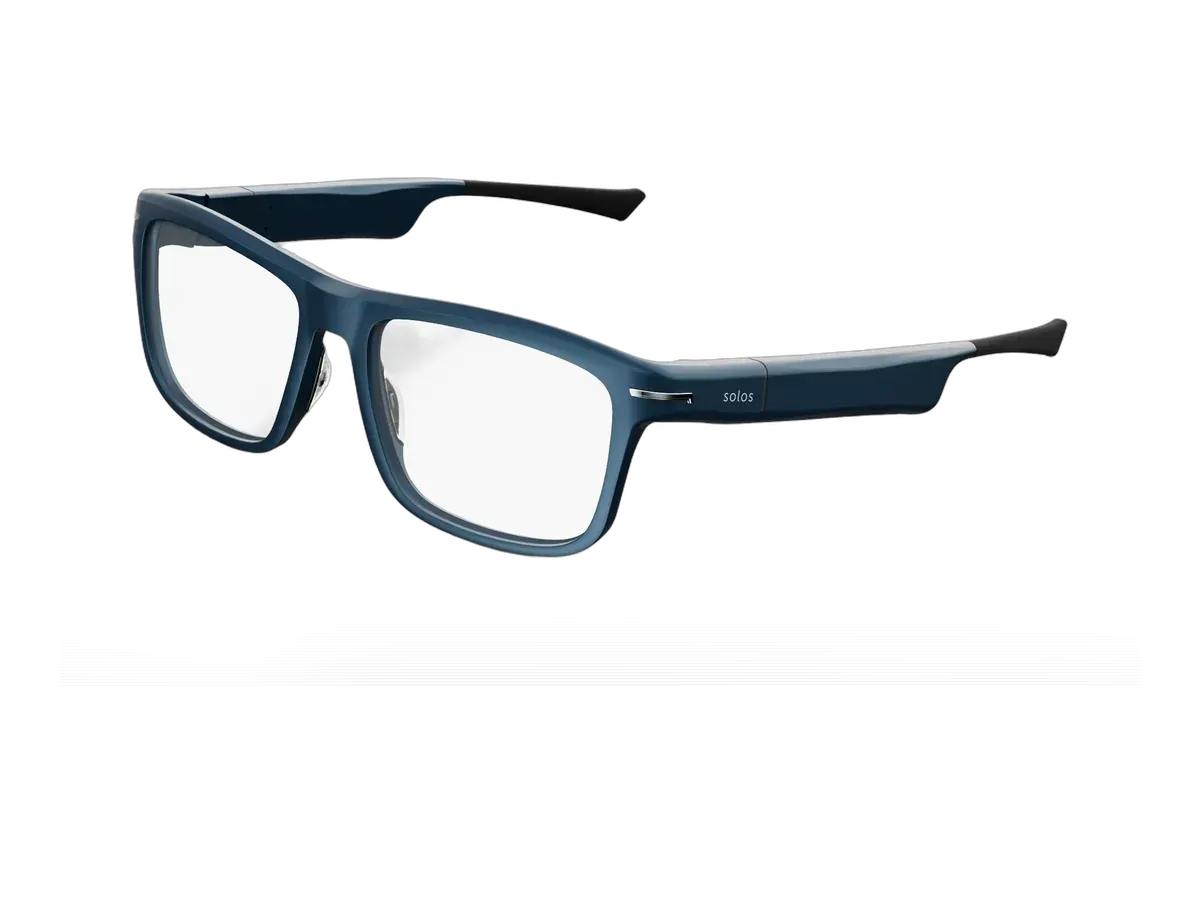
| Solos AirGo 3 | 35 g | +7 g | no display, no camera |
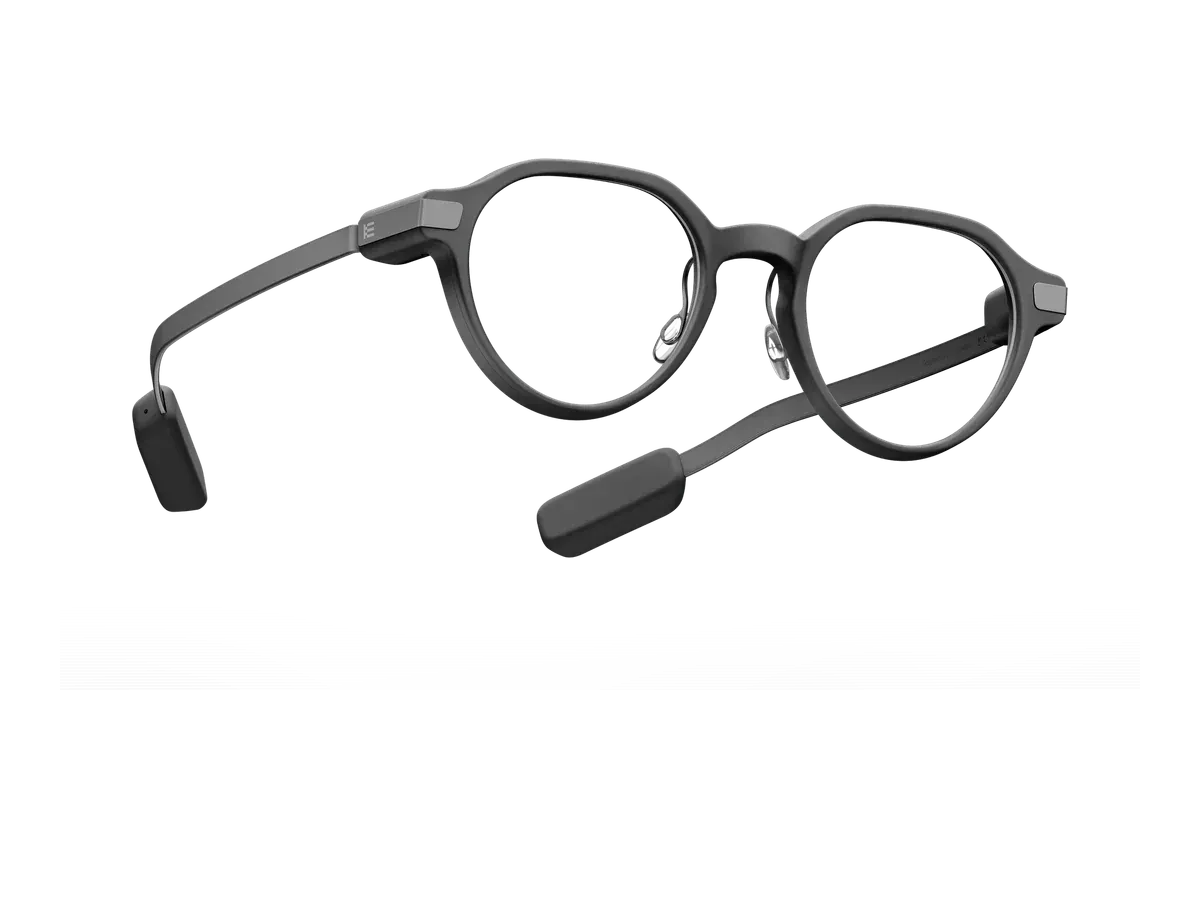
| Even Realities G2 | 36 g | +8 g | no camera |
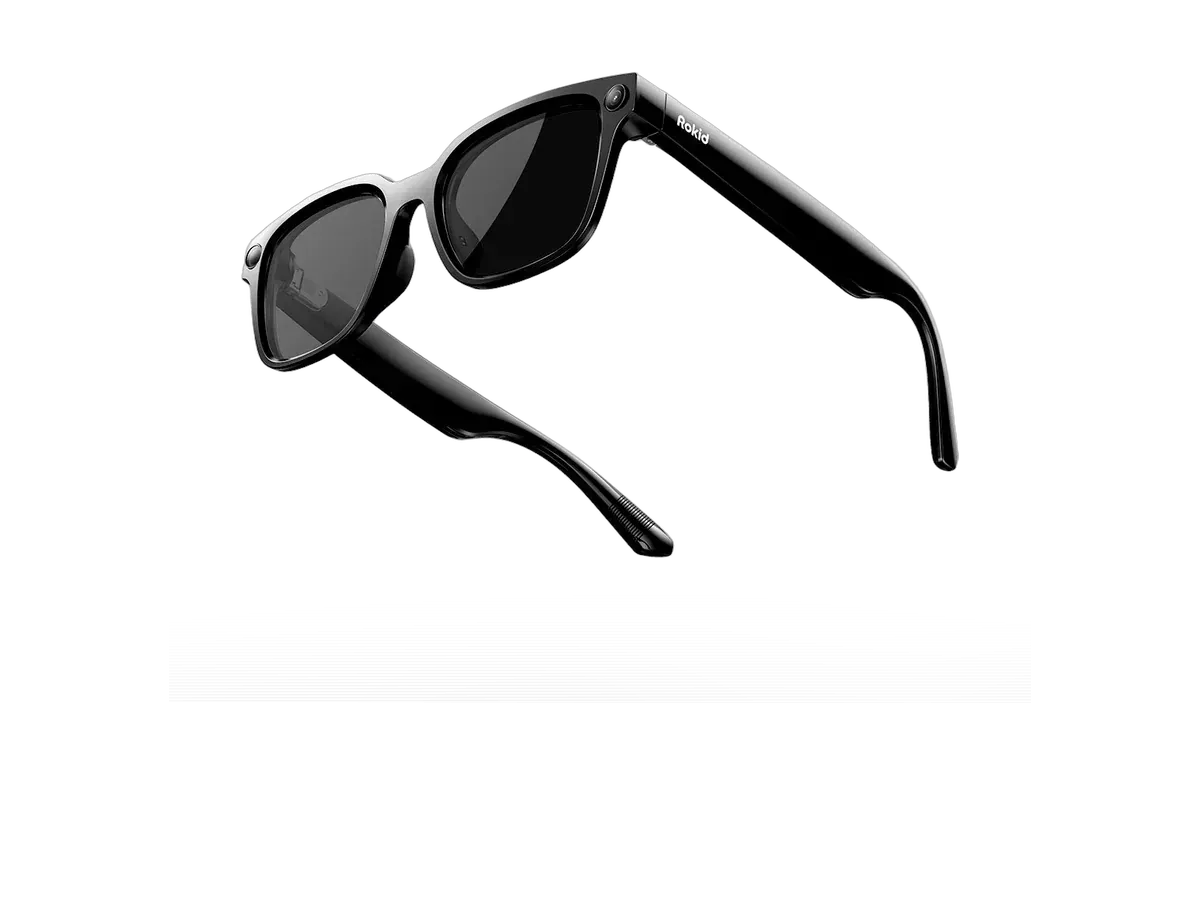
| Rokid AI Glasses Style | 38.5 g | +10.5 g | no display |
| Amazon Echo Frames (3rd Gen) | 39 g | +11 g | no display, no camera |
| Thunderbird V3 AI Shooting Glasses | 39 g | +11 g | no display, no camera |
| Brilliant Labs Halo AI Glasses | 40 g | +12 g | — |
| Xiaomi AI Glasses | 40 g | +12 g | no display |
| Lucyd Lyte (2025) | 44 g | +16 g | no display, no camera |
| HTC Vive Eagle | 48.5 g | +20.5 g | no display |
Everything in this family lands within about 5–21 g of a plain acetate frame — close enough that after the first day you mostly stop noticing. The trade is written in the last column: the pairs closest to ordinary eyewear got there by dropping the display, the camera, or both, so what you are wearing is an audio-and-assistant device that happens to look like glasses.
| Model | Recorded weight | vs a 28 g acetate frame | What it leaves out |
|---|---|---|---|
| XREAL xbx a01+ | 62 g | +34 g | no camera |
| VITURE Pro 2 XR Glasses | 63 g | +35 g | no camera |
| Lenovo Legion Glasses 2 | 65 g | +37 g | no camera, no onboard battery (tethered) |
| RayNeo GT | 68 g | +40 g | no camera |
| XREAL Air 2 | 72 g | +44 g | no camera |
| Rokid Max 2 | 75 g | +47 g | no camera, no onboard battery (tethered) |
| XREAL Air 2 Pro | 75 g | +47 g | no camera, no onboard battery (tethered) |
| RayNeo Air 2 | 76 g | +48 g | no camera, no onboard battery (tethered) |
| RayNeo Air 3s | 76 g | +48 g | no camera, no onboard battery (tethered) |
| RayNeo Air 3s Pro AR/XR Glasses | 76 g | +48 g | no camera |
The floor for a real big-screen pair sits in the low 60s of grams — an optical engine, two panels, and the speakers have to live somewhere — and the class trades the battery instead: most of these run tethered off the device they plug into, which is exactly why they can stay this light while driving a cinema-sized picture. If the screen is the point, this is the honest weight race; the smart glasses with a display hub ranks the same family on the full spec sheet rather than grams alone.
Every eligible product is scored on the recorded specs below. Missing data scores zero — we never guess a value. Points shown next to each pick add up to its total score.
RayNeo
Why it ranks here:
Solos
Why it ranks here:
Even Realities
Why it ranks here:
Rokid
Why it ranks here:
Thunderbird Innovation
Why it ranks here:

Xiaomi
Why it ranks here:
Buy the RayNeo iO if…
Buy the RayNeo iO if you need longer battery life (48 hours vs 10).
Buy the Solos AirGo 3 if…
Buy the Solos AirGo 3 if you want to spend $250 less ($199 vs $449) and you want adjustable lens dimming.
The lightest smart glasses are ultralight frames that weigh well under 50 grams -- close to a normal pair of glasses -- so you can wear them all day without fatigue. This page ranks every pair by its recorded weight, lightest first, so the featherweights sit at the top.
Weight is what decides whether you keep smart glasses on. A few extra grams on the nose becomes noticeable over a long session, and the gap between a sub-40-gram frame and a 100-gram one is the difference between forgetting they are there and taking them off. That is why this ranking is ordered by weight alone.
Often lighter frames drop the tethered display or larger battery that adds bulk, trading a screen for all-day audio, a camera, or an assistant. The heavier picks lower in this ranking carry more hardware. Each pick's recorded specs show exactly what its weight buys or gives up.
Provenance: use case derived from recorded weights across the catalog, ranked lightest first. Rankings are computed from recorded product specs only.