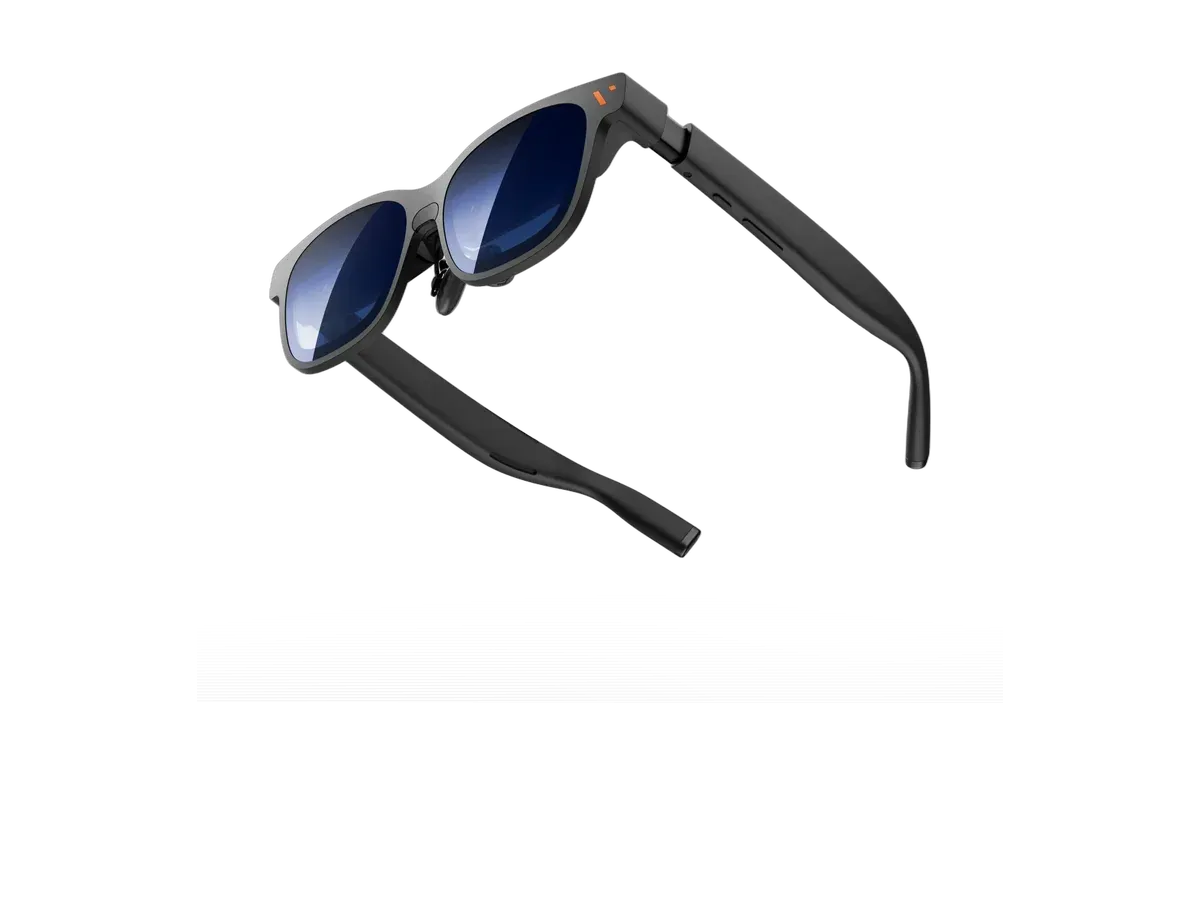
At a glance
- Display type
- Sony Micro-OLED (UltraClarity 3.0)
- Resolution
- 1920x1080
- Field of view
- 50°
- Refresh rate
- 120 Hz
- Brightness
- 1600 nits
- Weight
- 63 g
- Competitive starting price
- Bright, sharp 1600-nit screen
- Companion app (SpaceWalker) is buggy at times
- iPhone requires a pricey dongle for full features
VITURE Pro 2 XR Glasses
VITURE
8.5/10 “According to the aggregated consensus of reviewers, the VITURE Pro 2 is the strongest value in entry-level display glasses right now, cutting the original Pro's price nearly in half while upgrading brightness, comfort, and fit. DualShockers scored it 9.5/10 and calls it new tech worth getting excited about, Digital Trends judges it the entry-level pair to beat, and Gizmodo rates it a small but perceptible margin ahead of the XREAL a01+ and RayNeo Air 4 Pro. The consistent trade-offs: consoles need a dock accessory, iPhones need a dongle for spatial features, and the SpaceWalker app remains rough around the edges. The built-in diopter dials for nearsighted wearers are the differentiator nearly every review singles out. Scores below are an editorial aggregate of that cited coverage, not AR Compare hands-on measurements.” Read the full review$299
Check price at Amazon- Field of view
- 50°
- Weight
- 63 g
- Brightness
- 1600 nits
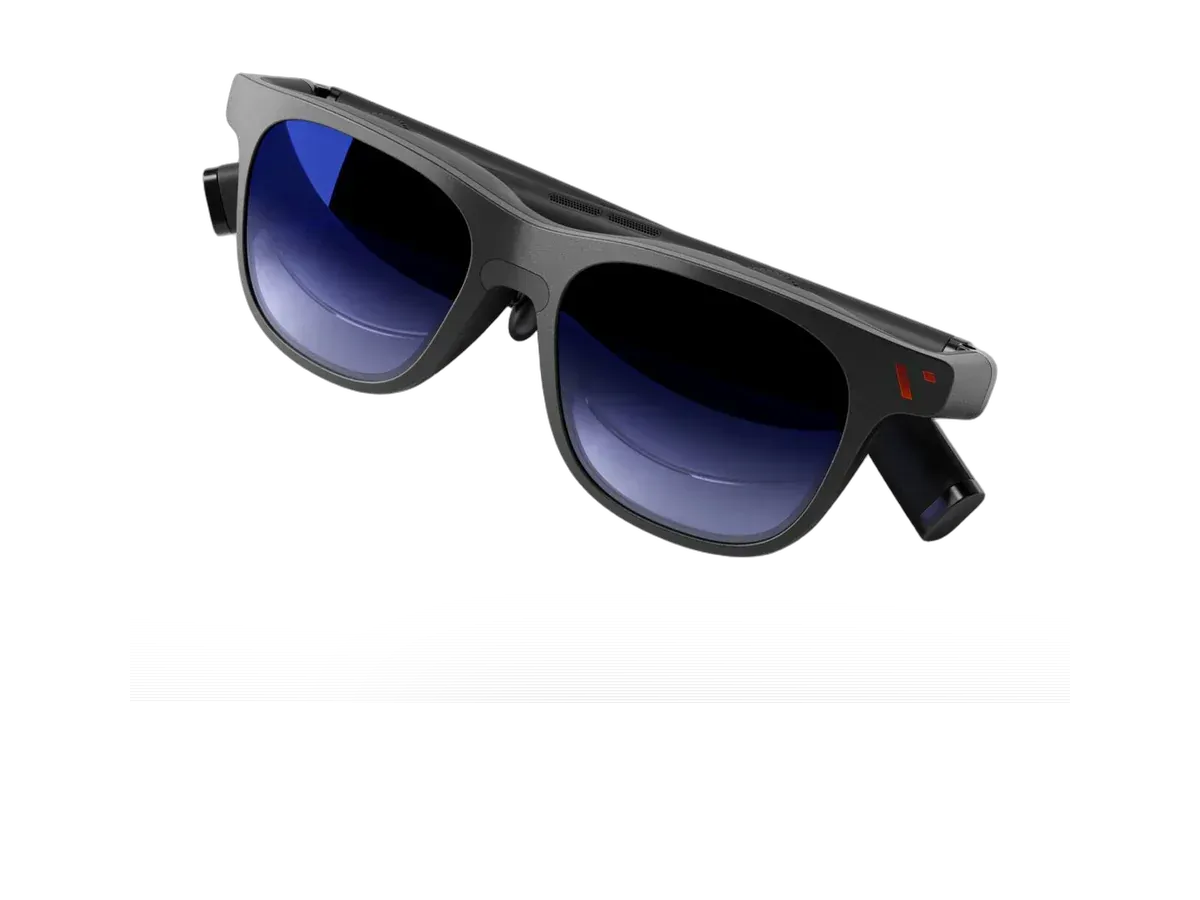
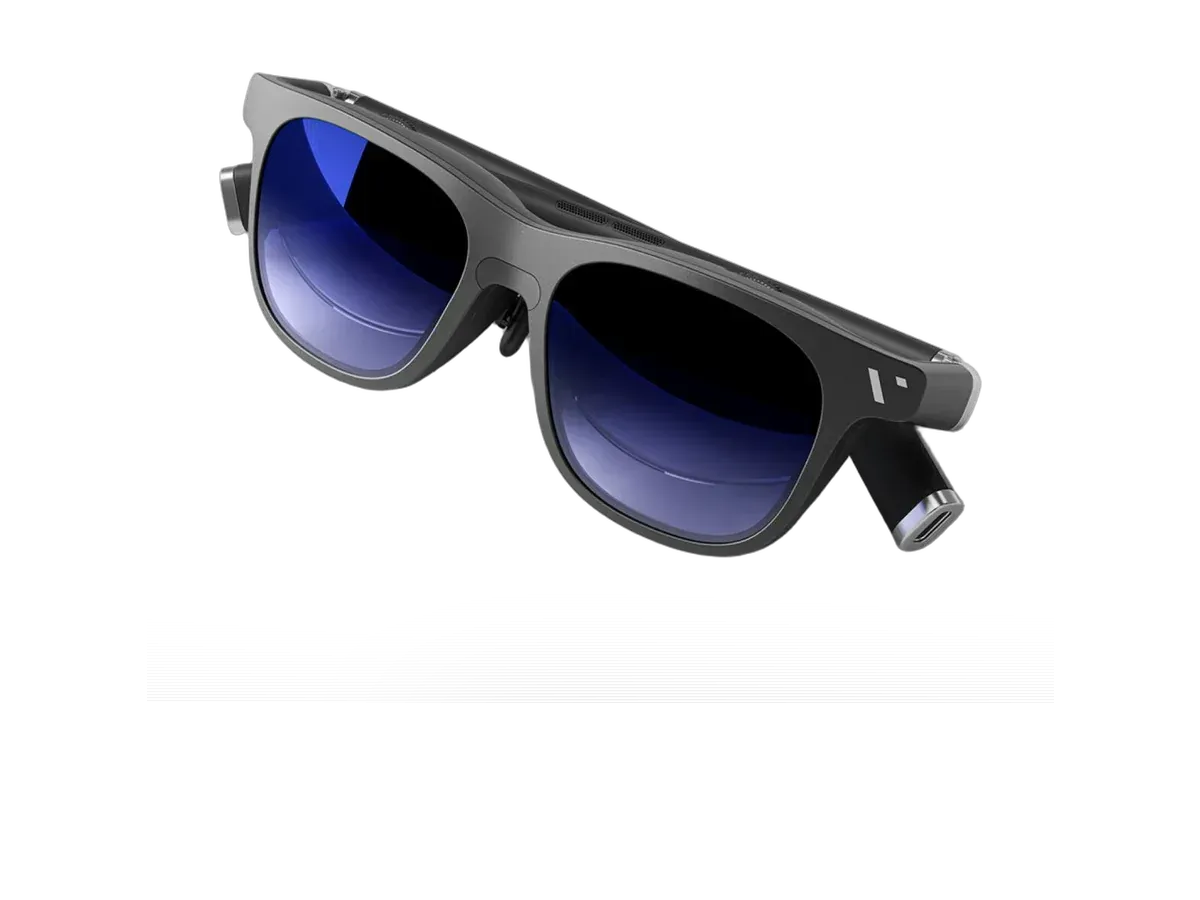
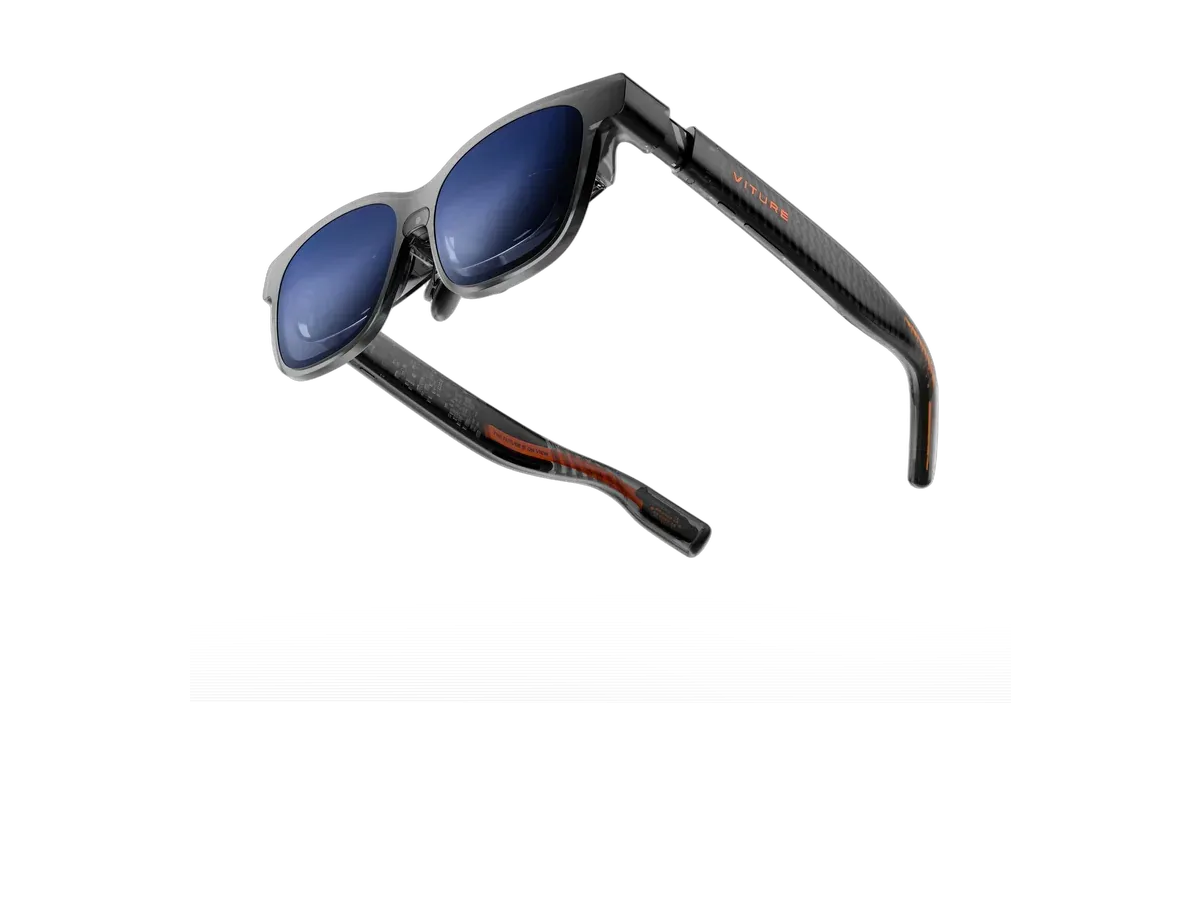
The VITURE Pro 2 XR Glasses are display glasses for media, gaming, and productivity from VITURE, released 2026-08. They feature a 1920x1080 per-eye Sony Micro-OLED (UltraClarity 3.0), 50° field of view, 1600 nits perceived brightness, 120Hz refresh rate. Weight is 63g. Nintendo Switch and Switch 2 connect through VITURE's mobile dock, and iPhone support covers the iPhone 15 or later — the iPhone 16e and iPhone 17 Air are not compatible, and full spatial features on iPhone need VITURE's dongle. Best for: Entry-level buyers who want the sharpest picture and built-in myopia adjustment in $299 display glasses.
Our review
By AR Compare Team ·
According to the aggregated consensus of reviewers, the VITURE Pro 2 is the strongest value in entry-level display glasses right now, cutting the original Pro's price nearly in half while upgrading brightness, comfort, and fit. DualShockers scored it 9.5/10 and calls it new tech worth getting excited about, Digital Trends judges it the entry-level pair to beat, and Gizmodo rates it a small but perceptible margin ahead of the XREAL a01+ and RayNeo Air 4 Pro. The consistent trade-offs: consoles need a dock accessory, iPhones need a dongle for spatial features, and the SpaceWalker app remains rough around the edges. The built-in diopter dials for nearsighted wearers are the differentiator nearly every review singles out. Scores below are an editorial aggregate of that cited coverage, not AR Compare hands-on measurements.
- Display quality
- 9/10
- Comfort
- 8.5/10
- Battery life
- 5.5/10
- Value for money
- 9/10
- Build quality
- 7.5/10
- Software
- 6.5/10
The VITURE Pro 2 is VITURE’s new entry-level display glasses model, launched in August 2026 at $299 — a price that surprised reviewers coming from the original Pro’s premium positioning. This review aggregates the launch-window record — Tom’s Guide’s full review, Gizmodo’s head-to-head against the budget field, Digital Trends’ long-form review, GameRevolution’s three-week test, and DualShockers’ scored review — alongside VITURE’s published specifications. AR Compare has not performed hands-on testing of this device; every observation below is attributed to the cited sources, and the category scores are an editorial aggregate of cited reviewer sentiment. Product facts were cross-checked against AR Compare’s spec record for the Pro 2 (Sony Micro-OLED at 1920x1080 per eye, a recorded 50-degree field of view, a recorded 1,600 nits, a 120Hz refresh rate, roughly 63 grams, built-in 0 to -5.0D myopia adjustment, $299).
How This Review Was Compiled
The record is unusually deep for a weeks-old product. Digital Trends’ Nadeem Sarwar published the fullest review, using the glasses across phones, laptops, and rival hardware for roughly two weeks; GameRevolution’s Mack Ashworth tested for three weeks across movies and games; Gizmodo compared it directly against the XREAL a01+ and RayNeo Air 4 Pro it had just reviewed. Tom’s Guide’s Scott Younker focused on comfort and work use, and DualShockers’ Ethan Krieger wrote the perspective of a first-time XR buyer, scoring it 9.5/10. Where the sources disagree — audio quality and text-heavy work are the genuine splits — both readings are reported below rather than smoothed over.
The Price Cut: What Got Cheaper and What Got Cut
The defining fact of the Pro 2 is that it costs $299 when the original Pro launched at $549 per Tom’s Guide — a near-halving in a year when, as that review notes, the surprising thing any company can do is cut prices. Digital Trends explains what funded it: the electrochromic dimming glass of pricier VITURE models is gone, replaced by a snap-on opaque shade; the Harman-tuned speaker hardware was dropped; and the controls are pared back to a rocker and a function button. The consensus is that the cuts were aimed well. GameRevolution concludes the sacrifices were ultimately the right call for entertainment-focused buyers, and Digital Trends judges that the savings went into the areas that matter — comfort, display quality, and affordability. What did not get cut is the kit: reviewers note the hard case, lens shade, three nose-pad sets, and a standard USB-C cable all ship in the box, with Tom’s Guide preferring the ordinary replaceable cable to the magnetic proprietary one on earlier VITURE glasses.
Is the Display Worth $299 on Its Own?
Close to yes, by the aggregated record. The Sony Micro-OLED panels run 1920x1080 per eye at a recorded 1,600 nits and 120Hz, and Gizmodo — testing side by side — calls the Pro 2 sharper than both the XREAL a01+ and the RayNeo Air 4 Pro, crediting VITURE’s UltraClarity 3.0 tuning for taming the color fringing and blurry corners that birdbath optics usually bring. Digital Trends reports clear text to the corners, deep OLED blacks, and brightness with enough headroom to be visually overwhelming in a dark room. The recorded 50-degree field of view is up from 46 degrees on the original Pro per Tom’s Guide, and the virtual screen works out to roughly 146 inches — smaller than the RayNeo Air 4 Pro’s circa-200-inch claim, which Gizmodo says is noticeable if maximum size is your priority. Two honest limits recur: there is no HDR10 support, unlike both direct rivals, and Tom’s Guide found the corners blurry during text-heavy work, though the reviewer flagged his own uneven eyesight as a possible cause — Digital Trends and GameRevolution report edge-to-edge clarity once the fit is dialed in.
Comfort and the Diopter Adjustment
Comfort may be the Pro 2’s most agreed-on win. At a recorded 63 grams the Pro 2 is about 20 percent lighter than the original per Tom’s Guide, and GameRevolution’s clearest data point is watching all of Interstellar — nearly three hours — lying in bed with no pressure, eye strain, or discomfort. The fit system draws specific praise: three nose-pad sets giving seven height positions plus three-position click-adjustable temple arms, which DualShockers — whose reviewer has an asymmetric jawline that defeats most eyewear — used to get a proper fit anyway. Digital Trends’ one comfort caveat is mild ear fatigue from the arm thickness on very long sessions.
The built-in diopter adjustment is the feature the record singles out. Each lens has an independent dial covering 0 to -5.0D of myopia adjustment, so nearsighted wearers dial in focus per eye instead of buying prescription inserts — Digital Trends calls it close to magic the first time and reason alone to recommend the Pro 2 over anything in the price bracket, since the rival a01+ asks $50 or more for custom inserts. The limits: astigmatism and prescriptions beyond -5.0D still need VITURE’s clip-in frame, as DualShockers (a -6.0D wearer) confirmed firsthand.
Gaming, Switch 2, and the Dock Caveat
Gaming is where the record glows. Gizmodo played Star Wars Jedi: Survivor at 120Hz and found everything smooth, sharp, and bright; GameRevolution ran Apex Legends at 120Hz with clean, smear-free camera movement; DualShockers played Mario Kart 8 Deluxe on Switch 2 and Demon’s Souls on PS5 and reports crystal-clear output with no perceptible added input lag. The caveat every review carries: consoles that do not output video over USB-C — Switch, Switch 2, and PlayStation — need VITURE’s dock, which outlets price at $99 for the new Mobile Dock Mini and $129 for the Pro Mobile Dock. GameRevolution notes this is a console-side limitation rather than a Pro 2 flaw, and DualShockers points out the dock doubles as a power bank and takes two pairs of glasses at once. Steam Deck, ROG Ally, phones, and laptops connect directly. As with nearly all tethered display glasses there is no onboard battery — the Pro 2 draws power from whatever it is plugged into — so the battery score of 5.5 reflects this site’s category convention rather than a standalone runtime. iPhone owners have one more asterisk, flagged by Gizmodo and Digital Trends: spatial features and VR playback on an iPhone require an $80 adapter.
Viture Pro 2 vs Pro XR, Luma Pro, and the $299 Rivals
Despite the name, reviewers agree the Pro 2 is not a straight successor: Digital Trends stresses that it slots in below the Luma family as VITURE’s new entry-level model, while the original Pro XR was a premium product in its day. What changed against the Pro XR: brighter panels (a recorded 1,600 nits versus 1,000 per Tom’s Guide), a wider view, lighter weight, USB-C instead of the magnetic cable, and a price nearly halved — minus the electrochromic dimming. Against the Luma Pro, Digital Trends frames the choice as $200 more for Harman-tuned audio and the pricier line’s extras, with the Pro 2 keeping the same styling. Against the $299 field, Gizmodo’s side-by-side verdict is the citable one: the Pro 2 beats the XREAL a01+ and RayNeo Air 4 Pro by a small but perceptible margin on sharpness and features, while the a01+ counters with HDR10 and the Air 4 Pro with a bigger virtual screen. Audio is the genuine split: Tom’s Guide hears tiny, tinny speakers, Gizmodo finds them surprisingly rich with a spatial quality, and Digital Trends lands in between — balanced, leaky in quiet rooms, best supplemented with earbuds.
Value
At $299, the aggregated answer to the worth-it question is an unusually confident yes. Digital Trends concludes that as a plug-and-play wearable display nothing at this price does it better; DualShockers finds the price shockingly low for the experience; GameRevolution calls it an excellent introduction to XR glasses without flagship pricing. The honest accounting is total cost: console players should budget for the dock, iPhone spatial users for the adapter, and heavy workers should read the SpaceWalker caveats first — Gizmodo hit audio and login bugs, and Digital Trends calls the app a work in progress with window drift, while noting the glasses work fine without it.
Who Should Buy the VITURE Pro 2
Per the aggregated consensus: travelers and commuters who want a bright private movie screen, handheld and console gamers — especially Switch 2 owners willing to add the dock — and nearsighted buyers within -5.0D who want to skip prescription inserts entirely. Who should skip: HDR completists better served by the a01+, buyers who want the largest possible virtual screen, iPhone owners unwilling to pay for the spatial adapter, and anyone planning all-day document work, where the SpaceWalker drift and mixed text-clarity reports advise caution.
Scores are aggregates of the cited reviews and hands-on reports, not AR Compare hands-on results.
Sources
- Tom’s Guide — Viture Pro 2 review: Cheaper, more comfortable AR glasses
- Gizmodo — Viture Pro 2 Review: A Dark Horse in the Entry-Level AR Glasses Race
- Digital Trends — Viture Pro 2 review: Affordable glasses loved more for work than play
- GameRevolution — VITURE Pro 2 XR Glasses Review
- DualShockers — VITURE Pro 2 XR Glasses Review: Even Cooler Than You Could Expect (9.5/10)
- VITURE — Pro 2 XR Glasses official product page (specifications)
What other reviewers say
1 review from an outside outlet.
Scores from other outlets, as published — not our rating.
| Source | Score |
|---|---|
| DualShockers | 9.5/10 |
Pros & cons
Pros
- Competitive starting price
- Bright, sharp 1600-nit screen
- Light and comfortable at 63g
- Built-in 0 to -5.0D myopia adjustment with an independent dial per eye
- Reviewers report full-length three-hour movie sessions with no pressure or eye strain, credited to seven nose-pad height settings and click-adjustable temple angles
- A picture multiple outlets call sharper than same-price rivals, with the usual birdbath color fringing visibly tamed
- Console and PC gaming reviewers describe as crystal clear and responsive, with no perceptible added input lag
- A standard USB-C cable replaces the proprietary magnetic connector of earlier VITURE glasses
- Nearly half the launch price of the original Pro, with the hard case, lens shade, and cables all in the box
Cons
- Companion app (SpaceWalker) is buggy at times
- iPhone requires a pricey dongle for full features
- No HDR10 support
- Audio remains a weak point per reviewers
- Full console support needs a dock accessory that outlets price between $99 and $129, and Switch 2 play requires it
- Electrochromic dimming from pricier VITURE models is gone, replaced by a snap-on plastic shade
- Spatial windows still show drift and text shimmer in extended work sessions, per one long-term review
- One reviewer noted the right arm runs warm in long sessions and the light frame flexes more than ordinary glasses
- Reading-heavy work divided reviewers, one of whom found the display corners blurry despite the adjustments
Full specifications
| Display | |
|---|---|
| Display type | Sony Micro-OLED (UltraClarity 3.0) |
| Resolution | 1920x1080 |
| Field of view (°) | 50 |
| Refresh rate (Hz) | 120 |
| Brightness (nits) | 1600 |
| Virtual screen size (in) | 146 |
| HDR support | ✕ No |
| Color support | Full color |
| Not published: Pixels per degree | |
| Optics | |
| Optics type | birdbath |
| Dimming control | ✕ No |
| Prescription support | ✓ Yes |
| Prescription options | Built-in dials, -5.00 to 0.00 · Inserts / lens frame, -16.00 to +12.00, cyl up to 6.00 |
| Not published: Transparency level | |
| Physical | |
| Weight (g) | 63 |
| Foldable | ✕ No |
| Not published: Frame style, Color options, IP rating | |
| Connectivity | |
| Connectivity | USB-C (DP Alt Mode) |
| Compatible devices | iOS, Android, Mac, PC, Nintendo Switch 2, PlayStation, Steam Deck |
| Not published: Tethered | |
| Computing | |
| Operating system | iPhone 15 or later, Android, Mac, PC, Switch/Switch 2 (via dock), PlayStation (via Pro Mobile Dock), Steam Deck |
| Not published: Processing type, Chipset | |
| Sensors & input | |
| Camera | ✕ No |
| Speakers | open-ear |
| Not published: Microphones, Tracking, Gesture control, Voice control | |
Prescription options
The documented prescription routes for the VITURE Pro 2 XR Glasses, from the maker and named-partner documentation recorded in our database.
- Built-in dials, -5.00 to 0.00 Source: shop.viture.com documentation
- Inserts / lens frame, -16.00 to +12.00, cyl up to 6.00 Source: viture.com documentation
Maker documentation as recorded 2026-09-17. Ranges are the maker's published limits, not medical advice — confirm your exact prescription with your optician before ordering.
Read the VITURE prescription guide for every documented option, model by model.
Where to buy
Price verified
VITURE Pro 2 XR Glasses specs: quick answers
- What is the VITURE Pro 2 XR Glasses's field of view?
- The VITURE Pro 2 XR Glasses has a 50-degree field of view.
- What is the VITURE Pro 2 XR Glasses's display resolution?
- The VITURE Pro 2 XR Glasses's recorded per-eye display resolution is 1920x1080.
- How bright is the VITURE Pro 2 XR Glasses's display?
- The VITURE Pro 2 XR Glasses has a rated peak brightness of 1600 nits.
- How much does the VITURE Pro 2 XR Glasses weigh?
- The VITURE Pro 2 XR Glasses's glasses weigh 63g according to the manufacturer specification.
- How much does the VITURE Pro 2 XR Glasses cost?
- The VITURE Pro 2 XR Glasses costs $299.
VITURE Pro 2 XR Glasses: FAQs
How much does the VITURE Pro 2 XR Glasses cost?
The VITURE Pro 2 XR Glasses costs $299 (USD). It is available from 2 retailers listed on this page.
What field of view does the VITURE Pro 2 XR Glasses have?
The VITURE Pro 2 XR Glasses has a recorded field of view of 50 degrees.
How much does the VITURE Pro 2 XR Glasses weigh?
The VITURE Pro 2 XR Glasses weighs 63g according to the manufacturer specification.
Can I use the VITURE Pro 2 XR Glasses with prescription lenses?
Yes, the VITURE Pro 2 XR Glasses supports prescription lenses. The recorded diopter range is Twin 0 to -5.0D myopia dials; snap-fit Rx frame for stronger or astigmatic prescriptions.
What devices work with the VITURE Pro 2 XR Glasses?
The VITURE Pro 2 XR Glasses lists compatibility with: iOS, Android, Mac, PC, Nintendo Switch 2, PlayStation, Steam Deck.
What resolution does the VITURE Pro 2 XR Glasses have?
The VITURE Pro 2 XR Glasses has a recorded per-eye resolution of 1920x1080. It refreshes at 120Hz.
Are the VITURE Pro 2 XR Glasses good for gaming?
The VITURE Pro 2 XR Glasses runs at a recorded 120Hz refresh rate with a 50-degree field of view -- the display specs that matter most for gaming.
Is the VITURE Pro 2 XR Glasses worth it?
The VITURE Pro 2 XR Glasses is priced at $299 (USD). For that you get a 50-degree field of view, 1600 nits of brightness, and a 1920x1080 per-eye resolution. It weighs 63g. The full spec breakdown on this page shows what the price includes.
Similar products
What shoppers cross-check with the VITURE Pro 2 XR Glasses — from our navigation records and closest spec matches.
Ranked in these buying guides
Where the VITURE Pro 2 XR Glasses lands in our recorded-spec rankings.
- Best AR Glasses for Gaming
- Best AR Glasses for Steam Deck
- Best AR Glasses for Movies & Travel
- Best AR Glasses for Productivity & Multi-Monitor Work
- Best AR Glasses for iPhone Users
- Best Budget AR Glasses & Smart Glasses
- Prescription Smart Glasses
- Best Everyday Smart Glasses
- The Best Smart Glasses of 2026
- AR Glasses Under $300
- Smart Glasses With a Display
- Lightest Smart Glasses
- Best AR Glasses for Nintendo Switch 2
- Monitor Glasses: AR Glasses That Replace a Screen
- Best AR Glasses for Mac & MacBook
- Best AR Glasses for PC & Windows
- Best AR Glasses for Android Phones & Samsung DeX
- Best AR Glasses for PS5
- Widest FOV AR Glasses
- Brightest Smart Glasses
Related Comparisons
VITURE Pro 2 XR Glasses vs XREAL xbx a01+
VITURE vs XREAL
VITURE Pro 2 XR Glasses vs RayNeo Air 4 Pro
VITURE vs RayNeo
VITURE Pro 2 XR Glasses vs XREAL 1S
VITURE vs XREAL
VITURE Pro 2 XR Glasses vs ASUS AirVision M1
VITURE vs ASUS
VITURE Pro 2 XR Glasses vs ASUS ROG XREAL R1
VITURE vs ASUS
VITURE Pro 2 XR Glasses vs Dream Glass Flow
VITURE vs Dreamworld
VITURE Pro 2 XR Glasses vs GOOVIS G3 Max 3D Head Mounted Display
VITURE vs Goovis
VITURE Pro 2 XR Glasses vs INAIR 2 Pro
VITURE vs INAIR
VITURE Pro 2 XR Glasses vs Lenovo Legion Glasses 2
VITURE vs Lenovo
VITURE Pro 2 XR Glasses vs RayNeo Air 2
VITURE vs RayNeo
VITURE Pro 2 XR Glasses vs RayNeo Air 3s Pro AR/XR Glasses
VITURE vs RayNeo
VITURE Pro 2 XR Glasses vs RayNeo Air 3s
VITURE vs RayNeo
VITURE Pro 2 XR Glasses vs RayNeo GT Max
VITURE vs RayNeo
VITURE Pro 2 XR Glasses vs RayNeo GT
VITURE vs RayNeo
VITURE Pro 2 XR Glasses vs Rokid Max 2
VITURE vs Rokid
VITURE Pro 2 XR Glasses vs Rokid Max
VITURE vs Rokid
VITURE Pro 2 XR Glasses vs Rokid Station 2 Spatial Computing Host
VITURE vs Rokid
VITURE Pro 2 XR Glasses vs Shadow Creator Honghu MR
VITURE vs Shadow Creator
VITURE Pro 2 XR Glasses vs TCL NXTWEAR S+ AR Glasses
VITURE vs TCL
VITURE Pro 2 XR Glasses vs TCL NxtWear S
VITURE vs TCL
VITURE Pro 2 XR Glasses vs VITURE Beast XR Glasses
VITURE
VITURE Pro 2 XR Glasses vs VITURE Luma Pro
VITURE
VITURE Pro 2 XR Glasses vs VITURE Luma Ultra XR/AR Glasses
VITURE
VITURE Pro 2 XR Glasses vs VITURE Luma XR
VITURE
VITURE Pro 2 XR Glasses vs VITURE One Lite
VITURE
VITURE Pro 2 XR Glasses vs VITURE One XR Glasses
VITURE
VITURE Pro 2 XR Glasses vs VITURE Pro XR
VITURE
VITURE Pro 2 XR Glasses vs XREAL Air 2
VITURE vs XREAL
VITURE Pro 2 XR Glasses vs XREAL Air 2 Pro
VITURE vs XREAL
VITURE Pro 2 XR Glasses vs XREAL Air 2 Ultra
VITURE vs XREAL
VITURE Pro 2 XR Glasses vs XREAL Beam
VITURE vs XREAL
VITURE Pro 2 XR Glasses vs XREAL One
VITURE vs XREAL
VITURE Pro 2 XR Glasses vs XREAL One Pro
VITURE vs XREAL