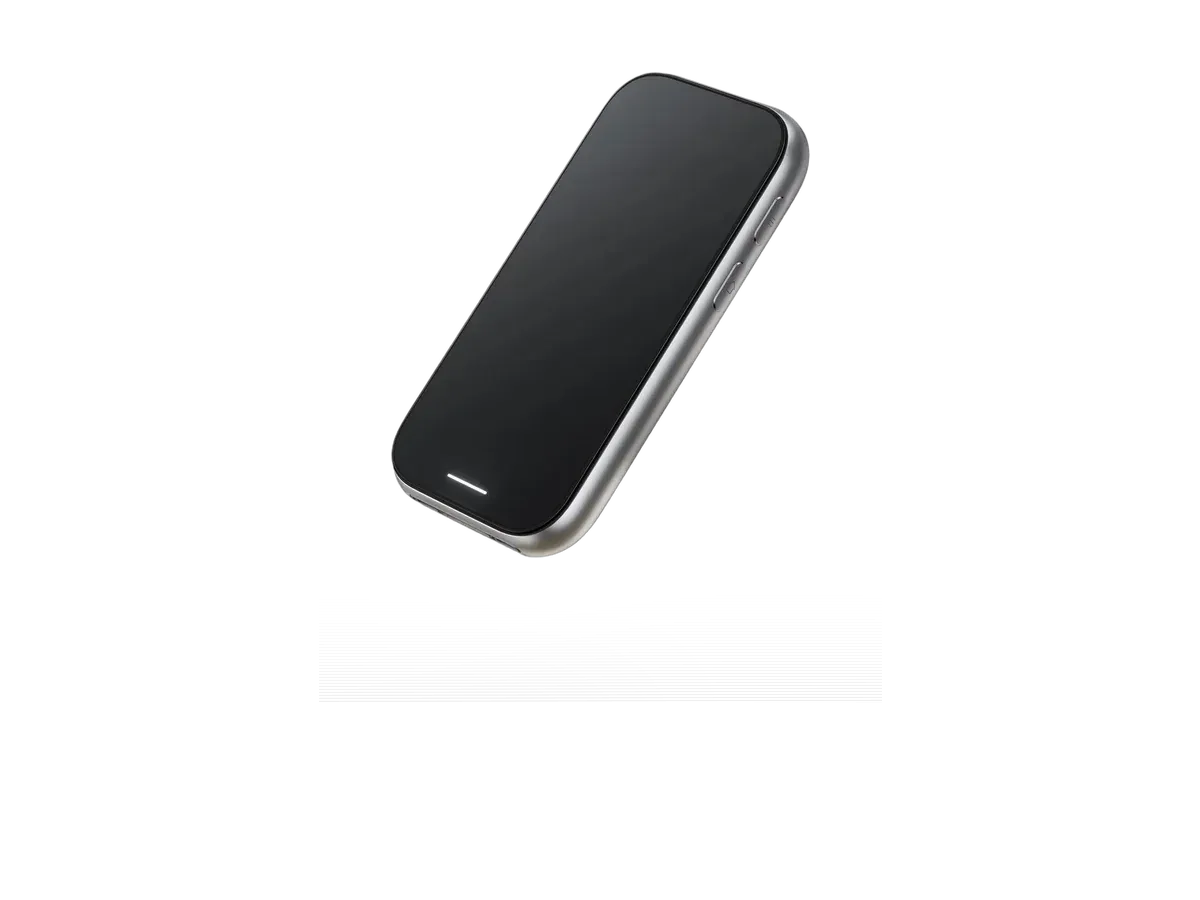
At a glance
- Display type
- None (host device; capacitive touch panel for control)
- Weight
- 181 g
- Battery
- 5 hr
- Turns Rokid Max 2 into a standalone 3-window spatial system
- Wi-Fi 6, BT keyboard/mouse support, and 128GB local storage
- Only useful paired with Rokid glasses
- Drives Max 2 at 90Hz max
Rokid Station 2 Spatial Computing Host
Rokid
Read the full overview$239
Check price at Amazon- Weight
- 181 g
- Battery
- 5 hr
The Rokid Station 2 Spatial Computing Host are display glasses for media, gaming, and productivity from Rokid, released 2025-01. There's no built-in screen — it drives the glasses instead, with a touch panel for control. Weight is 181g. Best for: Rokid Max 2 owners who want untethered streaming and spatial multi-window use without a phone or laptop.
Editorial overview
By AR Compare Team ·
Compiled from AR Compare's verified catalog record and cited coverage — AR Compare has not tested this device.
The Rokid Station 2 is not a pair of glasses at all: it is the $239 Android host that turns Rokid’s display glasses into a standalone spatial system, with no phone or laptop in the loop. It pairs with the Rokid Max 2 and the original Rokid Max. The 181-gram puck runs YodaOS-Master with a spatial browser, driving up to three floating windows, with 8GB of RAM, 128GB of local storage for downloaded media, Wi-Fi 6, and Bluetooth keyboard and mouse support. A capacitive touch panel handles control, and the roughly 5-hour battery doubles as a power bank for the connected glasses.
The record is equally clear about what it is not. It is only useful paired with Rokid glasses — this is an ecosystem accessory, not a general-purpose device — it drives the Max 2 at 90Hz rather than the panel’s full rate, Rokid does not specify the chipset (and the record flags it as no performance monster), and the app selection beyond media and streaming basics is limited. Android app compatibility through YodaOS covers the core streaming services, which is the use case the whole product is built around: movies and multi-window browsing on a couch, plane, or hotel bed.
Priced at $239 and stable at that figure across every observation in the record since mid-2026, the Station 2 is the cheapest path to making Rokid’s glasses feel like a complete computer — and pointless without them.
Pros & cons
Pros
- Turns Rokid Max 2 into a standalone 3-window spatial system
- Wi-Fi 6, BT keyboard/mouse support, and 128GB local storage
- About 5 hours battery; doubles as glasses power bank
- Android app compatibility via YodaOS-Master
Cons
- Only useful paired with Rokid glasses
- Drives Max 2 at 90Hz max
- Chipset unspecified by Rokid; not a performance monster
- App store selection limited outside media/streaming basics
Full specifications
Specs last verified
| Display | |
|---|---|
| Display type | None (host device; capacitive touch panel for control) |
| Color support | Full color |
| Not published: Resolution, Pixels per degree, Field of view, Refresh rate, Brightness, Virtual screen size, HDR support | |
| Optics | |
| Prescription options | None documented |
| Not published: Optics type, Dimming control, Transparency level, Prescription support | |
| Physical | |
| Weight (g) | 181 |
| Foldable | ✕ No |
| Not published: Frame style, Color options, IP rating | |
| Battery & power | |
| Battery life (hours) | 5 |
| Not published: Charging method, Charging time | |
| Connectivity | |
| Connectivity | USB-C |
| Compatible devices | Rokid Max 2, Rokid Max |
| Not published: Tethered | |
| Computing | |
| Operating system | YodaOS-Master with spatial browser |
| Chipset | 8GB RAM, 128GB storage |
| Not published: Processing type | |
| Sensors & input | |
| Camera | ✕ No |
| Speakers | open-ear |
| Not published: Microphones, Tracking, Gesture control, Voice control | |
Where to buy
Price verified
Rokid Station 2 Spatial Computing Host specs: quick answers
- How much does the Rokid Station 2 Spatial Computing Host weigh?
- The Rokid Station 2 Spatial Computing Host's glasses weigh 181g according to the manufacturer specification.
- How long does the Rokid Station 2 Spatial Computing Host's battery last?
- The Rokid Station 2 Spatial Computing Host is rated for about 5 hours of battery life.
- How much does the Rokid Station 2 Spatial Computing Host cost?
- The Rokid Station 2 Spatial Computing Host costs $239.
Rokid Station 2 Spatial Computing Host: FAQs
How much does the Rokid Station 2 Spatial Computing Host cost?
The Rokid Station 2 Spatial Computing Host costs $239 (USD). It is available from 2 retailers listed on this page.
How much does the Rokid Station 2 Spatial Computing Host weigh?
The Rokid Station 2 Spatial Computing Host weighs 181g according to the manufacturer specification.
How long does the battery last on the Rokid Station 2 Spatial Computing Host?
The Rokid Station 2 Spatial Computing Host has a rated battery life of 5 hours.
What devices work with the Rokid Station 2 Spatial Computing Host?
The Rokid Station 2 Spatial Computing Host lists compatibility with: Rokid Max 2, Rokid Max.
Is the Rokid Station 2 Spatial Computing Host worth it?
The Rokid Station 2 Spatial Computing Host is priced at $239 (USD). For that you get 5 hours of rated battery life. It weighs 181g. The full spec breakdown on this page shows what the price includes.
Similar products
What shoppers cross-check with the Rokid Station 2 Spatial Computing Host — from our navigation records and closest spec matches.

Ranked in these buying guides
Where the Rokid Station 2 Spatial Computing Host lands in our recorded-spec rankings.
Related Comparisons
Rokid Station 2 Spatial Computing Host vs ASUS AirVision M1
Rokid vs ASUS
Rokid Station 2 Spatial Computing Host vs ASUS ROG XREAL R1
Rokid vs ASUS
Rokid Station 2 Spatial Computing Host vs Dream Glass Flow
Rokid vs Dreamworld
Rokid Station 2 Spatial Computing Host vs GOOVIS G3 Max 3D Head Mounted Display
Rokid vs Goovis
Rokid Station 2 Spatial Computing Host vs INAIR 2 Pro
Rokid vs INAIR
Rokid Station 2 Spatial Computing Host vs Lenovo Legion Glasses 2
Rokid vs Lenovo
Rokid Station 2 Spatial Computing Host vs RayNeo Air 2
Rokid vs RayNeo
Rokid Station 2 Spatial Computing Host vs RayNeo Air 3s Pro AR/XR Glasses
Rokid vs RayNeo
Rokid Station 2 Spatial Computing Host vs RayNeo Air 3s
Rokid vs RayNeo
Rokid Station 2 Spatial Computing Host vs RayNeo Air 4 Pro
Rokid vs RayNeo
Rokid Station 2 Spatial Computing Host vs RayNeo GT Max
Rokid vs RayNeo
Rokid Station 2 Spatial Computing Host vs RayNeo GT
Rokid vs RayNeo
Rokid Station 2 Spatial Computing Host vs Rokid Max 2
Rokid
Rokid Station 2 Spatial Computing Host vs Rokid Max
Rokid
Rokid Station 2 Spatial Computing Host vs Shadow Creator Honghu MR
Rokid vs Shadow Creator
Rokid Station 2 Spatial Computing Host vs TCL NxtWear S
Rokid vs TCL
Rokid Station 2 Spatial Computing Host vs TCL NXTWEAR S+ AR Glasses
Rokid vs TCL
Rokid Station 2 Spatial Computing Host vs VITURE Beast XR Glasses
Rokid vs VITURE
Rokid Station 2 Spatial Computing Host vs VITURE Luma Pro
Rokid vs VITURE
Rokid Station 2 Spatial Computing Host vs VITURE Luma Ultra XR/AR Glasses
Rokid vs VITURE
Rokid Station 2 Spatial Computing Host vs VITURE Luma XR
Rokid vs VITURE
Rokid Station 2 Spatial Computing Host vs VITURE One XR Glasses
Rokid vs VITURE
Rokid Station 2 Spatial Computing Host vs VITURE One Lite
Rokid vs VITURE
Rokid Station 2 Spatial Computing Host vs VITURE Pro 2 XR Glasses
Rokid vs VITURE
Rokid Station 2 Spatial Computing Host vs VITURE Pro XR
Rokid vs VITURE
Rokid Station 2 Spatial Computing Host vs XREAL 1S
Rokid vs XREAL
Rokid Station 2 Spatial Computing Host vs XREAL Air 2
Rokid vs XREAL
Rokid Station 2 Spatial Computing Host vs XREAL Air 2 Pro
Rokid vs XREAL
Rokid Station 2 Spatial Computing Host vs XREAL Air 2 Ultra
Rokid vs XREAL
Rokid Station 2 Spatial Computing Host vs XREAL Beam
Rokid vs XREAL
Rokid Station 2 Spatial Computing Host vs XREAL One
Rokid vs XREAL
Rokid Station 2 Spatial Computing Host vs XREAL One Pro
Rokid vs XREAL
Rokid Station 2 Spatial Computing Host vs XREAL xbx a01+
Rokid vs XREAL