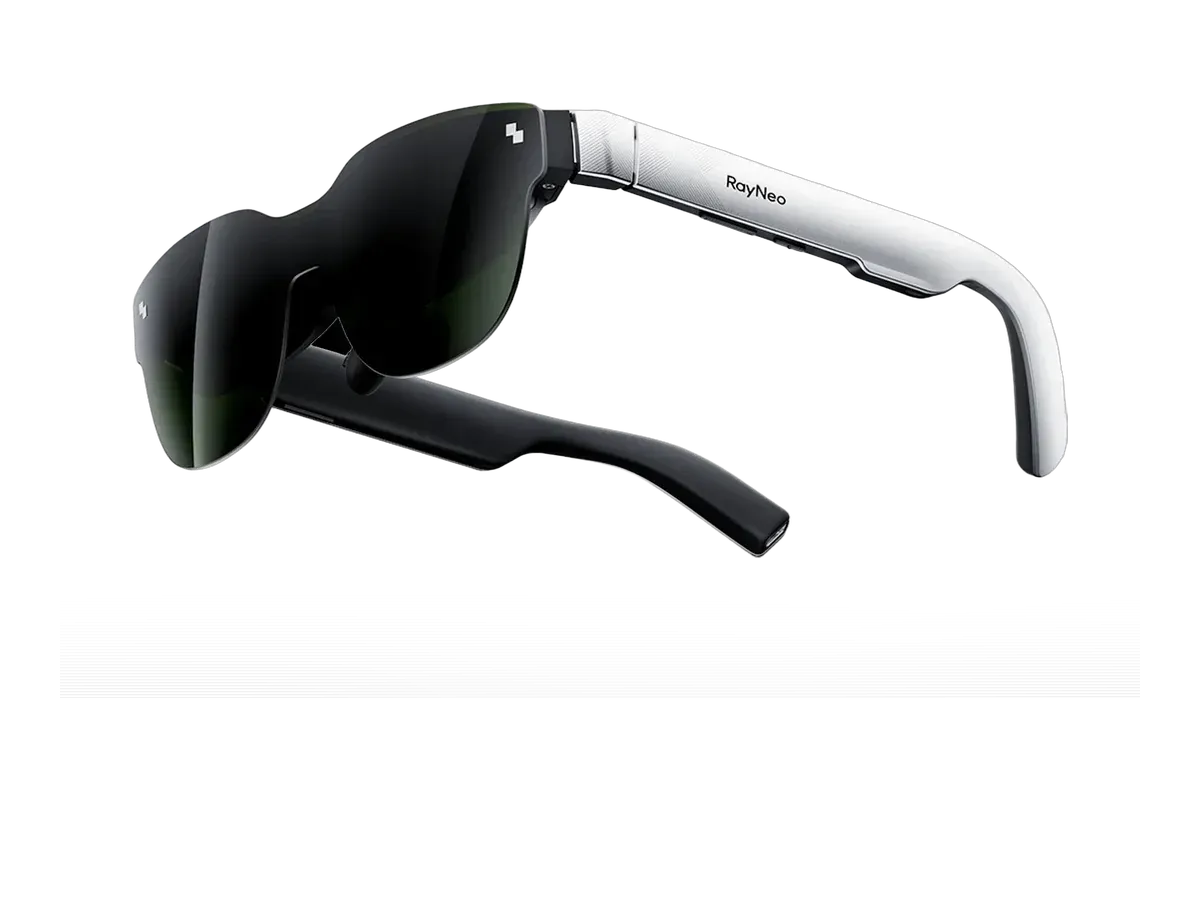
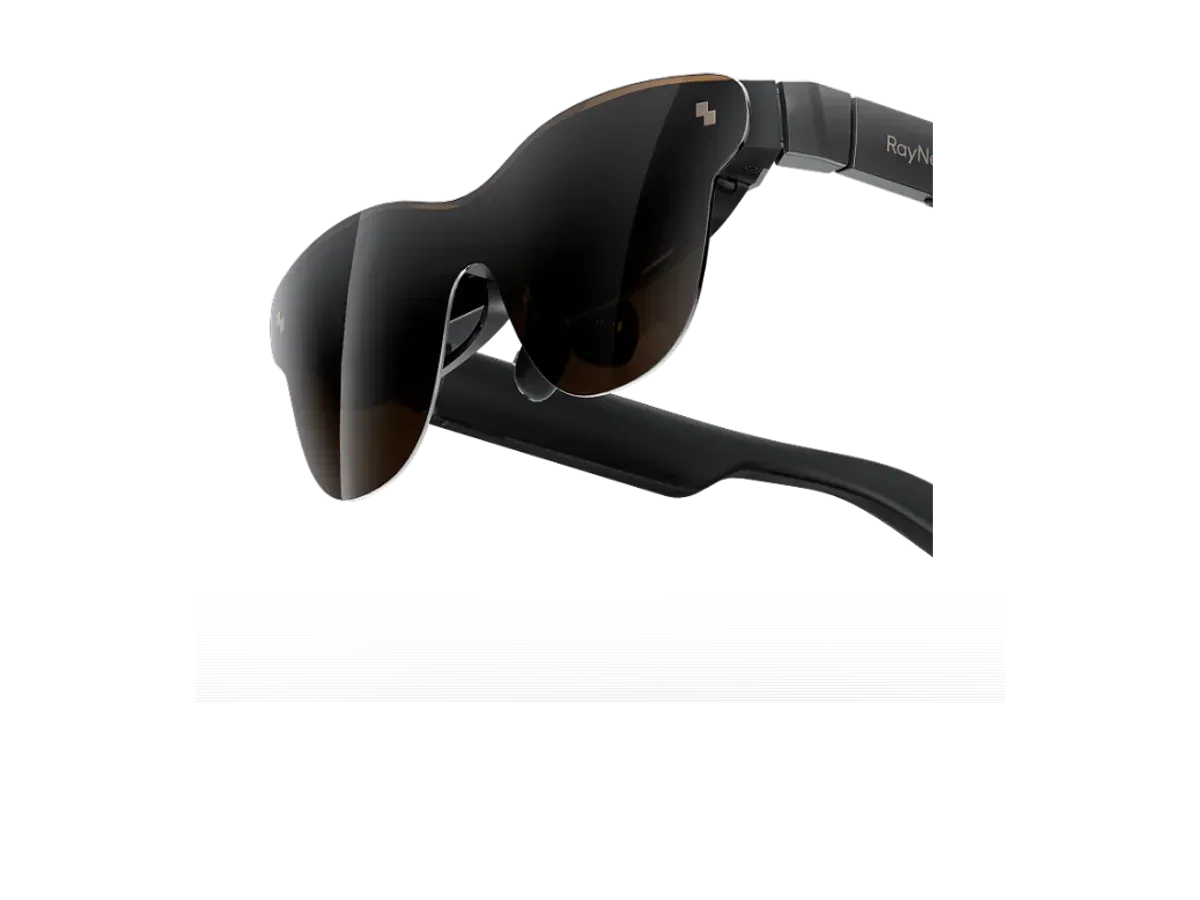
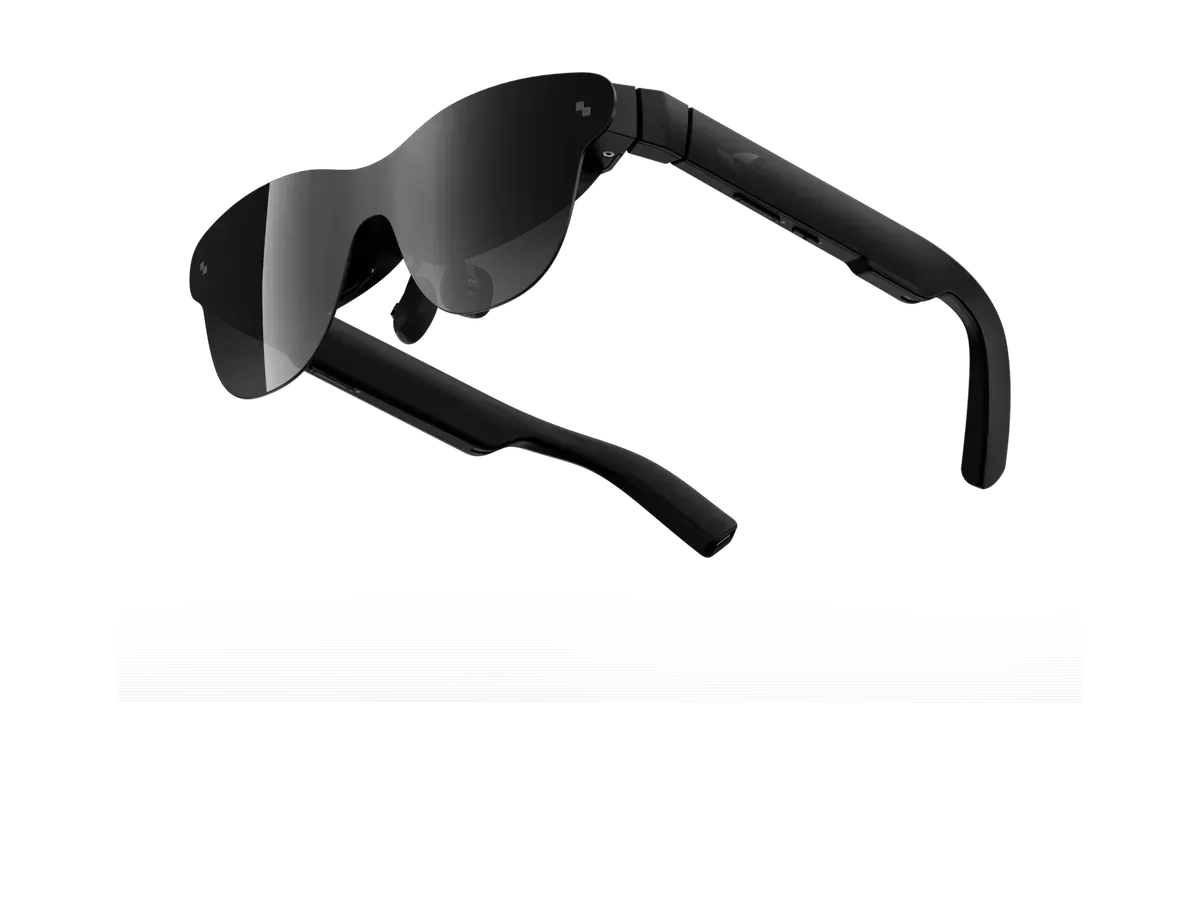
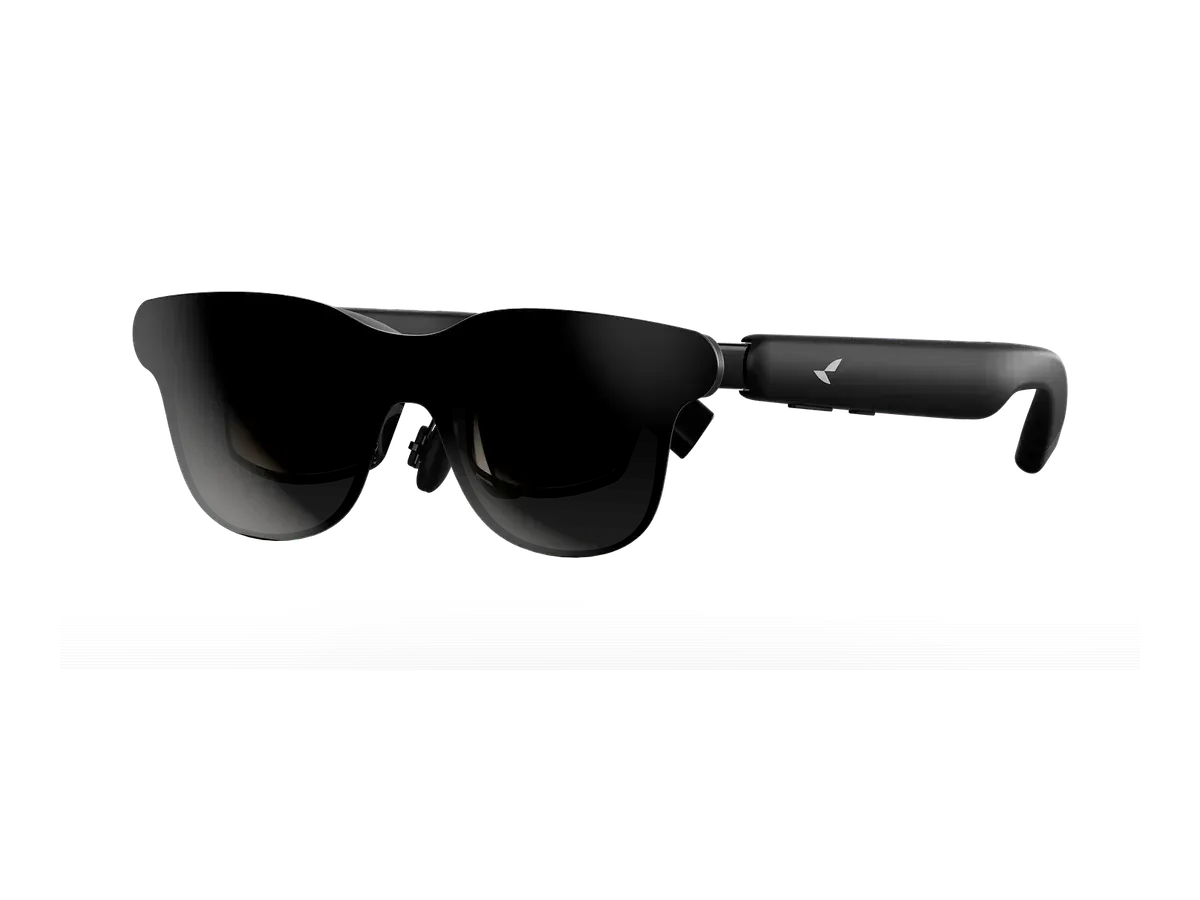
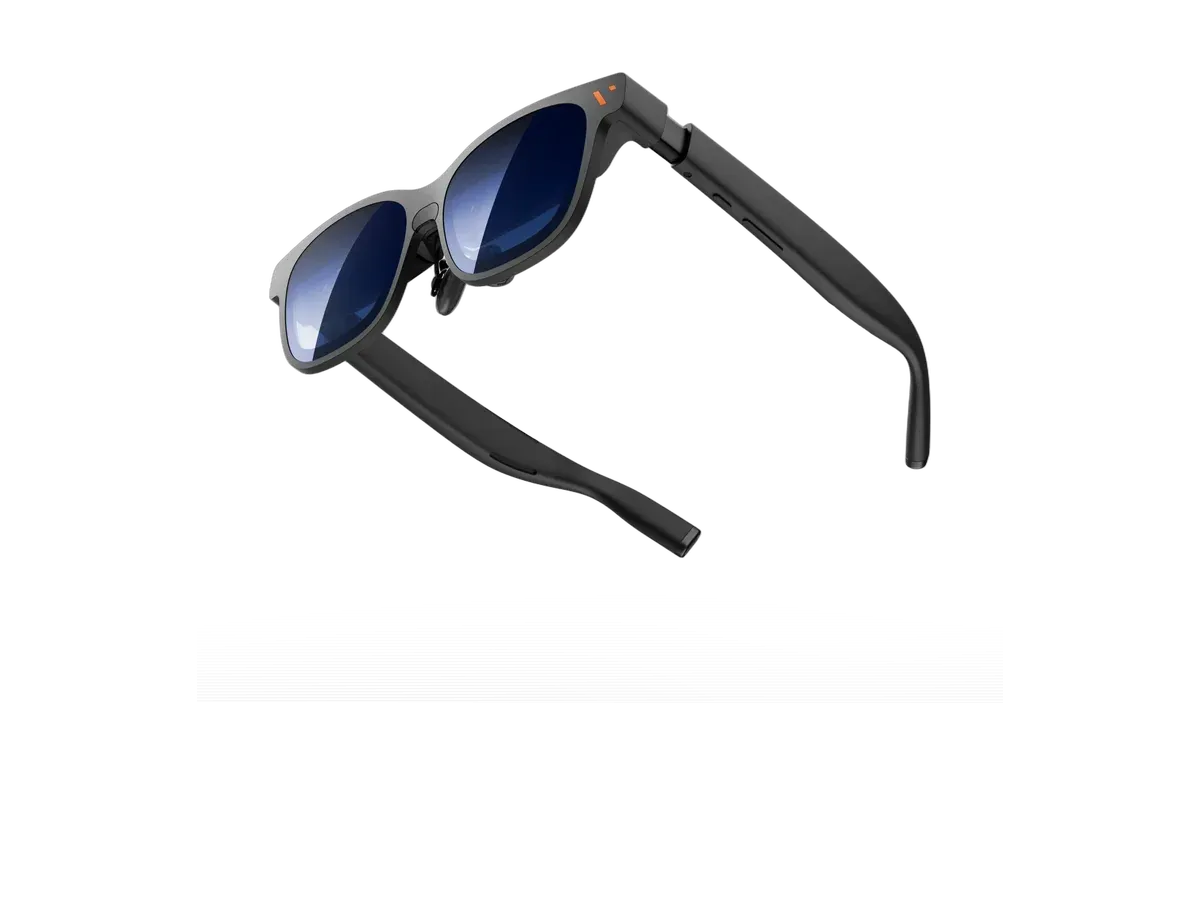
This page covers the whole budget category, ranked cheapest-first. If $300 is a hard ceiling, use AR Glasses Under $300 instead. Otherwise, first choose between display glasses — a tethered USB-C virtual screen for movies, gaming, and work, built on birdbath optics — and AI or audio glasses, which trade the big screen for a voice assistant, open-ear audio, and sometimes a camera. The lightest smart glasses page covers comfort across every price.
Two cautions keep budget buyers happy. First, display glasses have no battery or standalone brain: they draw power and video from the device you plug in, so confirm your phone or laptop supports USB-C DisplayPort Alt Mode before buying. Second, beware no-name display glasses at the very bottom of the market — they typically ship older LCD panels instead of micro-OLED, narrow fields of view, and brightness too low for a usable picture, which is exactly where the spec floor in this ranking earns its keep.
Are cheap augmented reality glasses worth buying?
Sometimes. At the lowest prices, display glasses can give you a good private screen, while display-free AI or audio glasses can give you capable open-ear audio. No single bargain pair does both well. Check the display type, device compatibility, and current price before you buy; an unfamiliar bargain with a dim LCD is rarely good value.
Stretching the budget by a hundred dollars or two buys meaningfully better optics — wider field of view, brighter panels, and niceties like built-in diopter adjustment — so it is worth comparing a budget pick against a mid-range pair before you commit. Prices move quickly in this category; the list below re-ranks from current recorded prices at every site update, and the wider market context lives in AR glasses vs VR headsets.
If price is the whole point, jump to the cheapest-first ladder further down — it lists every qualifying pair sorted by its current recorded price and grouped into three tiers, so you can shop straight to your ceiling. The tiers track real spending thresholds. The under-$200 band is where AI and audio frames and the oldest display panels live; expect a usable picture or a capable assistant, not both. The under-$300 band is the sweet spot, where current-generation micro-OLED display glasses and the more serious AI frames land, and where most buyers get the best picture-per-dollar. The under-$350 band, still comfortably below flagship money, is where you pick up the widest fields of view, the brightest panels, and extras like diopter dials. Because those figures are read from the catalog rather than typed into this page, the ladder never goes stale — and every entry links straight to its buy options.
If you searched for the cheapest AR glasses, this page is built to answer exactly that question. The cheapest-first ladder is generated from the recorded price of every qualifying pair, and it re-sorts whenever a recorded price changes — a blog post that quotes a launch price keeps quoting it long after the store has moved on, while a catalog-driven list corrects itself. That matters most at the budget end, where street prices move more often than anywhere else in the category: the pair that was cheapest at publication is not always the pair that is cheapest today.
This hub covers the whole budget category. If you are shopping to a hard number instead, two price-point ladders apply the same cheapest-first, price-performance approach to a fixed ceiling: AR glasses under $300 covers the value sweet spot, and AR glasses under $200 covers the entry tier.