At a glance
- Display type
- Dual Micro-LED projectors, full color (16.77M colors)
- Resolution
- 640x480
- Field of view
- 30°
- Refresh rate
- 60 Hz
- Brightness
- 3500 nits
- Weight
- 76 g
- Battery
- 1.5 hr
- True AR overlay with full-color Micro-LED waveguide display
- Industry-leading 6,000-nit peak brightness for outdoor visibility
- High price at $1,299 -- among the most expensive consumer AR glasses
- 30-degree FOV is narrow compared to Snap Spectacles' 46 degrees
RayNeo X3 Pro
RayNeo
6.3/10 “The aggregated verdict on the RayNeo X3 Pro is a study in one spectacular strength and one disqualifying weakness. Nearly every reviewer -- Tom's Hardware, Gizmodo, PhoneArena, Android Central, The Ghost Howls -- describes the 6,000-nit Micro-LED waveguide display as the best they have seen in consumer AR glasses, brighter than Meta's Ray-Ban Display and readable in daylight. And nearly every reviewer hit battery walls far below the 5-hour claim: Tom's Hardware never exceeded about an hour, Android Central could not get past 30 minutes and called the glasses unusable as a result. Add a thin app ecosystem and a conspicuous look, and the consensus lands where Gizmodo did: you should wait. The X3 Pro proves the display future is real; it does not yet ship a product you can live with.” Read the full review$1,299
Buy at RayNeo- Field of view
- 30°
- Weight
- 76 g
- Battery
- 1.5 hr
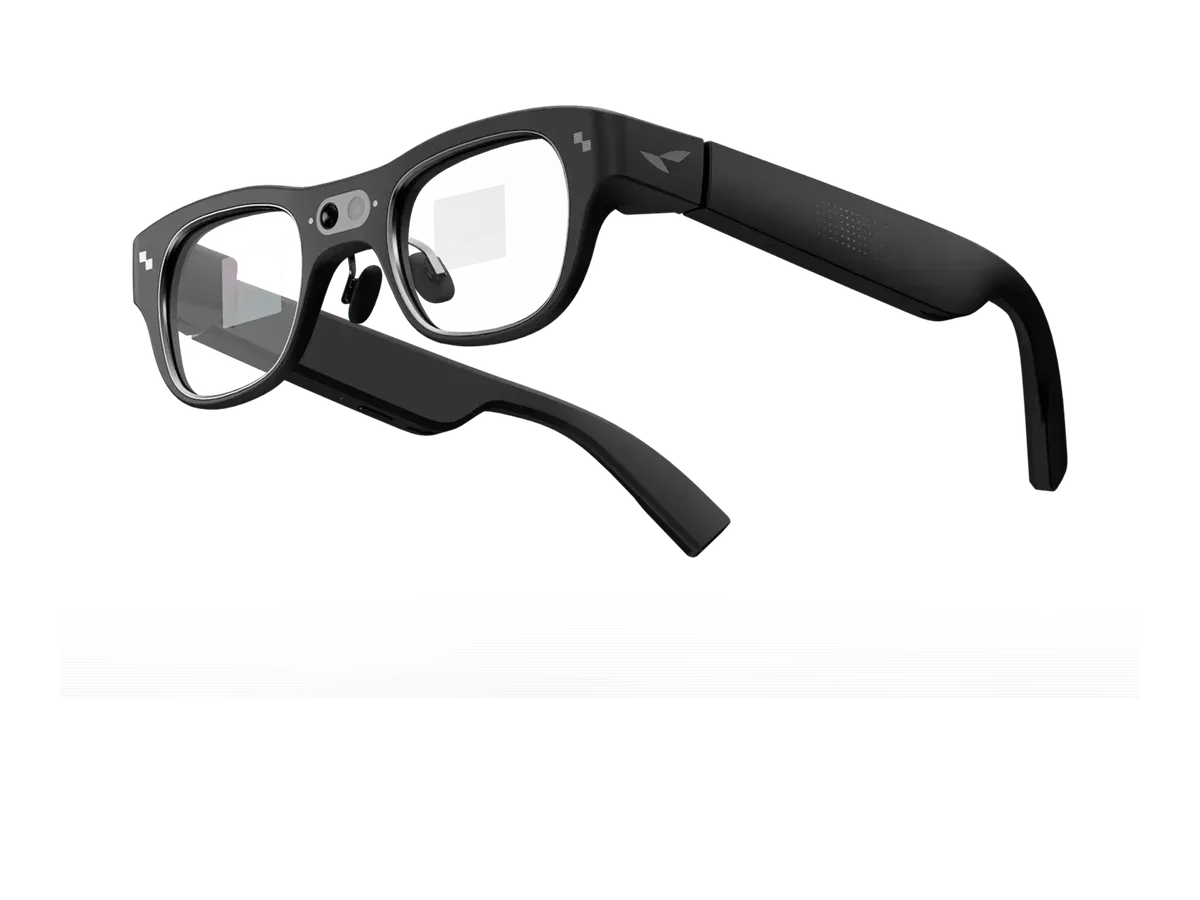
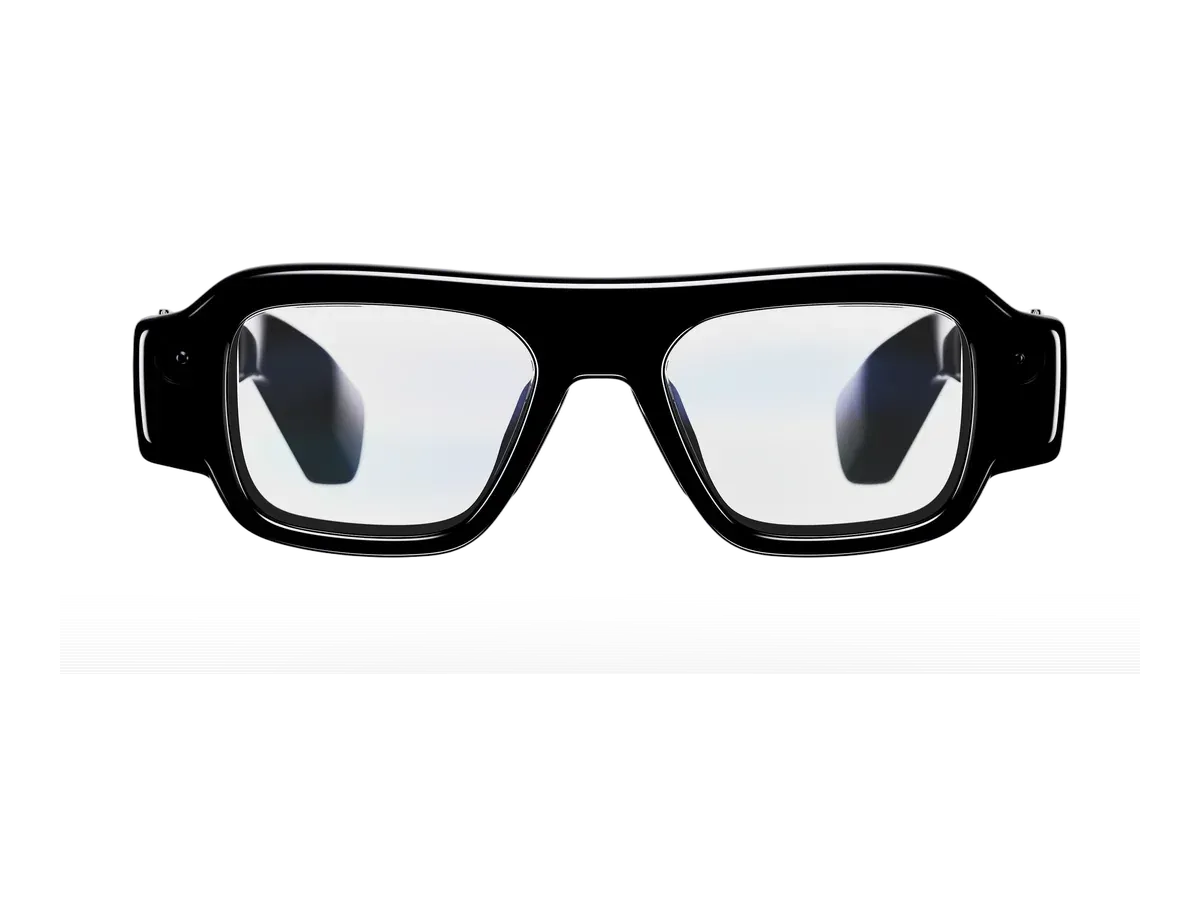
The RayNeo X3 Pro is a true AR smart glasses featuring a dual full-color Micro-LED waveguide display with 6,000-nit peak brightness, powered by the Qualcomm Snapdragon AR1 Gen 1 chipset. At just 76 grams with a titanium alloy frame, it delivers real-time AR overlays with Google Gemini AI, 12MP Sony IMX681 camera, 6DoF SLAM tracking, and gesture/voice control.
Our review
By AR Compare Team ·
The aggregated verdict on the RayNeo X3 Pro is a study in one spectacular strength and one disqualifying weakness. Nearly every reviewer -- Tom's Hardware, Gizmodo, PhoneArena, Android Central, The Ghost Howls -- describes the 6,000-nit Micro-LED waveguide display as the best they have seen in consumer AR glasses, brighter than Meta's Ray-Ban Display and readable in daylight. And nearly every reviewer hit battery walls far below the 5-hour claim: Tom's Hardware never exceeded about an hour, Android Central could not get past 30 minutes and called the glasses unusable as a result. Add a thin app ecosystem and a conspicuous look, and the consensus lands where Gizmodo did: you should wait. The X3 Pro proves the display future is real; it does not yet ship a product you can live with.
- Display quality
- 9/10
- Comfort
- 6.5/10
- Battery life
- 2.5/10
- Value for money
- 5/10
- Build quality
- 7/10
- Software
- 5.5/10
The RayNeo X3 Pro is one of the first true standalone AR glasses with full-color Micro-LED waveguides to reach consumers at scale, and the review record around its December 2025 launch is deep: Tom’s Hardware, Gizmodo, PhoneArena, Android Central, Notebookcheck, The Ghost Howls, and Digital Trends via Yahoo all published extended evaluations. This review aggregates that record along with early-owner community sentiment. AR Compare has not performed hands-on testing of this unit; every observation is attributed to the cited sources, and the category scores are an editorial aggregate of cited reviewer and owner sentiment.
How This Review Was Compiled
Sources include month-long usage reviews (Android Central), technically detailed evaluations (Notebookcheck, The Ghost Howls), and mainstream verdicts (Gizmodo, PhoneArena, Tom’s Hardware). The split between display praise and battery condemnation is near-universal, which makes this one of the easier consensus reads in the category.
The Display: Universal Praise
The X3 Pro pairs dual Micro-LED projectors with optical waveguides embedded in the lenses, outputting full color at 3,500 nits typical and 6,000 nits peak across a 30-degree field of view at 60Hz — effectively a simulated 43-inch display floating in your vision. The reaction is uniform. Digital Trends’ reviewer wrote “I challenge you not to say ‘wow’” when the screen lights up — clear, colorful, sharp, vibrant. Gizmodo noted it out-brights the Meta Ray-Ban Display’s 5,000 nits and appears much sharper. Tom’s Hardware found the UI easily readable indoors and bright enough for outdoor use — the waveguide category’s historical failure point, solved. The Ghost Howls, the most positive of the major reviews, judged it better than Meta’s offering on several axes.
The main optical complaint, from PhoneArena: the display sits low, and the bottom can fall outside your field of view unless you perch the glasses oddly on your nose.
The Battery: Universal Condemnation
RayNeo claims up to 5 hours. The crowdsourced record disagrees sharply. Tom’s Hardware never got more than about an hour of use, titling its review around “alarming battery life.” Android Central could not get the glasses past 30 minutes in a month of trying and concluded the poor battery makes them effectively unusable despite a diverse feature set. This is the single most consistent data point across every source, and it is the reason the aggregate score lands where it does. For a device meant to be worn as everyday glasses, sub-hour endurance is not a caveat; it is the verdict.
Platform and Everyday Reality
On paper the standalone platform is rich: Snapdragon AR1 Gen 1 with 4GB RAM and 32GB storage, a 12MP camera, Gemini-powered AI assistant, real-time translation, navigation, music, and notifications — no tether, no puck. In practice, reviewers report a thin app ecosystem with sideloading described by Gizmodo as a major headache. Whoever buys this is buying the built-in feature list as-is.
Physically, the 76-gram glasses read as gadget, not eyewear. Yahoo’s review title captures the consensus: the future is bright, but you will look silly waiting for it. Owners echo the point — these are “as geeky-looking as glasses can get,” and the chunky temples announce themselves.
Value
At $1,299 ($1,099 early-bird), the X3 Pro costs $500 more than the Meta Ray-Ban Display while delivering a better display and worse everything-else, per the aggregate comparisons. Tom’s Hardware’s summary — “more like a nifty tech demo” — and PhoneArena’s “a taste of the AR future” with a major battery compromise frame the same conclusion from two directions. Only The Ghost Howls mounts a real defense, and even it concedes the price limits the audience to enthusiasts.
Who Should Buy the RayNeo X3 Pro
Per the aggregated consensus: AR enthusiasts, developers, and technology-first buyers who want the most advanced consumer waveguide display shipping today and will work around sub-hour battery life. Who should skip: literally everyone else, per the majority of reviewers — anyone wanting all-day smart glasses (Even Realities G2), a usable display-plus-ecosystem package (Meta Ray-Ban Display), or value (any tethered display glasses). The consensus advice is to wait for generation two.
Scores are aggregates of the cited reviews and owner reports, not AR Compare hands-on measurements.
Sources
- Tom’s Hardware — RayNeo X3 Pro AR glasses review: Intriguing, high-priced glasses with alarming battery life
- Android Central — I used RayNeo’s X3 Pro for a month: futuristic, but there’s a big problem
- Gizmodo — RayNeo X3 Pro Review: These AR Smart Glasses May Haunt My Dreams
- PhoneArena — RayNeo X3 Pro review: a taste of the AR future
- The Ghost Howls — TCL RayNeo X3 Pro review: very advanced smartglasses, for a price
- Notebookcheck — RayNeo X3 Pro review: Promising AR smart glasses with one big limitation
- Yahoo Tech / Digital Trends — RayNeo X3 Pro review: The future is bright, but you’ll look silly waiting for it
Pros & cons
Pros
- True AR overlay with full-color Micro-LED waveguide display
- Industry-leading 6,000-nit peak brightness for outdoor visibility
- Lightweight 76g titanium frame -- lightest in true AR category
- Google Gemini AI with real-time translation and navigation
- 12MP Sony camera with 4K still photos (video up to 1440p)
- Readable outdoors and sharper-looking than the Meta Ray-Ban Display per multiple comparisons
- True everyday-glasses ambition: display embedded in the lenses, no tether
Cons
- High price at $1,299 -- among the most expensive consumer AR glasses
- 30-degree FOV is narrow compared to Snap Spectacles' 46 degrees
- Real-world battery life falls significantly short of claimed 5 hours
- Touch-sensitive temple controls can be finicky and imprecise
- Bulkier styling than conventional glasses despite lightweight frame
- Thin app ecosystem with sideloading described as a major headache
- Bulky, conspicuously techy look that reviewers say you will have to accept
- Display sits low in the field of view unless positioned awkwardly on the nose
Full specifications
Specs last verified
| Display | |
|---|---|
| Display type | Dual Micro-LED projectors, full color (16.77M colors) |
| Resolution | 640x480 |
| Field of view (°) | 30 |
| Refresh rate (Hz) | 60 |
| Brightness (nits) | 3500 |
| Virtual screen size (in) | 43 |
| HDR support | ✕ No |
| Color support | Full color |
| Not published: Pixels per degree | |
| Optics | |
| Optics type | waveguide |
| Dimming control | ✓ Yes |
| Transparency level | see-through AR overlay |
| Prescription support | ✓ Yes |
| Prescription options | Inserts / lens frame via Lensology, from £95 GBP (partner-sourced; the earlier $49 figure appears nowhere first-party) |
| Physical | |
| Weight (g) | 76 |
| Frame style | titanium |
| Color options | Black |
| Foldable | ✓ Yes |
| IP rating | IP52 |
| Battery & power | |
| Battery life (hours) | 1.5 |
| Charging method | USB-C |
| Charging time (min) | 0.75 |
| Connectivity | |
| Connectivity | Bluetooth 5.3, WiFi 6, USB-C |
| Tethered | ✕ No |
| Compatible devices | iOS, Android |
| Computing | |
| Processing type | on-device |
| Operating system | RayNeo AIOS with Google Gemini 2.5 AI |
| Chipset | Qualcomm Snapdragon AR1 Gen 1, 4GB RAM, 32GB storage |
| Sensors & input | |
| Camera | 12MP (2×) |
| Microphones | 3 |
| Speakers | open-ear |
| Tracking | 6DoF, head, SLAM |
| Gesture control | ✓ Yes |
| Voice control | ✓ Yes |
| AI | |
| AI assistant | Google Gemini |
| Not published: AI model, Wake word, AI capabilities | |
Prescription options
The documented prescription routes for the RayNeo X3 Pro, from the maker and named-partner documentation recorded in our database.
- Inserts / lens frame via Lensology, from £95 GBP (partner-sourced; the earlier $49 figure appears nowhere first-party) — range not published by the maker Source: rayneo.com documentation
Maker documentation as recorded 2026-09-17. Ranges are the maker's published limits, not medical advice — confirm your exact prescription with your optician before ordering.
Read the RayNeo prescription guide for every documented option, model by model.
Where to buy
Price checked
RayNeo X3 Pro specs: quick answers
- What is the RayNeo X3 Pro's field of view?
- The RayNeo X3 Pro has a 30-degree field of view.
- What is the RayNeo X3 Pro's display resolution?
- The RayNeo X3 Pro's recorded per-eye display resolution is 640x480.
- How bright is the RayNeo X3 Pro's display?
- The RayNeo X3 Pro has a rated peak brightness of 3500 nits.
- How much does the RayNeo X3 Pro weigh?
- The RayNeo X3 Pro's glasses weigh 76g according to the manufacturer specification.
- How long does the RayNeo X3 Pro's battery last?
- The RayNeo X3 Pro is rated for about 1.5 hours of battery life.
- Does the RayNeo X3 Pro have a camera?
- Yes, the RayNeo X3 Pro has 2 built-in cameras. The recorded camera resolution is 12MP.
- Does the RayNeo X3 Pro have an AI assistant?
- Yes, the RayNeo X3 Pro includes the Google Gemini AI assistant.
- How much does the RayNeo X3 Pro cost?
- The RayNeo X3 Pro costs $1,299.
RayNeo X3 Pro: FAQs
How much does the RayNeo X3 Pro cost?
The RayNeo X3 Pro costs $1,299 (USD). It is available from 1 retailer listed on this page.
What field of view does the RayNeo X3 Pro have?
The RayNeo X3 Pro has a recorded field of view of 30 degrees.
How much does the RayNeo X3 Pro weigh?
The RayNeo X3 Pro weighs 76g according to the manufacturer specification.
How long does the battery last on the RayNeo X3 Pro?
The RayNeo X3 Pro has a rated battery life of 1.5 hours.
Can I use the RayNeo X3 Pro with prescription lenses?
Yes, the RayNeo X3 Pro supports prescription lenses. The recorded diopter range is Prescription lens inserts via Lensology (from £95; sample lens in box).
Does the RayNeo X3 Pro have a camera?
Yes, the RayNeo X3 Pro has a built-in camera (12MP).
What devices work with the RayNeo X3 Pro?
The RayNeo X3 Pro lists compatibility with: iOS, Android.
What resolution does the RayNeo X3 Pro have?
The RayNeo X3 Pro has a recorded per-eye resolution of 640x480. It refreshes at 60Hz.
Is the RayNeo X3 Pro worth it?
The RayNeo X3 Pro is priced at $1,299 (USD). For that you get a 30-degree field of view, 3500 nits of brightness, a 640x480 per-eye resolution, and 1.5 hours of rated battery life. It weighs 76g. The full spec breakdown on this page shows what the price includes.
Similar products
What shoppers cross-check with the RayNeo X3 Pro — from our navigation records and closest spec matches.
Ranked in these buying guides
Where the RayNeo X3 Pro lands in our recorded-spec rankings.
- Best AR Glasses for Gaming
- Best AR Glasses for iPhone Users
- Prescription Smart Glasses
- Best AR Glasses for Developers
- Best AI Smart Glasses
- Sport Smart Glasses: Best for Running & Fitness
- Best Enterprise AR Glasses
- Smart Glasses With a Display
- Lightest Smart Glasses
- HUD Glasses: Every Heads-Up Display, Ranked
- Best AR Glasses for Android Phones & Samsung DeX
- Widest FOV AR Glasses
- Brightest Smart Glasses
- Smart Glasses Battery Life, Ranked
- Best AR Glasses in 2026
- Smart Glasses with a Camera
Related Comparisons
RayNeo X3 Pro vs Snap Spectacles Gen 5
RayNeo vs Snap
RayNeo X3 Pro vs XREAL Aura
RayNeo vs XREAL
RayNeo X3 Pro vs Magic Leap 2
RayNeo vs Magic Leap
RayNeo X3 Pro vs TCL RayNeo X2
RayNeo
RayNeo X3 Pro vs Meta Ray-Ban Display
RayNeo vs Meta
RayNeo X3 Pro vs Snap Specs (Consumer Edition)
RayNeo vs Snap
RayNeo X3 Pro vs DigiLens ARGO Smart Glasses
RayNeo vs DigiLens
RayNeo X3 Pro vs Dream Glass Lead Pro
RayNeo vs Dreamworld
RayNeo X3 Pro vs Epson Moverio BT-45C
RayNeo vs Epson
RayNeo X3 Pro vs Inmo Air2
RayNeo vs Inmo
RayNeo X3 Pro vs INMO Air3 All-in-One Full-Color Waveguide AR Glasses
RayNeo vs Inmo
RayNeo X3 Pro vs Lenovo ThinkReality A3
RayNeo vs Lenovo
RayNeo X3 Pro vs Mad Gaze Glow Plus
RayNeo vs Mad Gaze
RayNeo X3 Pro vs Microsoft HoloLens 2
RayNeo vs Microsoft
RayNeo X3 Pro vs Rokid AR Spatial
RayNeo vs Rokid
RayNeo X3 Pro vs Vuzix Blade 2
RayNeo vs Vuzix