Even Realities G2 vs Rokid Glasses
Side-by-side comparison of specs, features, and pricing
Specs updated
The Rokid Glasses has the brighter screen than the Even Realities G2: 1,500 nits against 1,200 — nits measure how bright the screen can get, per the makers' spec sheets. The Even Realities G2 is lighter: 36 grams against 49. The Even Realities G2 runs longer on a charge: 48 hours against 9. Specs updated October 6, 2026.
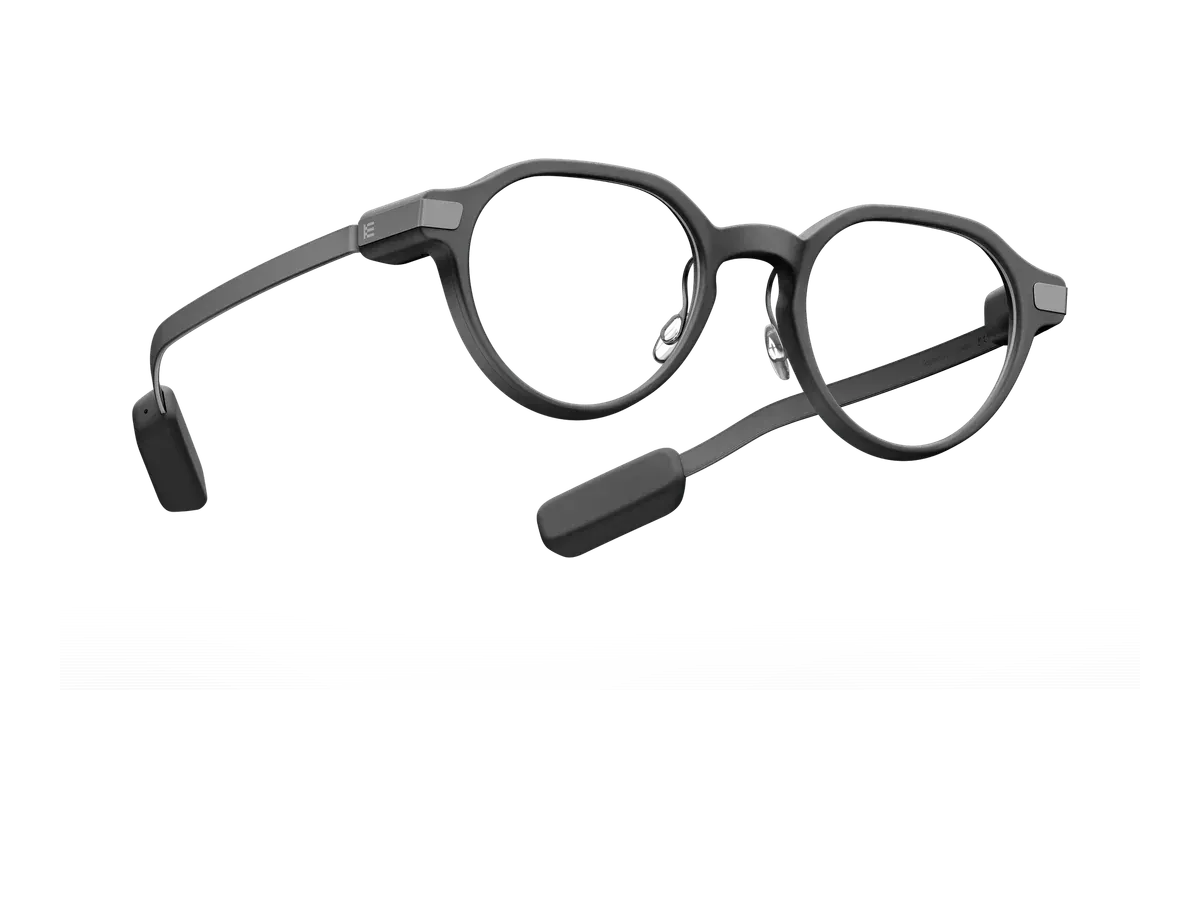
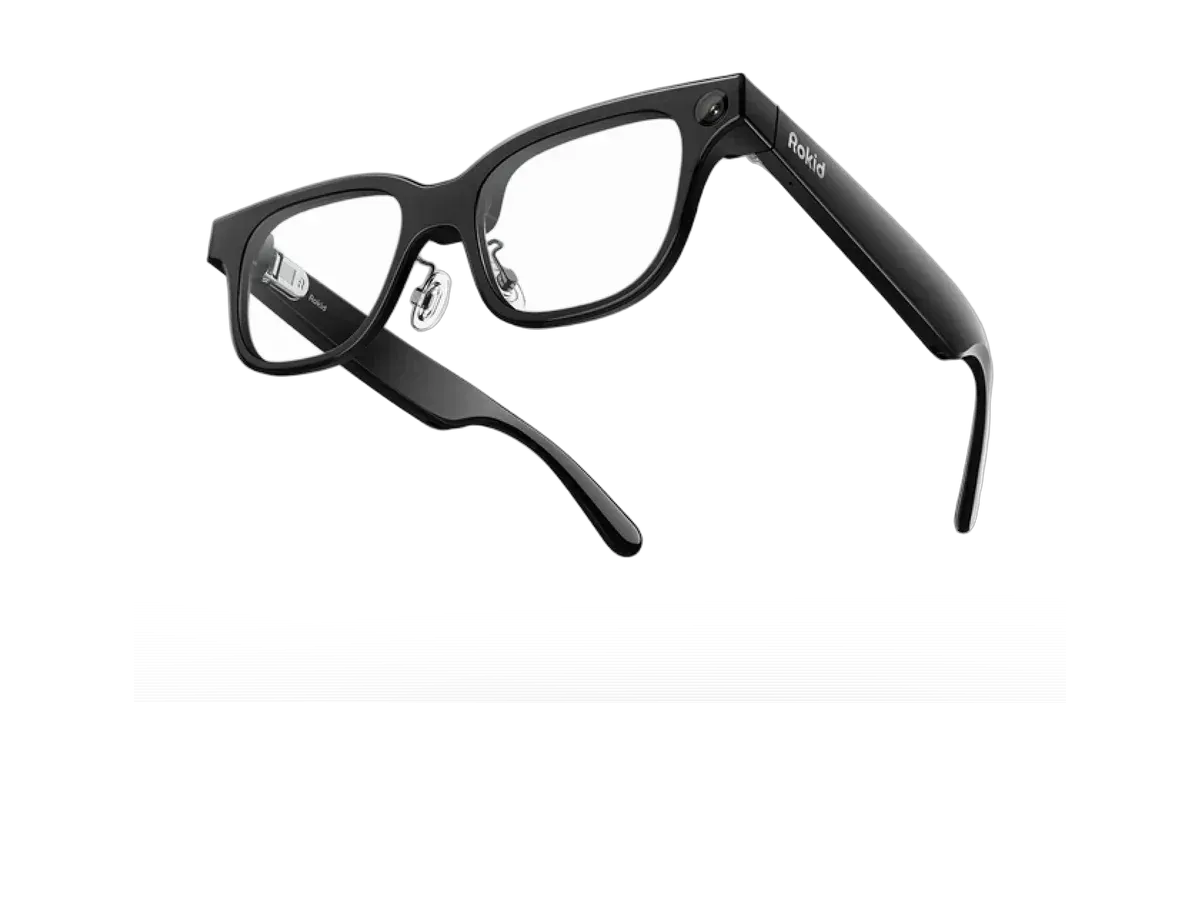
Which should you buy?
Bottom line: the Even Realities G2 is the better buy for most people at $100 less, unless you need the brighter display.
We may earn a commission on purchases made through links on this page.
Buy the Even Realities G2 if…
- You want to spend $100 less ($599 vs $699)
- You want the lighter 36g fit (vs 49g)
- You need longer battery life (48 hours vs 9)
Buy the Rokid Glasses if…
- You need the brighter 1500-nit display (vs 1200 nits)
- You want a built-in camera
Verdict generated from the recorded spec differences shown in the table below — when a spec is missing for either product, it is left out rather than guessed.
See the full rankings
Specs Comparison
| Specification |  Even Realities G2 $599 Even Realities G2 $599 |  Rokid Glasses $699 Rokid Glasses $699 |
|---|---|---|
| Price | ||
| Price | $599 | $699 |
| Optics | ||
| Optics type | waveguide | waveguide |
| Dimming control | ✓ Yes | ✓ Yes |
| Transparency level | 98% passthrough | — |
| Prescription support | ✓ Yes | ✓ Yes |
| Diopter range | -12.00 to +12.00 | yes, via magnetic clip-in corrective lens frame |
| Physical | ||
| Weight (g) | 36 | 49 |
| Frame style | classic panto and rectangular | — |
| Color options | Black, Silver, Brown | — |
| Foldable | ✓ Yes | ✕ No |
| IP rating | IP65 | IPX4 |
| Battery & power | ||
| Battery life (hours) | 48 | 9 |
| Charging method | Wireless charging case | — |
| Charging time (min) | 1.25 | — |
| Connectivity | ||
| Connectivity | Bluetooth 5.4 | — |
| Tethered | ✕ No | — |
| Compatible devices | iOS, Android | iOS, Android |
| Computing | ||
| Processing type | phone | — |
| Operating system | Even AI companion app; Conversate contextual AI, 31-language live translation, teleprompter, navigation with geomagnetic sensor | Rokid AI (supports ChatGPT, Gemini, DeepSeek, Microsoft Translator, Google Maps integrations); 89-language translation, 5 offline |
| Chipset | phone-tethered (Even AI app) | Qualcomm Snapdragon AR1 + NXP RT600 low-power co-processor, on-device |
| Sensors & input | ||
| Camera | ✕ No | 12MP |
| Microphones | 4 | — |
| Speakers | ✕ No | open-ear |
| Tracking | — | 0DoF |
| Voice control | ✓ Yes | — |
| AI assistant | Even AI | — |
Buy the Even Realities G2
Buy the Rokid Glasses
Keep shopping
Jump straight to full specs and where to buy either model, or keep exploring related picks.
More ways to decide
All Even Realities vs Rokid comparisons
Two heads-up displays, and only one can see
Strip away the branding and these two share a foundation: green MicroLED projected through waveguides into both lenses, driven from your phone, with live translation, a teleprompter, and turn-by-turn navigation among the recorded uses of each. Where they part ways is the question that decides this whole category: whether the glasses can see. The Even Realities G2 has no camera at all — a deliberate choice that keeps them easy to wear at work, in meetings, and around people who bristle at camera eyewear. The Rokid Glasses take the opposite position: a 12MP camera up front, an on-board Snapdragon AR1 chip running visual AI against what it captures, and photography, video capture, and calls listed among their core uses. One is a display you wear; the other is a display that watches with you.
The camera has a cost, and the records spell it out. The G2 comes in at 36 grams — lighter than many ordinary frames — runs about 48 hours between charges, and is sealed to IP65 against dust and rain. The Rokid Glasses carry their sensor and chip at 49 grams, are rated IPX4 for splashes rather than weather, and record 9 hours of battery. The G2 also ships without speakers entirely, so audio means your own earbuds, while the Rokid's open-ear speakers let it take calls and speak answers on its own.
Prescriptions, assistants, and the deciding question
Prescription wearers get real support either way, differently shaped. Even Realities grinds the correction straight into custom lenses, covering -12 to +12 diopters, so the G2 you receive is simply your glasses. Rokid uses a magnetic clip-in frame instead, covering nearsightedness to -16, which works but adds a layer behind the display. On the assistant side, the G2 pairs its four microphones with the Even AI companion; the Rokid runs several — ChatGPT, Gemini, and DeepSeek are all supported — and translates across 89 languages, a wider roster than the G2's.
Pick the G2 to wear a screen all day without carrying a camera on your face: lighter, longer-lived, weather-sealed, and easy company in rooms where recording devices are not. Pick the Rokid Glasses to give the display senses — photos, video, calls, and an assistant that can look at what is in front of you and answer for it.
Even Realities G2 vs Rokid Glasses (2025 consumer AI+AR glasses): FAQs
Which is cheaper: the Even Realities G2 or the Rokid Glasses?
The Even Realities G2 costs $599 and the Rokid Glasses costs $699, making the Even Realities G2 $100 cheaper.
Which has the larger field of view: the Even Realities G2 or the Rokid Glasses?
The Rokid Glasses has the larger field of view: Even Realities G2 measures 27.5 degrees vs 30 degrees for the Rokid Glasses.
Which is lighter: the Even Realities G2 or the Rokid Glasses?
The Even Realities G2 is lighter at 36g. The Even Realities G2 weighs 36g and the Rokid Glasses weighs 49g.
Which has the brighter display: the Even Realities G2 or the Rokid Glasses?
The Rokid Glasses is brighter at 1500 nits (Even Realities G2: 1200 nits, Rokid Glasses: 1500 nits).
What is the main difference between the Even Realities G2 and the Rokid Glasses?
Based on recorded specs, the Even Realities G2 leads on price ($100 cheaper) while the Rokid Glasses leads on field of view (2.5 degrees wider FOV).