At a glance
- Display type
- none (peripheral status LED for HR/power-zone alerts)
- Weight
- 66 g
- Battery
- 9 hr
- IP67 dust and water resistance -- highest of any Meta smart glasses
- 122-degree ultra-wide camera captures more of the action than competitors
- Sport-focused shield design limits everyday casual wear appeal
- 66g weight is heavier than lifestyle smart glasses like Ray-Ban Meta
Oakley Meta Vanguard
Oakley
7.7/10 “The aggregated verdict from athlete-testers and reviewers is that the Oakley Meta Vanguard is the best sport-specific smart glasses yet made -- and a poor fit for anyone else. Wareable's split captures the consensus: for serious athletes who love to share their training, a superb bit of kit; for everyone else, a costly novelty. The center-nose camera earns real praise for stabilized POV capture, the shield design survives what athletes throw at it, and Garmin users get genuinely useful live-metric readouts. The recurring deal-breakers in the record: battery that craters to 2-4 hours under real recording loads, no HUD of any kind, portrait-only video, and no prescription path. Runners and cyclists inside the Garmin ecosystem will love it; casual buyers are pointed to cheaper Ray-Ban Metas.” Read the full review$499
Check price at Amazon- Weight
- 66 g
- Battery
- 9 hr
- Camera
- 12 MP ultra-wide (122° FOV), 3K video
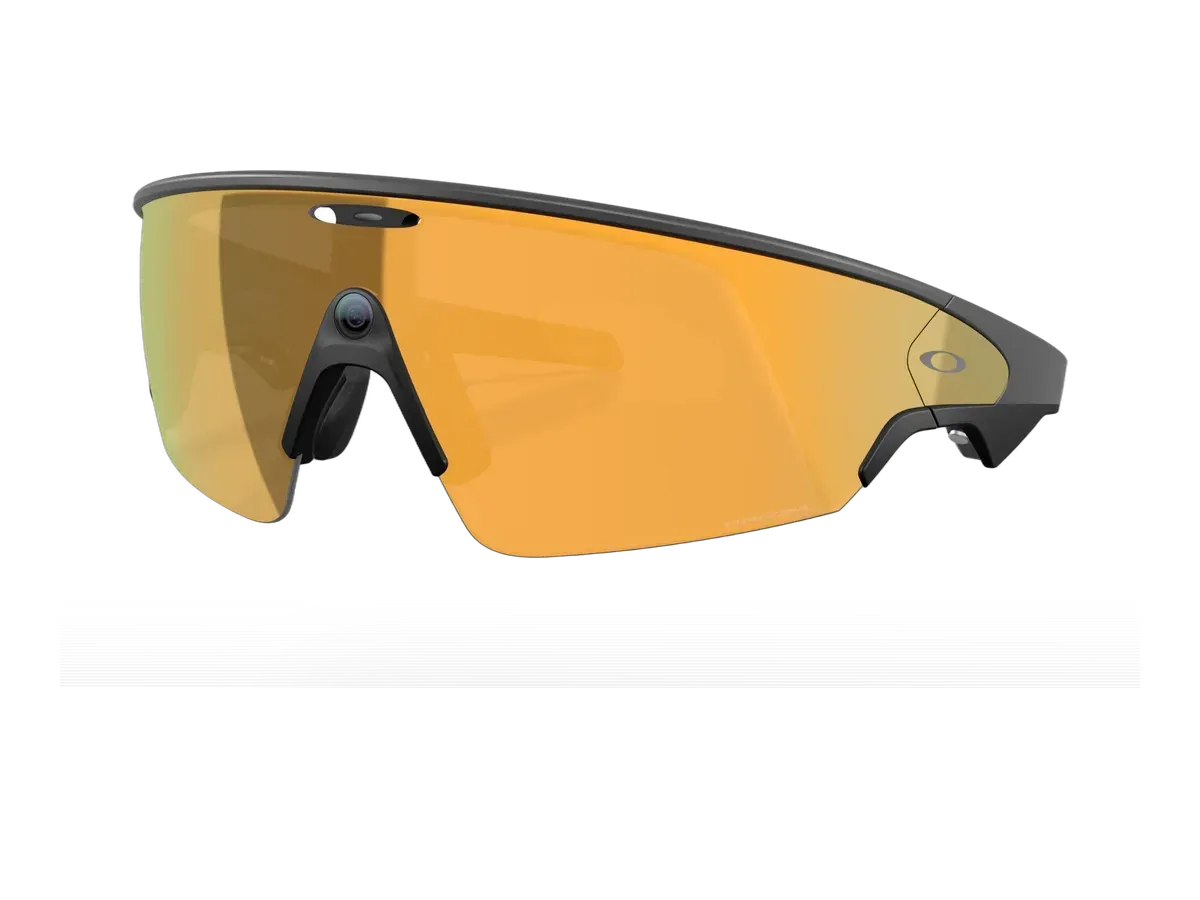
The Oakley Meta Vanguard is a sport-focused smart glasses collaboration between Oakley and Meta, designed specifically for athletes. Featuring a unified shield lens design, 12 MP ultra-wide camera with 3K video, five wind-resistant microphones, and IP67 dust and water resistance, the Vanguard is built to perform during intense workouts, cycling, running, and outdoor adventures.
Our review
By AR Compare Team ·
The aggregated verdict from athlete-testers and reviewers is that the Oakley Meta Vanguard is the best sport-specific smart glasses yet made -- and a poor fit for anyone else. Wareable's split captures the consensus: for serious athletes who love to share their training, a superb bit of kit; for everyone else, a costly novelty. The center-nose camera earns real praise for stabilized POV capture, the shield design survives what athletes throw at it, and Garmin users get genuinely useful live-metric readouts. The recurring deal-breakers in the record: battery that craters to 2-4 hours under real recording loads, no HUD of any kind, portrait-only video, and no prescription path. Runners and cyclists inside the Garmin ecosystem will love it; casual buyers are pointed to cheaper Ray-Ban Metas.
- Display quality
- 1/10
- Comfort
- 8.5/10
- Battery life
- 6/10
- Value for money
- 6.5/10
- Build quality
- 9/10
- Software
- 7/10
The Oakley Meta Vanguard is Meta’s first purpose-built sports smart glasses, and the most useful thing about its review record is who wrote it: runners, cyclists, and a triathlete who raced it at Ironman Arizona, alongside conventional tech reviewers at Trusted Reviews, Wareable, T3, and Android Central. This review aggregates that athlete-heavy record. AR Compare has not performed hands-on testing of this unit; every observation is attributed to the cited sources, and the category scores are an editorial aggregate of cited reviewer and tester sentiment. Note: the Vanguard has no display, so the display score of 1 follows this site’s convention for display-free devices rather than indicating a defect.
How This Review Was Compiled
Sources include sport-specialist evaluations (Athletech News’ runner review, GRAN FONDO’s cycling test, The Run Testers, a Front Pack Sports triathlon field report) and generalist reviews (Trusted Reviews, Wareable, T3, Stuff, Android Central). Battery figures differ meaningfully by workload and temperature across testers, so the range is reported rather than a single number.
The Camera: The Reason It Exists
The Vanguard moves the 12MP camera from the temple to the center of the nose bridge — a placement reviewers consistently praise as smarter for POV framing — and shoots 3K/30fps with stabilization and a 122-degree field of view, wider than other Meta glasses. Athletech News found stills sharp and balanced, stabilized video holding up on fast terrain, and voice capture (“Hey Meta, take a photo”) letting a runner grab moments without breaking stride. The Ironman tester called the results “a glimpse into the future of endurance storytelling.”
The limits are equally well documented: portrait-only video — fine for Instagram, wrong for YouTube, per The Run Testers — dynamic range and low-light performance below a similarly priced phone, no 3K/60fps, and Trusted Reviews’ conclusion that it cannot replace an action camera. T3 was bluntest: bold, beautifully built, full of promise, but the execution is not there yet.
Built for Sport
The hardware earns near-unanimous respect: a unified Prizm shield lens, IP67 water and dust resistance, Z87+ impact certification, and roughly 66 grams distributed evenly enough that testers report no slippage on gravel or rough roads. Android Central’s shorthand — “Ray-Ban Meta on steroids” — reflects the louder speakers (tuned to cut through wind), sweat resistance, and the sportier fit. There are, however, no prescription or polarized options, which excludes a chunk of the athletic population outright.
The Garmin integration is the software story testers value most: paired with a compatible Garmin device, the glasses read out live pace, heart rate, and cadence, and an internal LED signals target-zone status. Athletech found this genuinely useful in motion once dialed in. The flip side, per the Ironman tester and T3: the integration is Garmin-deep and Wahoo/COROS-shallow, and it can feel clunky to configure.
The Battery Reality
Meta quotes up to 9 hours of standard use, and the crowdsourced record says to plan around a fraction of that when the camera works for a living. Pure audio playback runs about 6 hours. Under mixed recording loads: Athletech got about six hours; Stuff typically saw six — enough for a marathon, maybe not a bikepacking weekend; Trusted Reviews extrapolated roughly 3.5 hours from a run with auto-capture and music; and GRAN FONDO’s cold-weather cycling test died in 2-3 hours. The Ironman tester noted the battery limits full-day racing, and the lack of onboard music storage restricts long phone-free sessions. The charging case’s roughly 36-hour reserve (75-minute full recharge) softens this for training days, not for single long events.
Value
At $499 the Vanguard is the most expensive Meta glasses product, and the aggregate advice sorts buyers cleanly. Wareable: superb for serious athletes who share their training, a costly novelty for everyone else. Trusted Reviews notes the price jump over other Meta glasses buys sport-specific advantages that only matter if you will use them. For general lifestyle capture, reviewers point buyers to the cheaper Ray-Ban Meta Gen 2 instead.
Who Should Buy the Oakley Meta Vanguard
Per the aggregated consensus: runners, cyclists, and triathletes inside the Garmin ecosystem who want hands-free POV capture, open-ear audio, and live-metric readouts in one impact-rated package. Who should skip: anyone who needs prescription lenses, expects a HUD or display, wants landscape video for YouTube, rides with Wahoo or COROS, or is shopping for everyday smart glasses — the standard Ray-Ban Meta line serves that buyer for less money. For how the Vanguard stacks up against every other pair a runner might actually wear, see our smart glasses for running guide.
Scores are aggregates of the cited reviews and field reports, not AR Compare hands-on measurements.
Sources
- Wareable — Oakley Meta Vanguard review: Reframing the workout
- Trusted Reviews — Oakley Meta Vanguard Review
- Athletech News — Oakley Meta Vanguard Glasses: A Runner’s Review
- GRAN FONDO Cycling Magazine — Oakley Meta Vanguard Smart Performance Glasses On Review
- T3 — Oakley Meta Vanguard review: stylish, capable, and not quite ready for prime time
- The Run Testers — Oakley Meta Vanguard Review
- Android Central — Oakley Meta Vanguard smart glasses review: Ray-Ban Meta on steroids
- Front Pack Sports — Meta x Oakley Vanguard triathlete review (Ironman Arizona field report)
Pros & cons
Pros
- IP67 dust and water resistance -- highest of any Meta smart glasses
- 122-degree ultra-wide camera captures more of the action than competitors
- Five wind-resistant microphones enable voice commands at cycling speeds
- Deep fitness integration with Garmin, Strava, Apple Health, and Android Health
- 32GB storage with automatic cloud uploads via charging case Wi-Fi
- Center-mounted 12MP camera with 122-degree FOV shoots stabilized 3K/30fps POV video reviewers rate excellent for sport
- IP67-rated, Z87+ impact-certified shield design with Prizm lenses that stays put on rough terrain
- Garmin integration reads out live pace, heart rate, and cadence hands-free
- Louder open-ear speakers than other Meta glasses, tuned for wind and speed
- Charging case adds roughly 36 hours of reserve
Cons
- Sport-focused shield design limits everyday casual wear appeal
- 66g weight is heavier than lifestyle smart glasses like Ray-Ban Meta
- No display -- all AI interaction is audio-only
- Lenses are not prescription-compatible
- Real-world battery life with heavy video use can drop to 2-3 hours
- No display or HUD, no prescription or polarized lens options
- Portrait-only video and dynamic range that cannot replace an action camera
- Deep Garmin bias leaves Wahoo and COROS users with a reduced experience
- $499 makes it the priciest Meta glasses yet, for a deliberately niche audience
Full specifications
Specs last verified
| Optics | |
|---|---|
| Optics type | Prizm lens technology |
| Dimming control | ✓ Yes |
| Prescription support | ✓ Yes |
| Prescription options | Prescription lenses in the frame via participating certified retailers only |
| Not published: Transparency level | |
| Physical | |
| Weight (g) | 66 |
| Frame style | shield sport wrap |
| Color options | Black / Prizm 24K, White / Prizm Black, Black / Prizm Road, White / Prizm Sapphire |
| Foldable | ✕ No |
| IP rating | IP67 |
| Battery & power | |
| Battery life (hours) | 9 |
| Charging method | charging case (USB-C on case) |
| Charging time (min) | 1.25 |
| Connectivity | |
| Connectivity | Bluetooth 5.3, Wi-Fi 6 |
| Tethered | ✕ No |
| Compatible devices | iOS, Android |
| Computing | |
| Processing type | on-device |
| Operating system | Meta AI app (iOS/Android companion) |
| Chipset | Qualcomm Snapdragon AR1 Gen 1 |
| Sensors & input | |
| Camera | 12 MP ultra-wide (122° FOV), 3K video |
| Microphones | 5 |
| Speakers | open-ear |
| Voice control | ✓ Yes |
| Not published: Tracking, Gesture control | |
| AI | |
| AI assistant | Meta AI |
| Wake word | Hey Meta |
| Not published: AI model, AI capabilities | |
Prescription options
The documented prescription routes for the Oakley Meta Vanguard, from the maker and named-partner documentation recorded in our database.
- Prescription lenses in the frame via participating certified retailers only — range not published by the maker Source: meta.com documentation
Maker documentation as recorded 2026-09-17. Ranges are the maker's published limits, not medical advice — confirm your exact prescription with your optician before ordering.
Where to buy
Price verified
Oakley Meta Vanguard specs: quick answers
- How much does the Oakley Meta Vanguard weigh?
- The Oakley Meta Vanguard's glasses weigh 66g according to the manufacturer specification.
- How long does the Oakley Meta Vanguard's battery last?
- The Oakley Meta Vanguard is rated for about 9 hours of battery life.
- Does the Oakley Meta Vanguard have a camera?
- Yes, the Oakley Meta Vanguard has a built-in camera. The recorded camera resolution is 12 MP ultra-wide (122° FOV), 3K video.
- Does the Oakley Meta Vanguard have an AI assistant?
- Yes, the Oakley Meta Vanguard includes the Meta AI AI assistant.
- How much does the Oakley Meta Vanguard cost?
- The Oakley Meta Vanguard costs $499.
Oakley Meta Vanguard: FAQs
How much does the Oakley Meta Vanguard cost?
The Oakley Meta Vanguard costs $499 (USD). It is available from 2 retailers listed on this page.
How much does the Oakley Meta Vanguard weigh?
The Oakley Meta Vanguard weighs 66g according to the manufacturer specification.
How long does the battery last on the Oakley Meta Vanguard?
The Oakley Meta Vanguard has a rated battery life of 9 hours.
Can I use the Oakley Meta Vanguard with prescription lenses?
Yes, the Oakley Meta Vanguard supports prescription lenses. The recorded diopter range is Prescription lenses at participating certified retailers only (Meta help center); no range documented; not orderable with Rx on Meta.com or Oakley.com.
Does the Oakley Meta Vanguard have a camera?
Yes, the Oakley Meta Vanguard has a built-in camera (12 MP ultra-wide (122° FOV), 3K video).
What devices work with the Oakley Meta Vanguard?
The Oakley Meta Vanguard lists compatibility with: iOS, Android.
Is the Oakley Meta Vanguard worth it?
The Oakley Meta Vanguard is priced at $499 (USD). For that you get 9 hours of rated battery life. It weighs 66g. The full spec breakdown on this page shows what the price includes.
Similar products
What shoppers cross-check with the Oakley Meta Vanguard — from our navigation records and closest spec matches.

Ranked in these buying guides
Where the Oakley Meta Vanguard lands in our recorded-spec rankings.
- Best AR Glasses for iPhone Users
- Prescription Smart Glasses
- Best Everyday Smart Glasses
- Best AI Smart Glasses
- Sport Smart Glasses: Best for Running & Fitness
- The Best Smart Glasses of 2026
- Lightest Smart Glasses
- Bluetooth Glasses: Every Audio Pair, Ranked
- Smart Glasses Battery Life, Ranked
- Smart Glasses with a Camera
Related Comparisons
Oakley Meta Vanguard vs Ray-Ban Meta Gen 2
Oakley vs Meta
Oakley Meta Vanguard vs Meta Ray-Ban Display
Oakley vs Meta
Oakley Meta Vanguard vs Solos AirGo 3
Oakley vs Solos
Oakley Meta Vanguard vs Oakley Meta HSTN Performance AI Glasses
Oakley
Oakley Meta Vanguard vs Almer Arc 2 AR Glasses
Oakley vs Almer
Oakley Meta Vanguard vs Amazon Echo Frames (3rd Gen)
Oakley vs Amazon
Oakley Meta Vanguard vs Brilliant Labs Frame
Oakley vs Brilliant Labs
Oakley Meta Vanguard vs Brilliant Labs Halo AI Glasses
Oakley vs Brilliant Labs
Oakley Meta Vanguard vs Chamelo Music Shield
Oakley vs Chamelo
Oakley Meta Vanguard vs Even Realities G1
Oakley vs Even Realities
Oakley Meta Vanguard vs Even Realities G2
Oakley vs Even Realities
Oakley Meta Vanguard vs Halliday AI Glasses
Oakley vs Halliday
Oakley Meta Vanguard vs Halliday G2
Oakley vs Halliday
Oakley Meta Vanguard vs HTC Vive Eagle
Oakley vs HTC
Oakley Meta Vanguard vs Inmo GO
Oakley vs Inmo
Oakley Meta Vanguard vs INMO GO3 AI Translation Glasses
Oakley vs Inmo
Oakley Meta Vanguard vs Lucyd Lyte (2025)
Oakley vs Lucyd
Oakley Meta Vanguard vs Meta Adventurer
Oakley vs Meta
Oakley Meta Vanguard vs Meta Fury
Oakley vs Meta
Oakley Meta Vanguard vs OPPO Air Glass 3
Oakley vs OPPO
Oakley Meta Vanguard vs Ray-Ban Meta Audio
Oakley vs Meta
Oakley Meta Vanguard vs Ray-Ban Meta AI Glasses (Gen 1)
Oakley vs Meta
Oakley Meta Vanguard vs Ray-Ban Meta (Gen 3)
Oakley vs Meta
Oakley Meta Vanguard vs RayNeo iO
Oakley vs RayNeo
Oakley Meta Vanguard vs RealWear Navigator 520
Oakley vs RealWear
Oakley Meta Vanguard vs Rokid AI Glasses Style
Oakley vs Rokid
Oakley Meta Vanguard vs Rokid Glasses (2025 consumer AI+AR glasses)
Oakley vs Rokid
Oakley Meta Vanguard vs Samsung Smart Glasses
Oakley vs Samsung
Oakley Meta Vanguard vs Solos AirGo Vision Smart Glasses
Oakley vs Solos
Oakley Meta Vanguard vs Thunderbird V3 AI Shooting Glasses
Oakley vs Thunderbird Innovation
Oakley Meta Vanguard vs Vuzix M400 Smart Glasses
Oakley vs Vuzix
Oakley Meta Vanguard vs Vuzix Ultralite Pro
Oakley vs Vuzix
Oakley Meta Vanguard vs Vuzix Z100
Oakley vs Vuzix
Oakley Meta Vanguard vs Warby Parker Intelligent Eyewear
Oakley vs Warby Parker
Oakley Meta Vanguard vs Xiaomi AI Glasses
Oakley vs Xiaomi