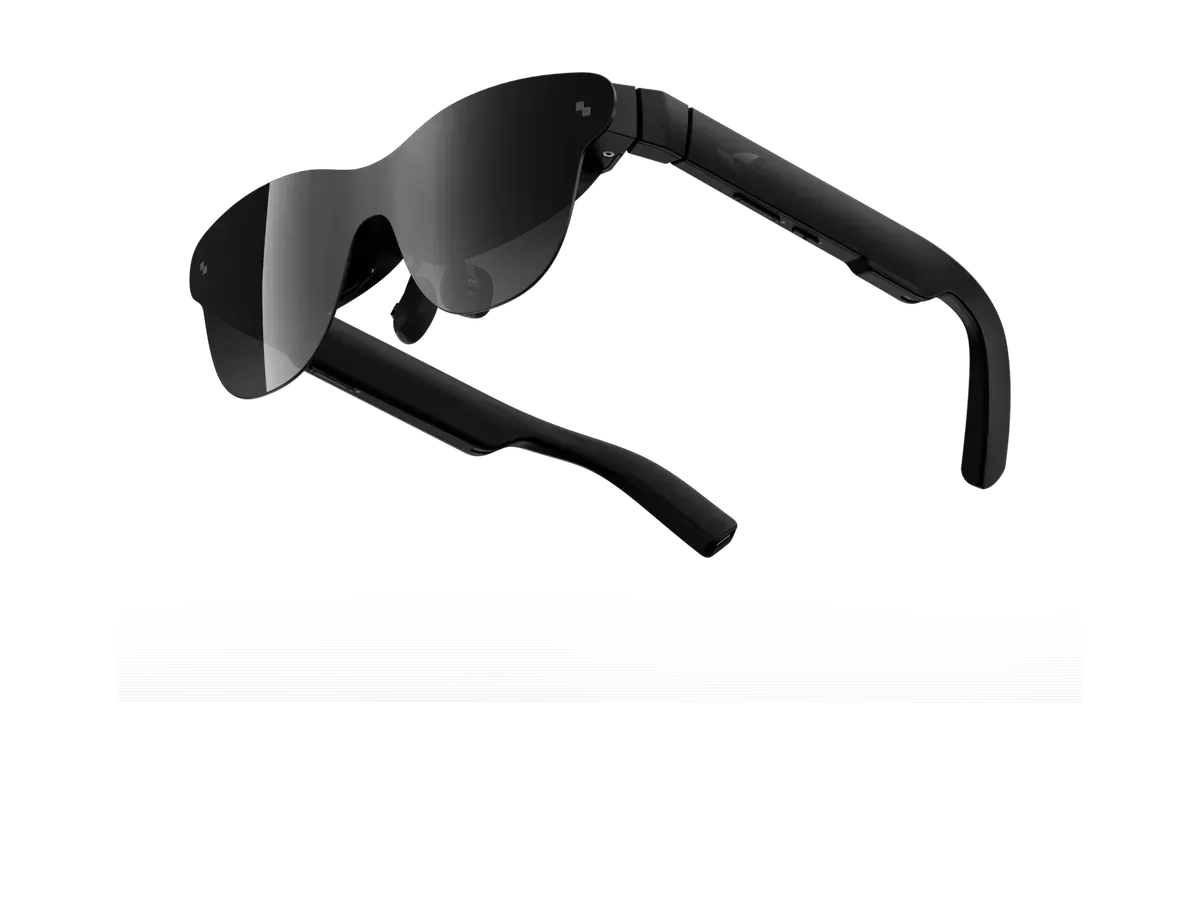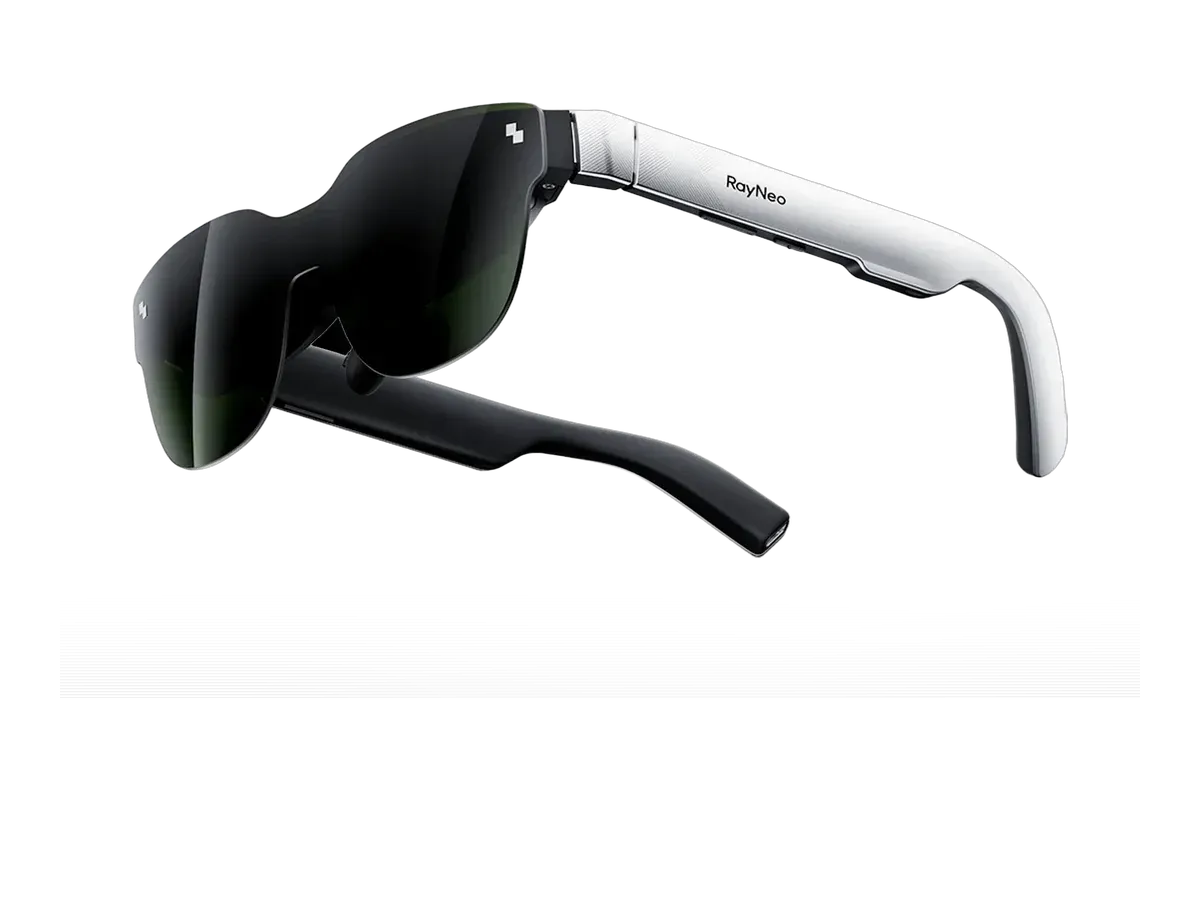
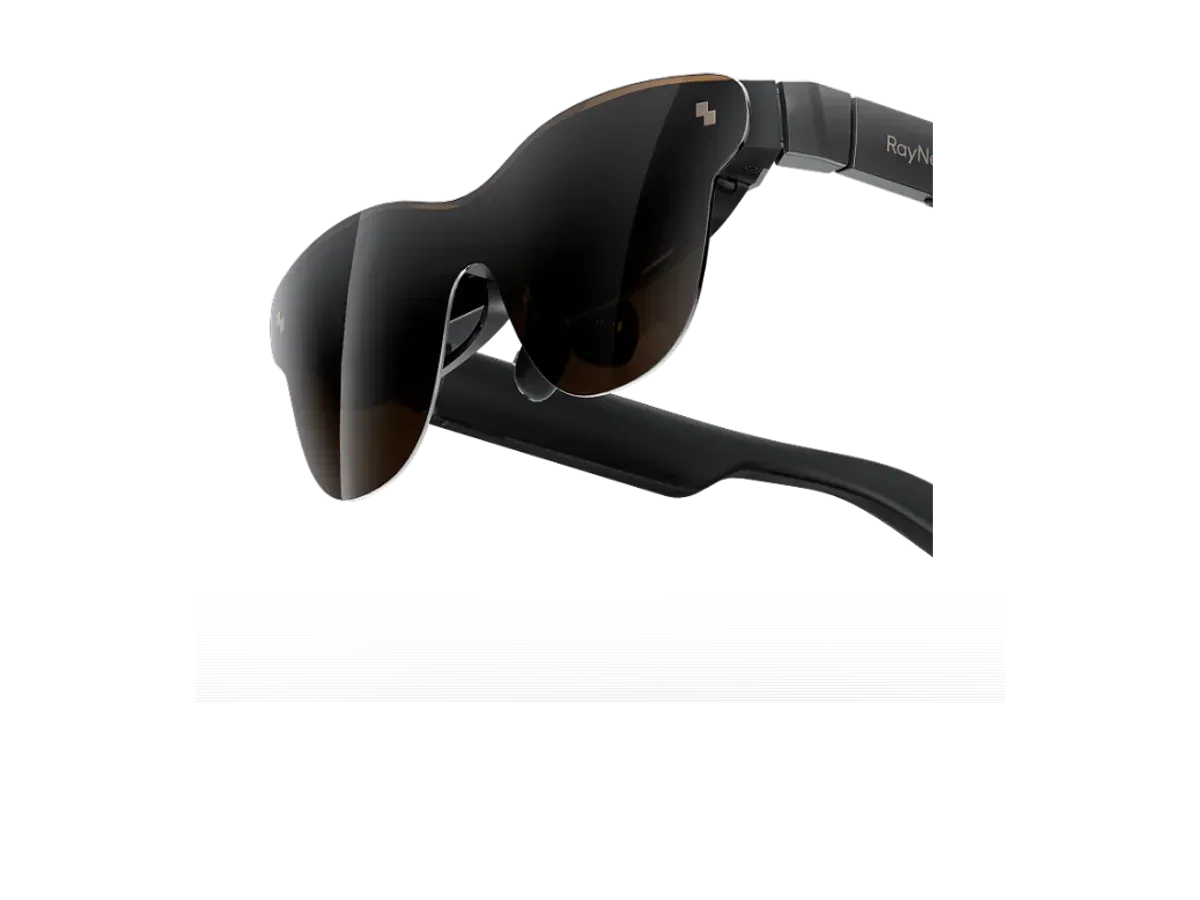
RayNeo
Why it ranks here:
- $149 price (+25)
- 46° field of view (+18)
- 600 nits brightness (+10)
- 76g weight (+5)
- 120Hz refresh rate (+5)
- prescription lens support recorded (+4)
- built-in speakers (+3)
Best of
Every pick is $300 or less. Ranked by what each dollar buys.
Product data last updated
You do not have to spend flagship money for a capable pair of AR or smart glasses. Every product ranked here is available now at $300 or less, and the score rewards price-performance: the display, clarity, brightness, comfort, and battery that decide whether a sub-$300 pair is worth owning. Prices come straight from our catalog, so the ranking re-sorts the moment they move.
Our top pick for AR Glasses Under $300 is the RayNeo Air 2 at $149.
Three hundred dollars is where AR and smart glasses stop feeling like a compromise. It comfortably covers current-generation tethered display glasses — the kind that plug into a phone, laptop, or handheld over USB-C for a large private screen — as well as the more serious AI and audio frames worn like everyday sunglasses. Decide which of those you actually want before you compare models: a big-screen display pair and a camera-and-assistant pair solve completely different problems, and the ranking below scores each against the specs its own job demands.
This page answers a price-point question — what is the most you should expect from AR glasses at or below $300 — so it leads with the ceiling and ranks purely on price-performance. If you are shopping the category rather than a hard number, the budget AR glasses hub sorts the wider sub-$350 field cheapest-first. If your ceiling is tighter, the AR glasses under $200 rung applies the same rubric to the entry tier. For the full field regardless of price, see the best AR glasses of 2026 guide and our best smart glasses picks, and the optics trade-offs behind the picture are explained in birdbath vs waveguide.
Two cautions keep budget buyers happy. Display glasses have no battery or standalone brain: they draw power and video from the device you plug into, so confirm your phone, laptop, or console supports USB-C DisplayPort Alt Mode before buying. And beware no-name display glasses beneath the picks here — they typically ship older LCD panels, narrow fields of view, and brightness too low for a usable image, which is exactly where the spec floor in this ranking earns its keep. Because every price is read from the catalog rather than typed onto this page, the cheapest-first ladder further down never goes stale, and each entry links straight to its buy options.
Every eligible product is scored on the recorded specs below. Missing data scores zero — we never guess a value. Points shown next to each pick add up to its total score.
RayNeo
Why it ranks here:
Rokid
Why it ranks here:
XREAL
Why it ranks here:
RayNeo
Why it ranks here:
RayNeo
Why it ranks here:
RayNeo
Why it ranks here:
22 budget picks, sorted cheapest first — from $149 to $299. Every price is pulled from our catalog, and each pick links straight to its buy options.
Close on price? Settle it spec-by-spec.
Buy the Rokid Max if…
Buy the Rokid Max if you want the wider 50° field of view (vs 46°).
Under $300 you can buy tethered display glasses that give you a big private screen for movies, gaming, and a virtual monitor, or AI and audio glasses worn like regular frames. This page ranks every available pair at or below $300 on price-performance and links each straight to its current buy options, so you can shop to your ceiling and see exactly what each dollar buys.
For the right job, yes. Sub-$300 display glasses deliver a genuine big-screen experience, though they draw power and video from the phone, laptop, or console you plug into rather than working on their own. Sub-$300 AI and audio glasses trade the screen for a voice assistant, open-ear sound, and all-day wear. The score breakdown on each pick shows what it actually delivers.
Most display glasses in this price range are tethered: they have no battery or standalone processor and rely on a USB-C DisplayPort connection to your device. AI and audio glasses run on their own battery. Each pick records its connectivity in the score breakdown, so confirm your device is supported before buying.
Spending more usually buys a wider field of view, brighter panels, higher refresh rates, and extras like electrochromic dimming or built-in diopter adjustment. Under $300 you get the core experience; the ranking rewards the pairs that come closest to the flagships on the specs that matter most for the money.
Provenance: use case derived from the under-$300 price-point buying question; scope is purchase-priced AR and smart glasses at or below $300. Rankings are computed from recorded product specs only.