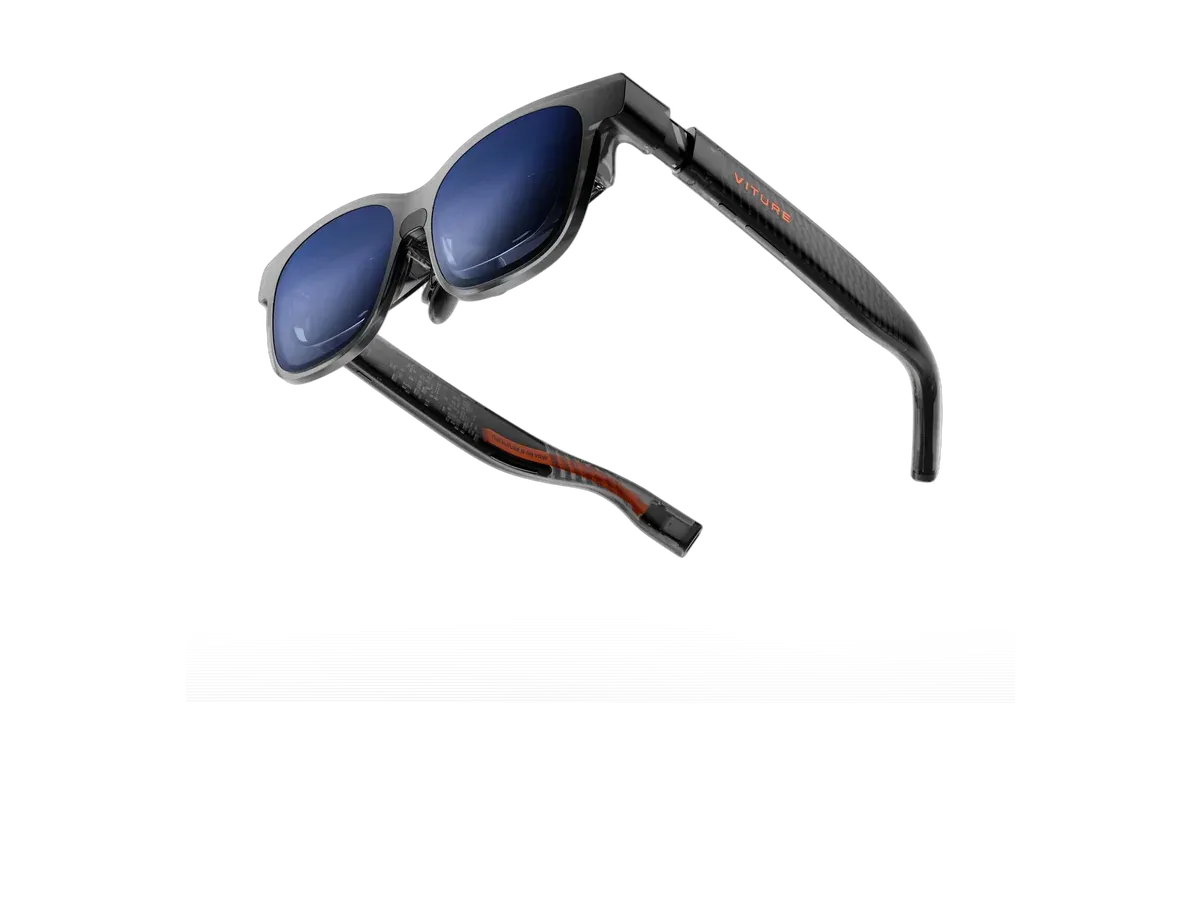
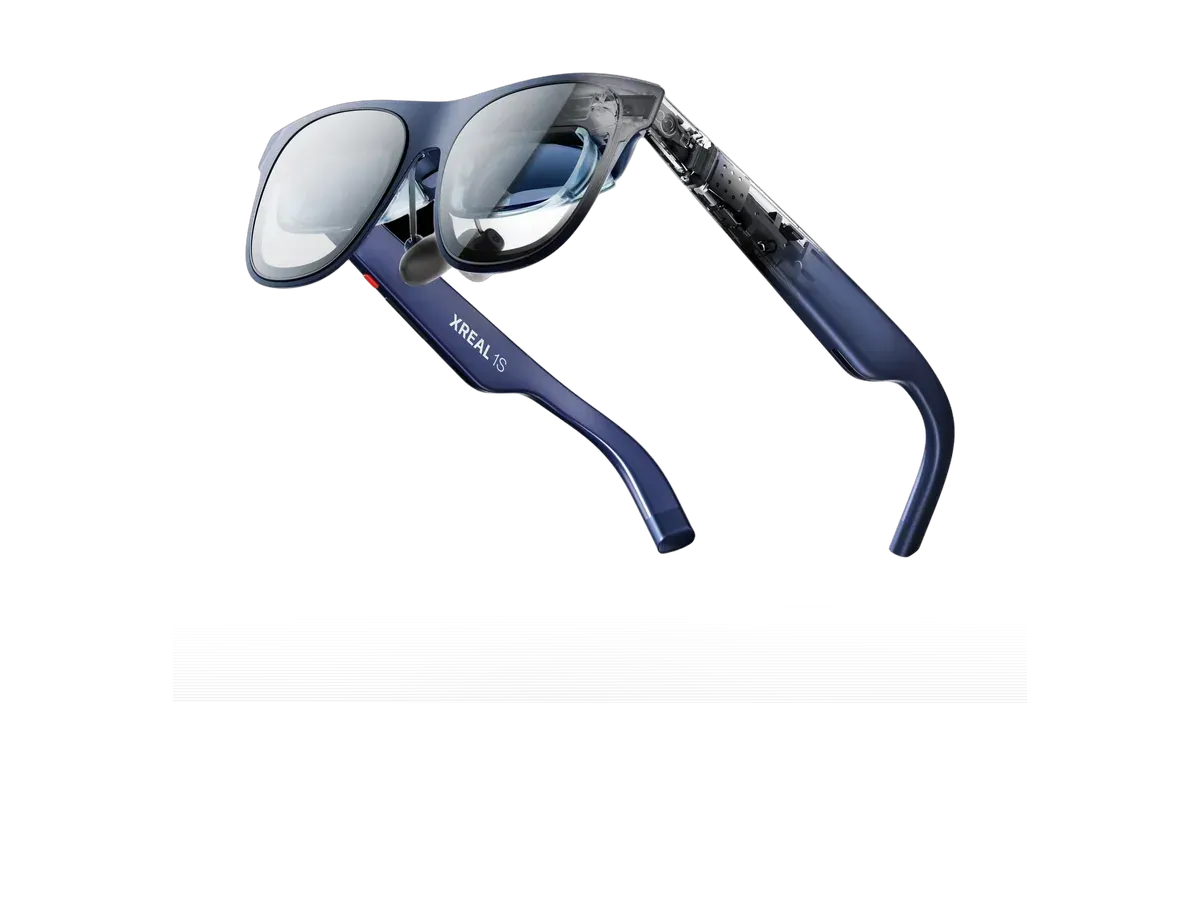
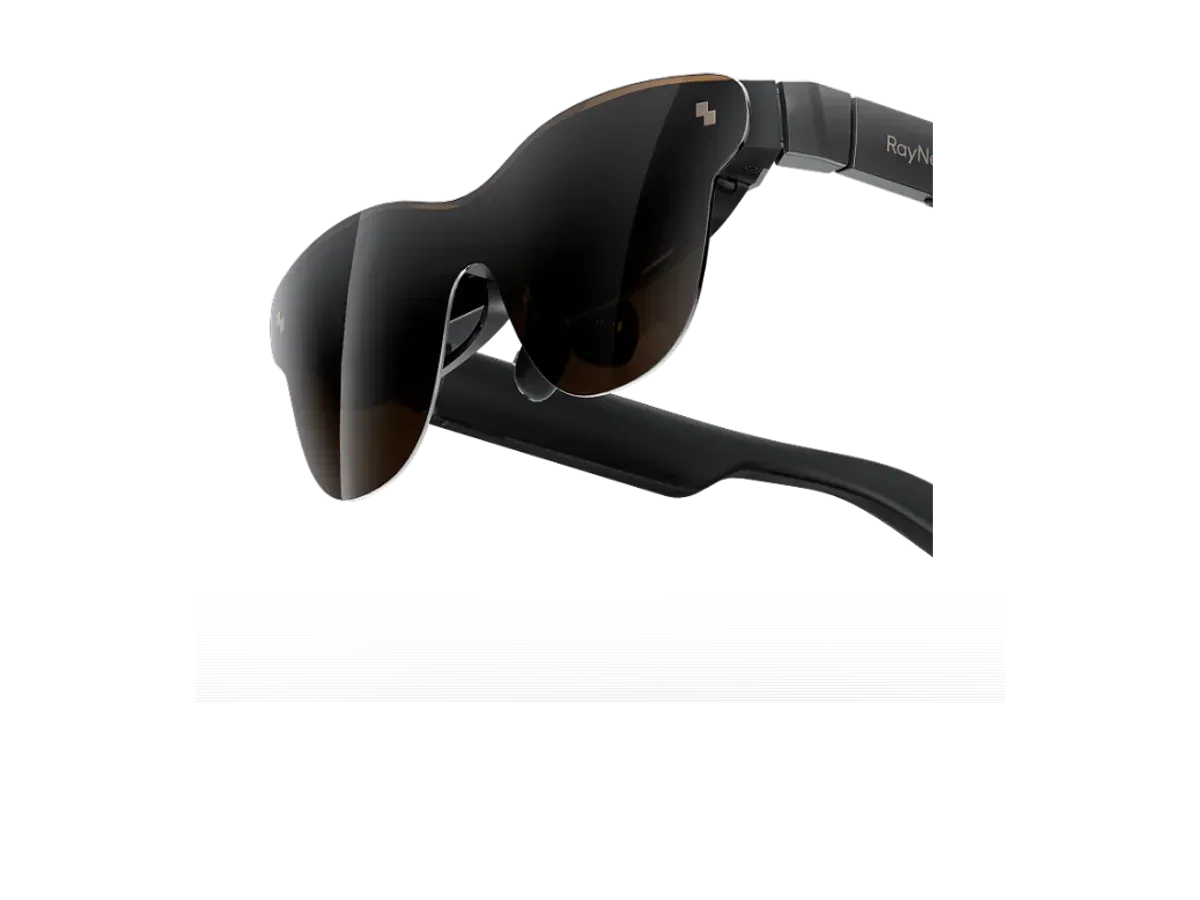
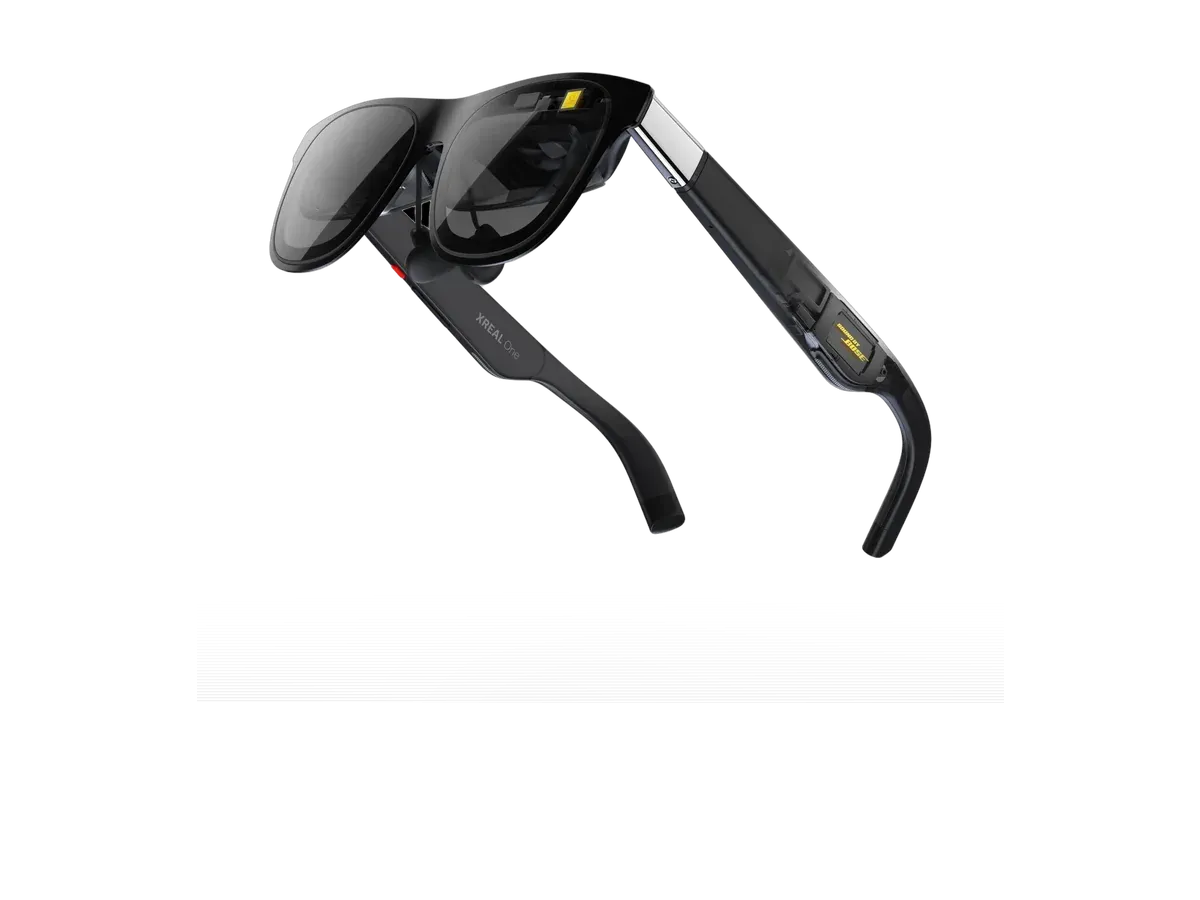
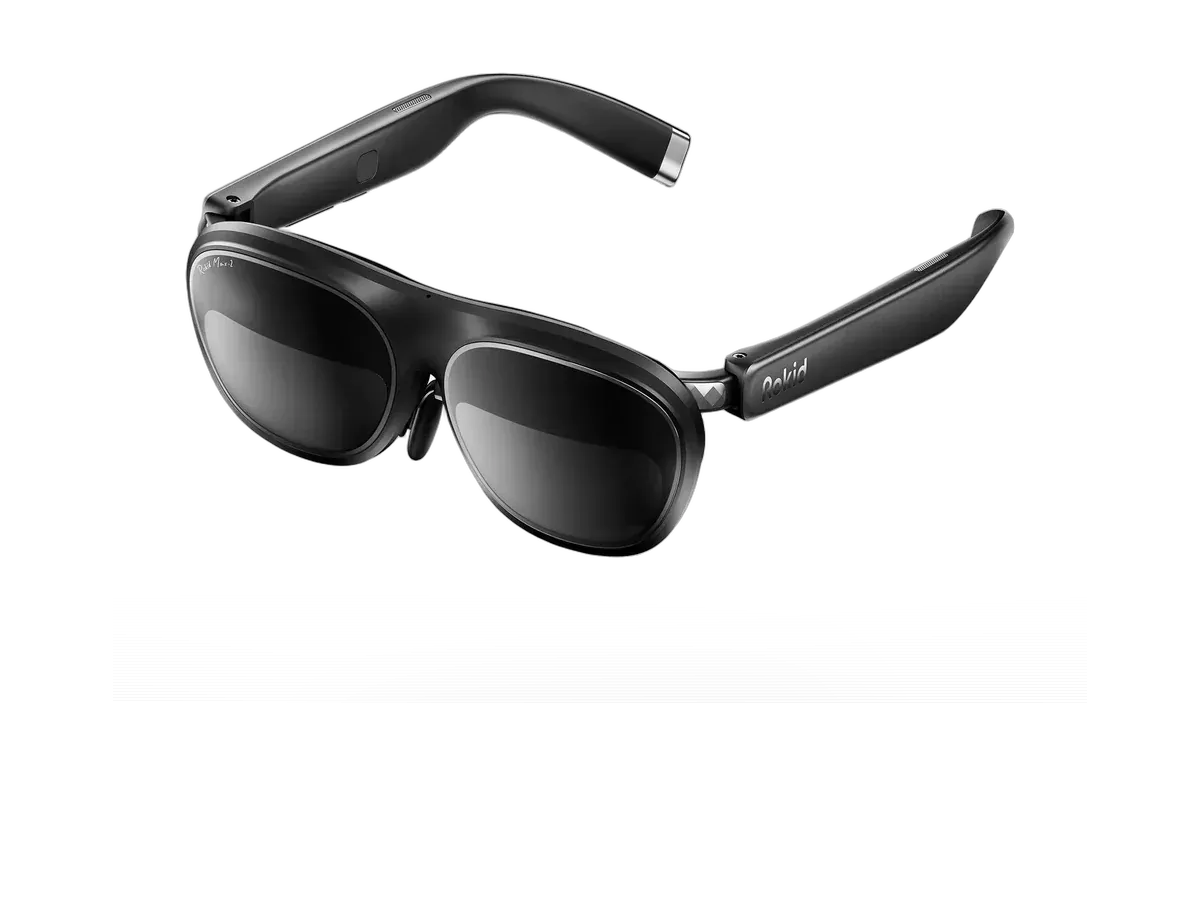
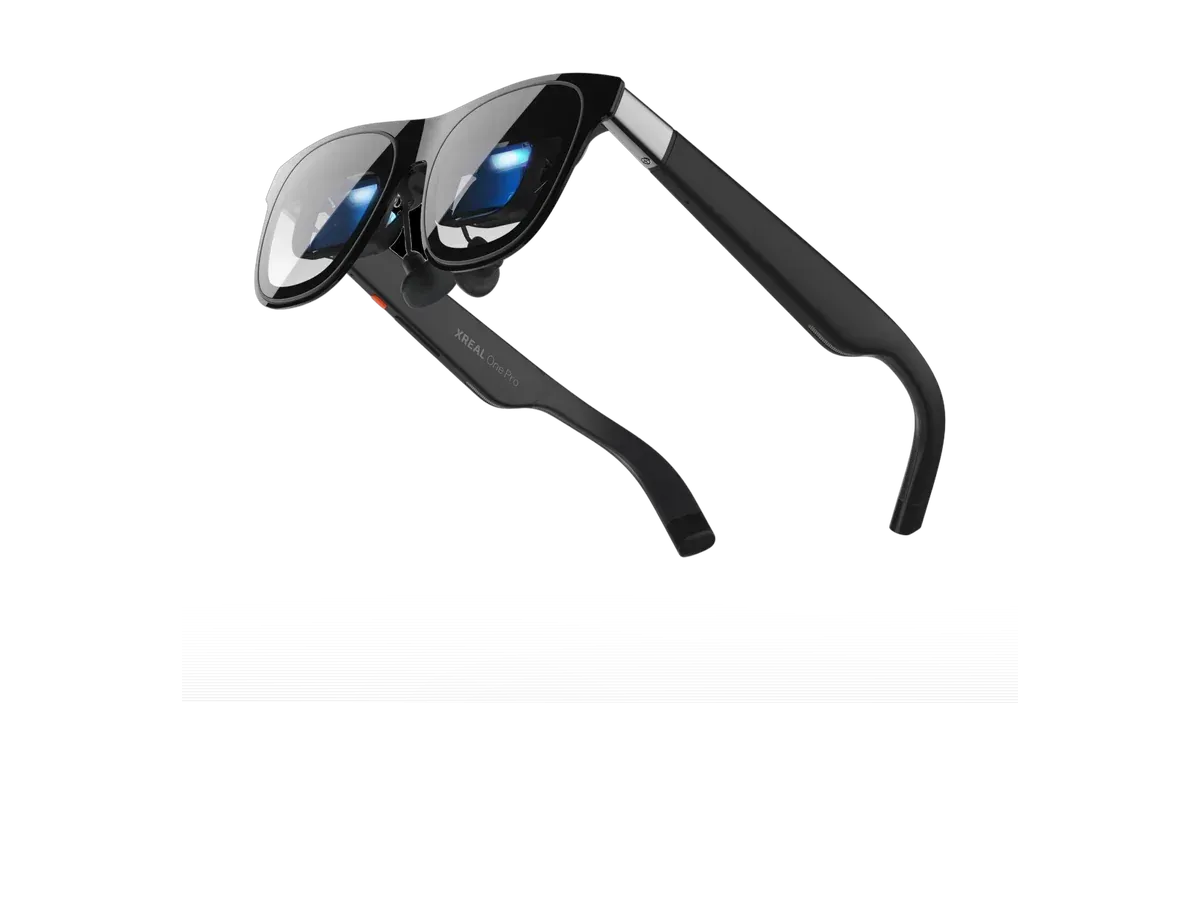
The pitch for watching movies on glasses is simple and, for once, true: a screen that feels enormous, that nobody else can see, that fits in a coat pocket. The economy seat becomes the best seat in the house, the hotel room stops mattering, and the last hour of a long-haul flight belongs to you instead of the seatback catalog. What the pitch leaves out is that the experience lives or dies on four recorded specs — field of view, lens dimming, weight, and sound — and that the models at the top of this ranking earn their places on exactly those numbers. This page ranks every display-carrying pair in the database for the watching-and-travel job specifically; the wider category, scored for all jobs at once, lives on the display glasses ranking, and the plain-language tour of the movie-watching class is the big screen glasses guide.
What makes a movie feel like cinema instead of a phone
Field of view does. It is the recorded angle the picture fills in your vision, and it is the difference between “watching a screen” and “being at the movies.” The mid-40s in degrees reads like a big living-room TV; push higher and the picture starts to wrap into your peripheral vision the way a proper cinema screen does. Manufacturer screen-size claims — the 100-inch, 200-inch numbers on every box — are marketing translations of that same angle against an imaginary distance, which is why this ranking scores the degrees and shows you the recorded spec instead. One honest caveat belongs up front: a wide field of view flatters video far more than it flatters text. If your travel hours are split between films and a laptop screen, you are shopping across two jobs, and the work half of that decision has its own criteria — different enough that it is a different page, not a paragraph here.
Dimming is the travel spec nobody tells you about
A cabin at cruising altitude with the shades up, a train window strobing through trees, a bright hotel room at noon: travel is a hostile lighting environment, and a see-through display fights every photon behind it. That is why recorded lens dimming carries real weight in this ranking. Electrochromic dimming — lenses that darken on demand — lets the same glasses work as a private cinema in a sunlit window seat and stay transparent when you need the world back for the drinks cart. Without dimming, you are betting on raw brightness alone, and the recorded nits figure becomes the number to check: comfortable in dim cabins at the low end of the class, genuinely daylight-usable only toward the high end. A cheap pair of clip-on shades over clear lenses is the field workaround some travelers use, but it is exactly the kind of friction the dimming spec exists to remove. The combination worth hunting for a lot of travel is high recorded brightness plus dimming; the ranking rewards both, and each pick’s breakdown shows which one is doing the work.
Weight math for a full film
Glasses that are pleasant for a trailer can be a headache by the third act — literally, if the nose pads are carrying too much. The class clusters in a narrow band of grams, but the band matters: at the light end you finish a film and forget you are wearing hardware, at the heavy end you start adjusting and repositioning around the ninety-minute mark. This ranking scores recorded weight on a tighter curve than the general display ranking precisely because the watching job means long, unbroken sessions. Two adjacent specs earn their points for the same reason. A foldable design decides whether the glasses live in your bag or get left home — travel gear that does not travel is a contradiction — and recorded spatial audio decides whether sound stays believable when you turn your head, which matters more in a seat you cannot rearrange. For the gram-by-gram view of the whole catalog, the lightest smart glasses ranking sorts on that single axis.
The streaming reality, honestly
Display glasses in this class are screens, not computers: whatever plays on the device at the other end of the cable — phone, tablet, laptop, handheld — is what you watch. That is mostly good news, because it means your existing apps, accounts, and downloads generally carry over, and the airplane-mode downloads you made at the gate play as they would on the phone itself. The fine print worth knowing involves copy protection: some streaming apps treat glasses as an external display and apply the same rules they would to a TV cable, which can affect resolution or playback on some host-and-app combinations. The practical advice — and the per-service detail, including the offline-download pattern that sidesteps most of it — lives in the big screen glasses guide, which keeps this page evergreen while the app policies churn. The short version: downloads before departure are the reliable path, and the glasses are only ever as capable as the device feeding them.
Watching in bed, on planes, and other impossible places
A recurring reason people arrive at this page is positional: wanting to watch lying down, flat on a pillow, without holding a phone above their face or craning at a wall TV. Display glasses solve this in the most direct way possible — the screen is attached to your head, so it goes where your gaze goes, at any angle, in the dark, silently. The same property is what makes them work in a middle seat with no seatback screen, on a night bus, or in a shared room where a lit TV would be rude. It is a genuinely different tool from propping a tablet on your chest, and for a lot of buyers it is the single feature that justifies the purchase. If your travel is gaming-shaped rather than film-shaped, the same head-anchored screen logic applies with a controller in hand — the gaming on a plane guide and the gaming ranking cover that fork of the decision.
How to choose from this page
Name your dominant scenario and let it order the specs. Mostly planes and trains: dimming first, then field of view, then weight. Mostly bed and sofa: field of view first, weight second, dimming barely matters in the dark. Split between watching and working on the road: read this ranking alongside the display category page and favor sharpness over size. Then check the pick’s recorded host compatibility against the actual device you travel with — the cable only carries a picture if the host can send one — and if you are torn between two finalists, compare them side by side on the same recorded data this ranking is built from. Every score on this page recomputes when the database changes, which is why the list below never quietly disagrees with the spec sheets it cites.