Camera Glasses & Smart Glasses with a Camera: 2026 Guide
By AR Compare Team ·
Camera glasses, recording glasses, smart glasses with a camera — whichever name you searched, this is the same product category: eyewear that captures photos and video hands-free, from the first-person angle a phone can never reach, and increasingly feeds that view to an AI that can read a menu, identify a landmark, or translate a sign in real time. This guide covers every model in our database with a built-in camera, compared on the specs that decide whether the camera is worth wearing: resolution, video capability, battery, and — because a camera on your face is a social object as much as a technical one — the recording indicator each maker documents. If the assistant matters more to you than the lens, the best AI smart glasses hub ranks these frames on assistant hardware; if you want a screen in your view, see smart glasses with a display.
Camera quality varies enormously across smart glasses. Some deliver sharp 12MP photos that rival a decent smartphone; others offer grainy, low-resolution captures barely suitable for social media stories. The picks below separate the models that deliver on wearable photography and AI vision from the ones that do not, and every claim is grounded in the recorded camera specs on each product’s page.
Jump to the camera table, the ranked picks, video recording, camera sunglasses, POV capture, livestreaming, the recording-light answer, camera-free alternatives, or the bottom line.
Which smart glasses have a camera?
Every available model in our database that records a built-in camera — 22 of them, with the resolution field quoted exactly as recorded, a dash where no price is recorded, and the recording indicator each maker documents (as of 2026-10-06):
| Product | Cameras | Recorded resolution | Recorded price | Recording indicator |
|---|---|---|---|---|
| Almer Arc 2 AR Glasses | 1 | 25MP | — | Not documented |
| Brilliant Labs Halo AI Glasses | 1 | 640x480 (0.3MP, global shutter) | $399 | Not documented |
| DigiLens ARGO Smart Glasses | 1 | 48MP | — | Not documented |
| HTC Vive Eagle | 1 | 12MP, up to 3K (2176x2944) vertical video @ 30fps | $499 | Auto-brightness LED — refuses to film if obscured |
| Meta Adventurer | 1 | 12MP, up to 3K video | $299 | White capture LED — camera disables if covered or tampered |
| Meta Fury | 1 | 12MP, up to 3K video | $299 | White capture LED — camera disables if covered or tampered |
| Oakley Meta HSTN Performance AI Glasses | 1 | 12MP | $399 | White capture LED — camera disables if covered or tampered |
| Oakley Meta Vanguard | 1 | 12 MP ultra-wide (122° FOV), 3K video | $499 | White capture LED — camera disables if covered or tampered |
| Meta Ray-Ban Display | 1 | 12 MP, 1440x1920 video @30fps, 3X zoom | $799 | White capture LED — camera disables if covered or tampered |
| Ray-Ban Meta AI Glasses (Gen 1) | 1 | 12MP | $224 | White capture LED — camera disables if covered or tampered |
| Ray-Ban Meta Gen 2 | 1 | 12MP | $379 | White capture LED — camera disables if covered or tampered |
| Ray-Ban Meta (Gen 3) | 1 | 12MP, 3K Ultra HD video | $449 | Not re-verified on the launch pages (Meta’s camera family documents a white capture LED) |
| RayNeo X3 Pro | 2 | 12MP | $1299 | Front LED — solid for photo, blinks for video |
| RealWear Navigator 520 | 1 | 48MP | $3150 | Not documented |
| Rokid AI Glasses Style | 1 | 12MP Sony IMX681, up to 3K video @ 30fps (10-minute clips) | $299 | Indicator light — recording stops if blocked |
| Rokid Glasses (2025 consumer AI+AR glasses) | 1 | 12MP | $699 | Indicator light — recording stops if blocked |
| Snap Spectacles Gen 5 | 2 | 12MP | — | LED ring circles while recording |
| Solos AirGo Vision Smart Glasses | 1 | — | $299 | Not documented |
| TCL RayNeo X2 | 1 | 16MP | $499 | Not documented |
| Vuzix M400 Smart Glasses | 1 | 12.8MP | $1499.99 | Not documented |
| Xiaomi AI Glasses | 1 | 12MP | $280 | Not documented |
| XREAL Beam Pro | 3 | Dual 50MP (3D spatial, f/2.2) + 8MP front | $199 | Not documented |
* Table notes: resolution strings are quoted verbatim from each product record, so the level of detail varies by what each maker publishes. The XREAL Beam Pro is the one non-eyewear entry — a companion handheld whose dual 50MP cameras capture spatial photos and video for XREAL glasses. Prices are the recorded current prices in our database; live prices move, so check the product page before buying.
Beyond the five ranked picks below, the table holds several models worth a look on their own pages: Meta’s own-brand Meta Adventurer and Meta Fury put the same recorded 12MP camera and 8-hour battery as the Ray-Ban line into cheaper $299 frames; the Oakley Meta HSTN wraps that platform in a $399 lifestyle frame; the Rokid Glasses pair a 12MP camera with a waveguide display at $699; the Xiaomi AI Glasses are the budget 12MP entry at a recorded $280; and the original Ray-Ban Meta Gen 1 stays on sale at a recorded $224 for buyers who want the Meta camera formula at the lowest price.
Can smart glasses take photos and record video?
Yes — that is the point of the category. Every model in the table above records a built-in camera, with recorded resolutions running from a 0.3MP computer-vision sensor to 48MP, and where a maker publishes a video spec it appears in the resolution string verbatim. Not all smart glasses cameras are equal, though. Here is what separates the good from the mediocre:
Camera Specs That Matter
Resolution: 12MP is the current standard for quality stills. Below 8MP produces noticeably soft images.
Field of View: Wider camera FOV captures more of the scene. 120+ degrees is ultra-wide. 90-100 degrees is standard.
Video: 1080p minimum for shareable video. 30fps is standard; 60fps is better for action. Some support 4K.
AI Integration: The camera’s value multiplies when paired with AI that can understand what it sees.
Privacy Indicator: An LED that signals when the camera is active. Essential for social acceptance.
A critical consideration: smart glasses with cameras raise privacy concerns. Social acceptance varies by context, and understanding when and where camera glasses are appropriate is part of responsible ownership — the recording-light section covers what each maker documents.
What video can camera glasses actually record?
The honest answer from the recorded specs: good 3K, not cinema. The Ray-Ban Meta Gen 2 records the highest video mode in our database — 3K Ultra HD at up to 60 frames per second — and the rest of the Meta platform sits just behind it: the Oakley Meta Vanguard, Meta Adventurer, and Meta Fury all record 3K video, and the Meta Ray-Ban Display records 1440x1920 at 30fps with 3X zoom. Outside the Meta family, the HTC Vive Eagle records vertical 3K (2176x2944) at 30fps — a portrait mode aimed squarely at short-form video — and the Rokid AI Glasses Style records 3K at 30fps in clips capped at 10 minutes. The RayNeo X3 Pro tops out at 1440p video despite its 4K still photos, a distinction worth knowing before you buy it as a video device.
Three practical limits the spec strings imply but marketing never leads with. First, clip length: glasses this small manage heat and battery by capping recordings — the Rokid’s recorded 10-minute clip limit is typical of the class, not an outlier. Second, battery: a recorded 8-hour battery life is a mixed-use figure, and continuous video capture drains far faster on every model here. Third, framing: there is no viewfinder on most of these, so you are trusting the camera’s field of view to match your head position — one reason the ultra-wide lenses (the Vanguard’s recorded 122-degree camera) are genuinely useful rather than a spec-sheet flex.
Do any camera glasses record true 4K?
No model in our database records a true 4K video mode. The recorded ceiling is 3K — the Ray-Ban Meta Gen 2’s 3K Ultra HD at up to 60fps — and the RayNeo X3 Pro, which markets 4K photography, documents 4K for still photos only while its video tops out at 1440p. Listings that advertise “4K camera glasses” at bargain prices are overwhelmingly no-name imports whose claims no maker documentation supports, from a corner of the market this page deliberately excludes (our stance). If 4K video on your head is the requirement, an action camera still owns that job in 2026.
What are the best smart glasses with a camera in 2026?
Five picks, each the strongest at one way of using a face-mounted camera — everyday capture, sports, AR effects, privacy control, and professional spatial work. Every claim below is grounded in the recorded specs on each product’s page.
Best Camera Smart Glasses Overall: Ray-Ban Meta Gen 2
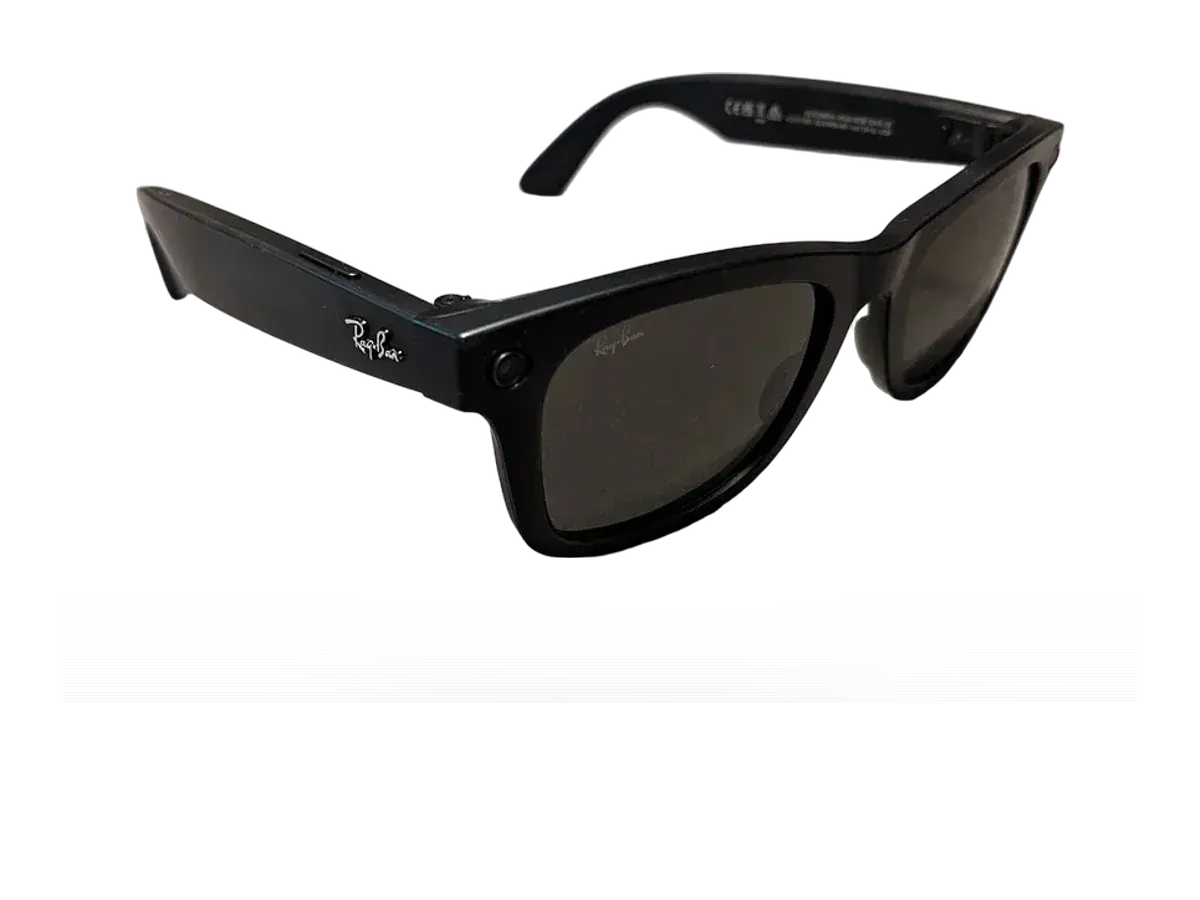
Ray-Ban Meta Gen 2
Meta · $379
A recorded 12MP camera with Meta AI visual understanding that lets you ask about anything you see, a recorded 8-hour battery, and genuine Wayfarer styling that means you will actually wear them.
The Ray-Ban Meta Gen 2 wins this category because it combines strong camera hardware with the best camera software in a package people actually want to wear on their face. The recorded 12MP sensor sits at the top of the mainstream field, and the pairing with Meta AI is what separates it from cameras with similar numbers.
But the hardware is only half the story. Meta AI’s visual understanding capabilities transform the camera from a simple capture device into an intelligent vision system. Point the glasses at a menu in a foreign language and get instant translation. Look at a landmark and ask for its history. Show the AI a plant and get species identification. Glance at a product on a shelf and get price comparisons. These AI vision features work well enough in practice to feel useful rather than gimmicky.
Photo quality is solidly good. In good lighting, the recorded 12MP sensor produces sharp, well-exposed images with accurate colors. Low-light performance is acceptable but not exceptional — smartphone cameras still have a significant advantage in dark conditions. Our record for the Gen 2 lists the camera simply as 12MP; Meta publishes no video spec we have recorded, so check the product page for the current recorded detail.
The white LED recording indicator is small but visible, meeting the minimum social contract of signaling when the camera is active. Recorded battery life is 8 hours, double the original Gen 1’s recorded 4 — enough that the camera, not the battery, is usually the reason you reach for your phone.
At $379, the Ray-Ban Meta Gen 2 undercuts most of the display-equipped competition while carrying the strongest camera-plus-AI package, making it the easy recommendation for anyone who wants to add a camera to their face without spending a fortune.
Best for Sports and Action: Oakley Meta Vanguard
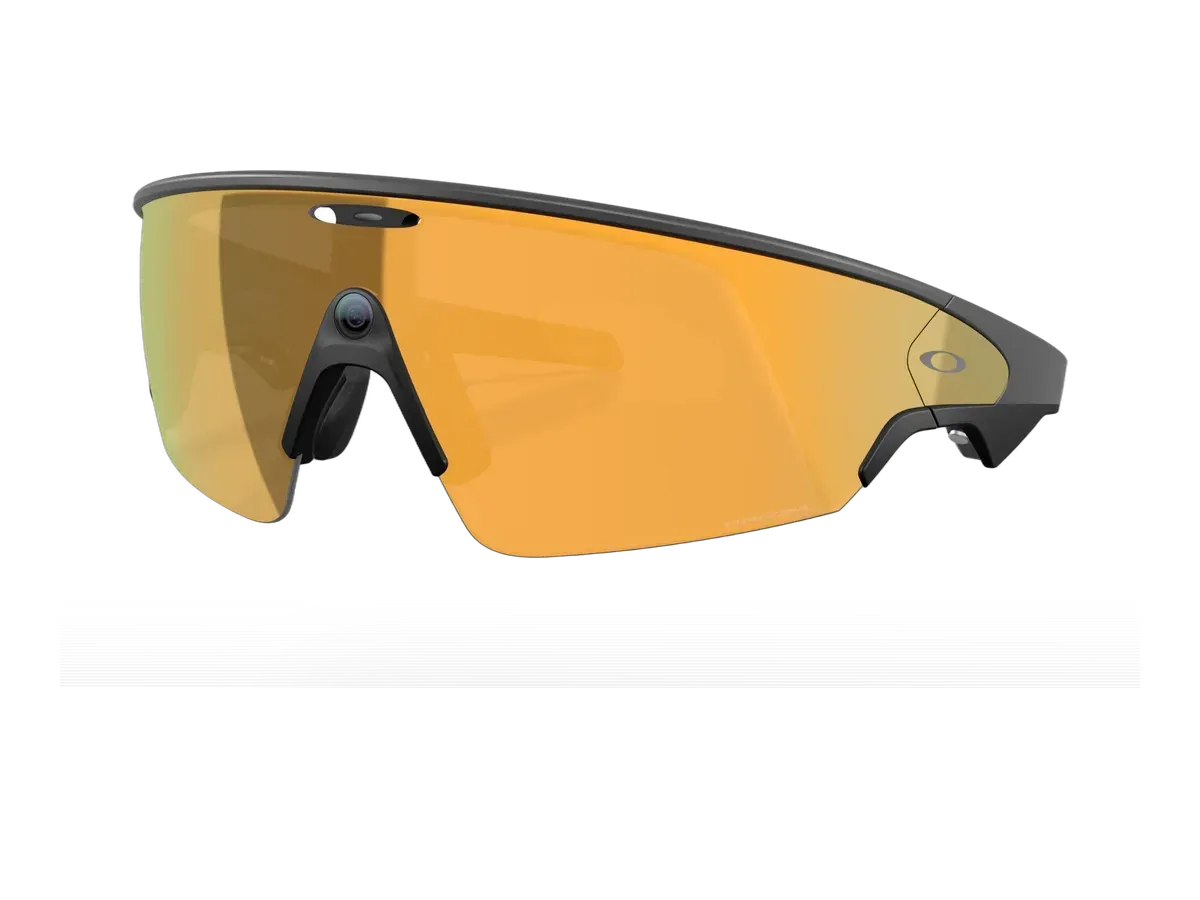
Oakley Meta Vanguard
Oakley · $499
The same 12MP camera and Meta AI platform as the Ray-Ban Meta Gen 2, but in an IP67-rated sport shield form factor. Five wind-resistant mics and 122-degree ultra-wide lens are purpose-built for capturing active lifestyles.
The Oakley Meta Vanguard runs on the same Qualcomm AR1 Gen 1 platform as the Ray-Ban Meta Gen 2, which means identical camera specs and identical AI capabilities. What differs is the form factor: the Vanguard uses Oakley’s signature shield design optimized for athletic use.
IP67 water and dust resistance means you can wear these cycling in rain, skiing in snow, or running in dusty trail conditions without worry. The five wind-resistant microphones maintain call and voice command quality at speeds where the Ray-Ban Meta’s mics would be overwhelmed by wind noise. The shield design provides more consistent camera angle during movement compared to traditional glasses frames that shift during activity.
At $499, the Vanguard costs $120 more than the Ray-Ban Meta Gen 2 for essentially the same camera and AI package in a different body. That premium is worth it specifically for athletes and outdoor enthusiasts who need weather resistance and a sport-optimized form factor. For everyone else, the Ray-Ban Meta offers identical camera performance at a lower price.
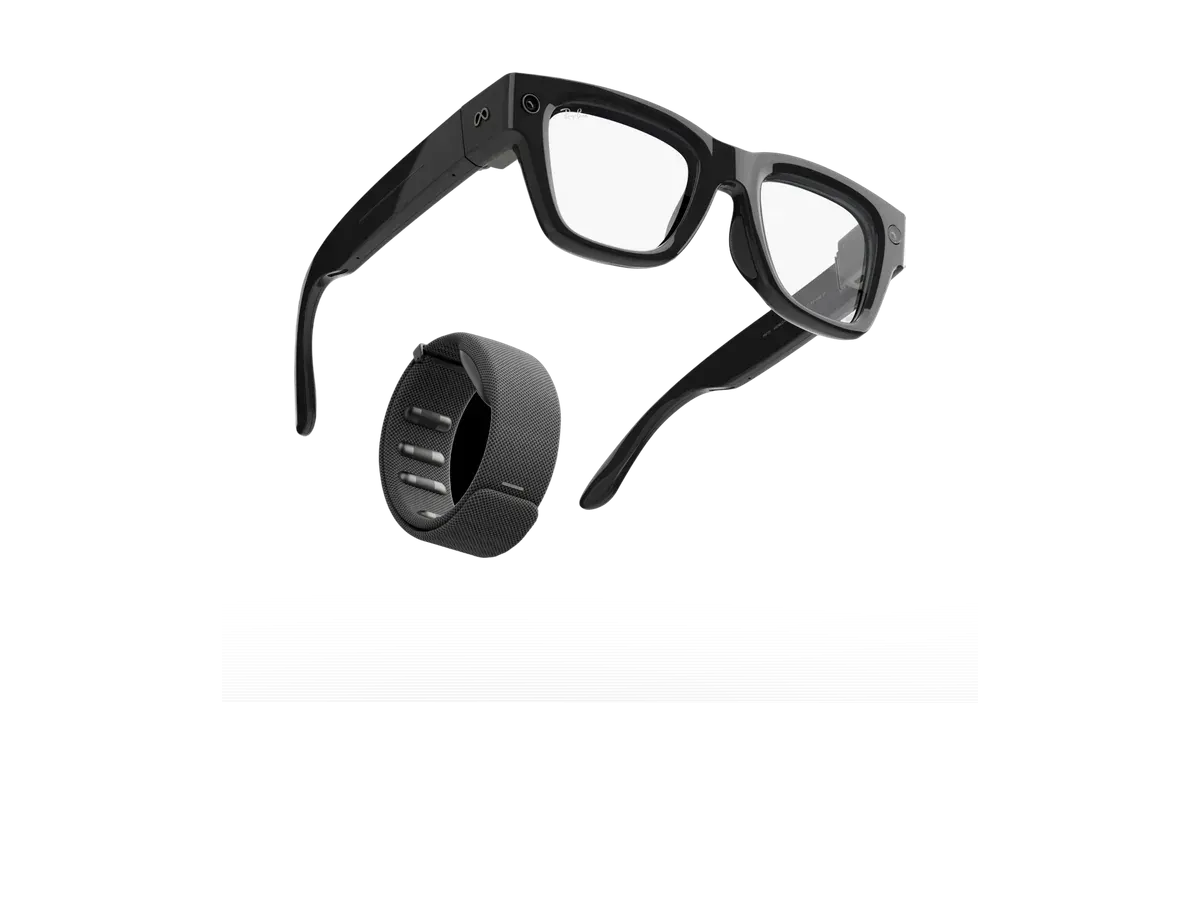
Best for AR Camera Experiences: Snap Spectacles Gen 5
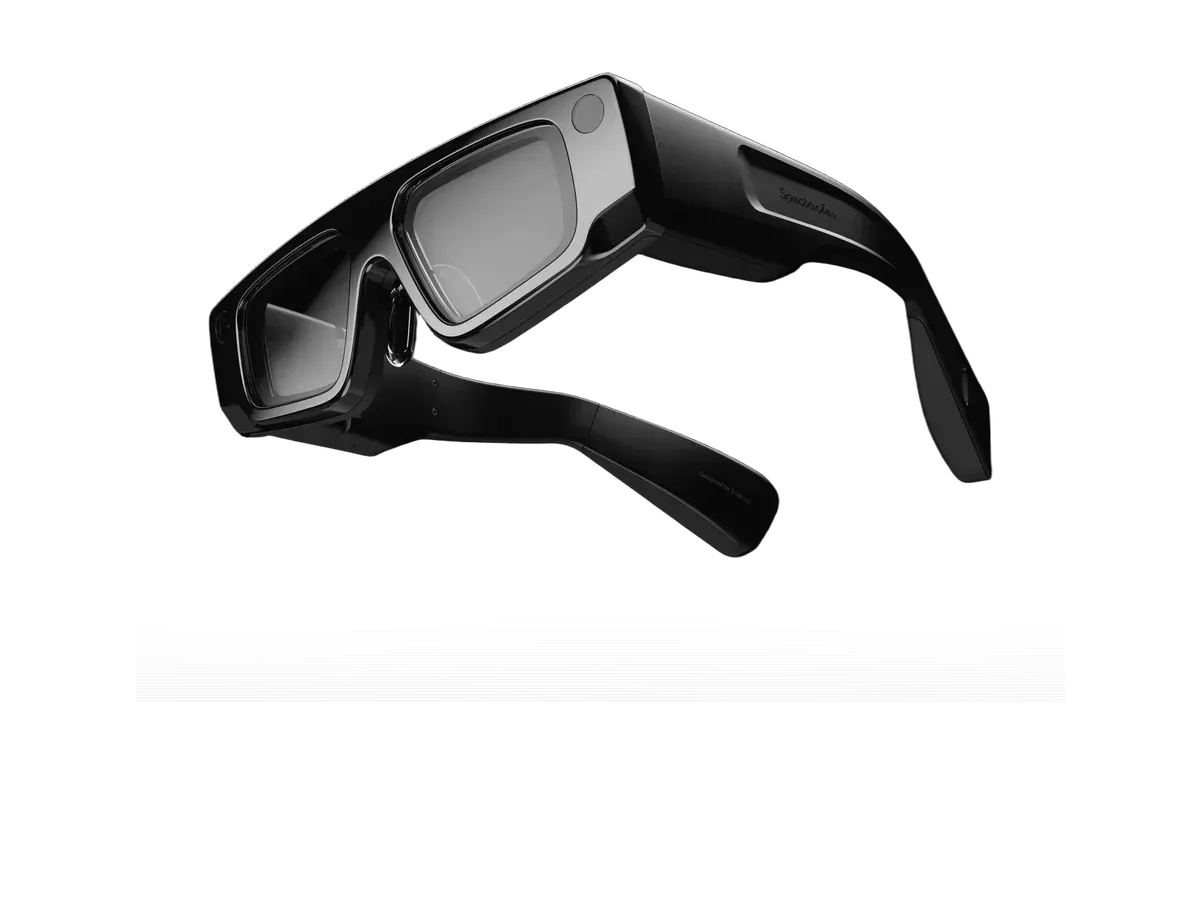
Snap Spectacles Gen 5
Snap
The only camera glasses with true AR overlay capabilities. Dual cameras enable 6DoF spatial tracking and hand gesture recognition, powering what Snap says are 375,000+ AR experiences in its Lens ecosystem.
The Snap Spectacles Gen 5 approaches the camera from a completely different angle than the Meta products. Rather than focusing on traditional photo and video capture, the Spectacles use their dual cameras primarily for spatial understanding — enabling augmented reality experiences that overlay digital content onto the real world.
The 375,000+ AR lenses Snap claims for its Lens Studio ecosystem represent the largest library of camera-powered AR content available on any device — Snap’s own figure, not one we can count. These range from playful face filters to genuinely useful AR tools: measuring spaces, visualizing furniture placement, interactive art installations, and educational overlays that annotate the world around you.
The dual camera setup also enables 6DoF spatial tracking and hand gesture recognition, which means AR content stays anchored in physical space and you can interact with it using natural hand movements. No other consumer smart glasses offer this combination of spatial understanding and content breadth.
The trade-offs are significant for traditional photography. At $99 per month with no purchase option, the subscription model is expensive over time. Battery life is limited to about 45 minutes of active AR use. At 226 grams, extended wear causes discomfort. These are enthusiast and developer devices first, everyday camera glasses second.
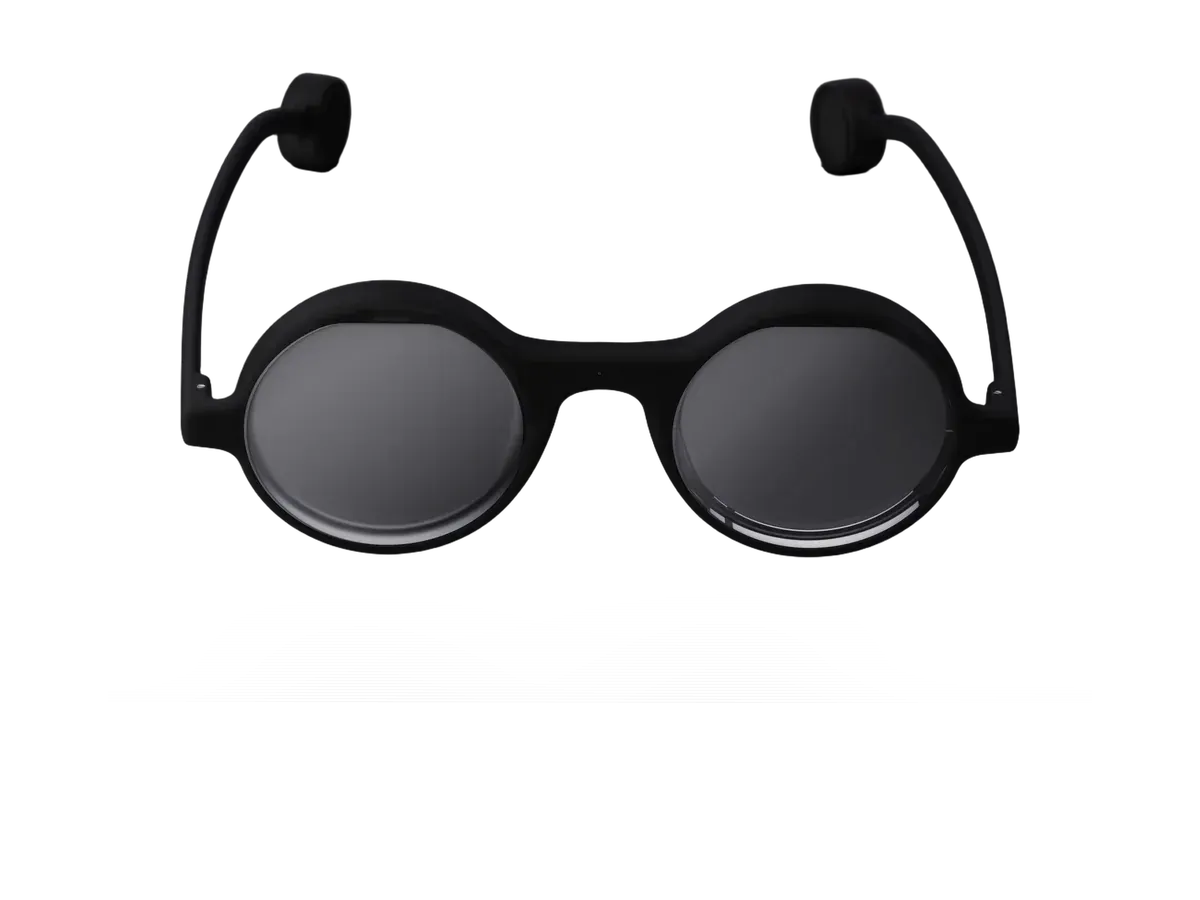
Best Open-Source Camera Glasses: Brilliant Labs Frame
Brilliant Labs Frame
Brilliant Labs · $349
Open-source hardware and software with a 720p camera, color micro-OLED display, and multimodal AI. The only camera glasses where you fully control what the camera data does and where it goes.
The Brilliant Labs Frame takes a fundamentally different approach to camera privacy. As open-source hardware and software, you have complete control over what happens with the camera data. There is no mandatory cloud upload, no social media integration, and no third-party AI processing unless you explicitly configure it.
The 720p camera is not going to win any photography awards, but that is not the point. The camera feeds into a multimodal AI system running on a Nordic nRF52840 MCU with a Lattice FPGA, enabling real-time visual understanding, object recognition, and text reading. The color micro-OLED display shows AI responses directly in your field of view, creating a complete camera-to-display AI loop that more expensive glasses still cannot match.
For developers, researchers, and privacy-conscious users, the Frame offers something no other camera glasses do: transparency about what is happening with your visual data. You can inspect the source code, modify the AI pipeline, and ensure your camera feed stays entirely local if you choose.
At around $349, the Frame is reasonably priced for what is essentially a wearable development platform with a camera. It is not the best choice for casual photography, but it is the best choice for anyone who wants camera glasses they can fully trust and customize.
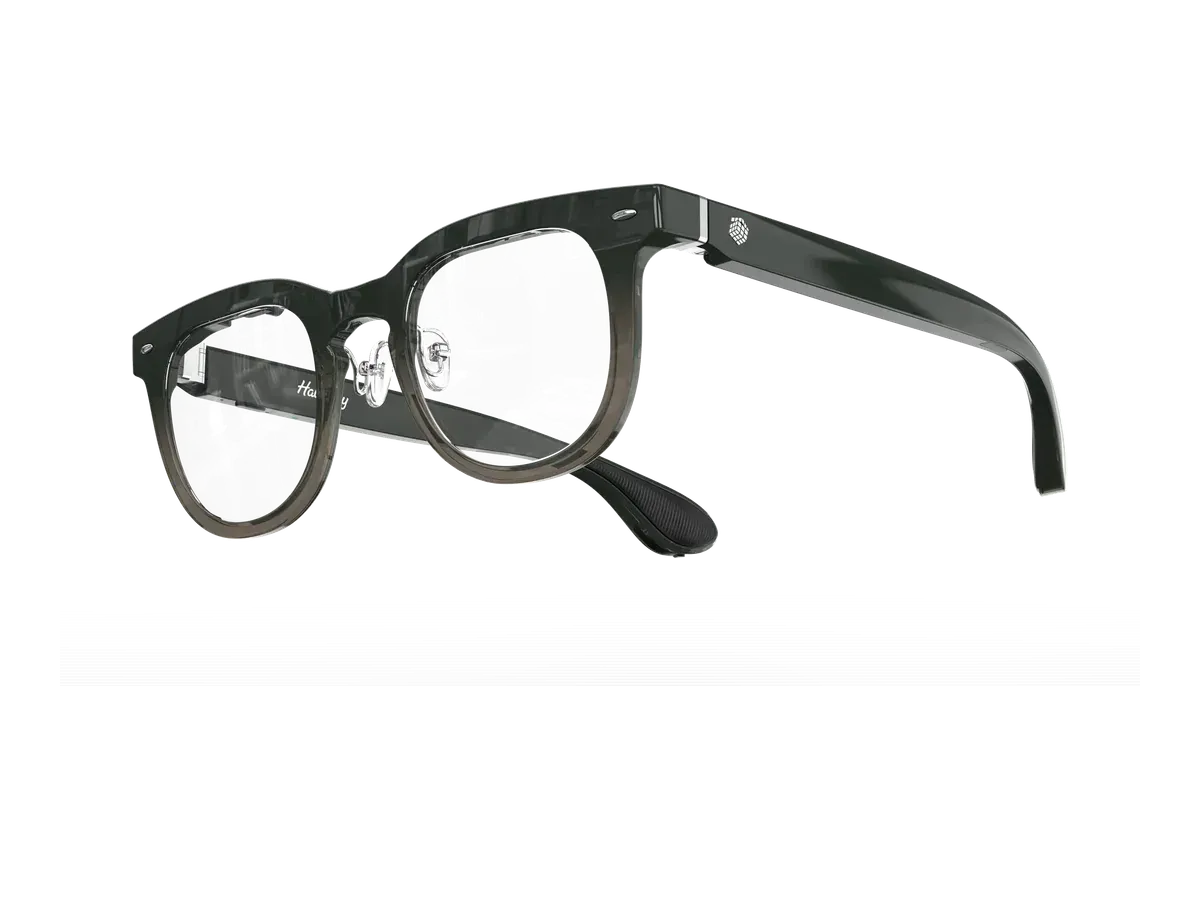
Best Camera for AR Professionals: RayNeo X3 Pro
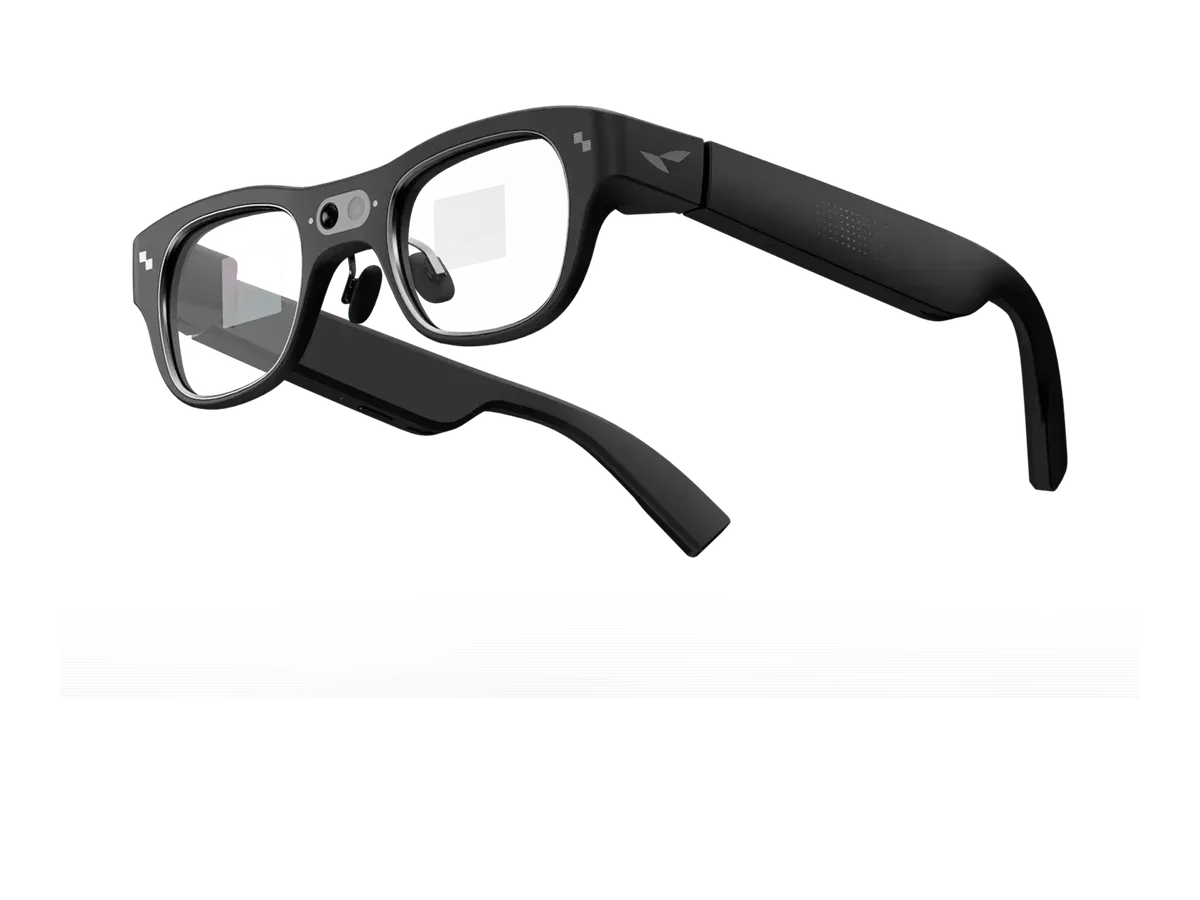
RayNeo X3 Pro
RayNeo · $1,299
12MP Sony IMX681 main camera plus a dedicated B/W spatial camera for depth sensing. Google Gemini AI integration with standalone processing. The most capable camera system in any consumer AR glasses.
The RayNeo X3 Pro features the most sophisticated camera system in consumer AR glasses. The dual-camera setup pairs a 12MP Sony IMX681 sensor (the same sensor rumored for Samsung’s upcoming smart glasses) with a dedicated black-and-white spatial camera for depth sensing and environmental mapping.
This dual-camera architecture enables capabilities beyond simple photography. The spatial camera feeds SLAM (Simultaneous Localization and Mapping) tracking data to the Snapdragon AR1 processor, enabling persistent AR content that stays locked to physical surfaces. Google Gemini AI integration means the 12MP camera doubles as an intelligent vision system similar to Meta AI, but with the added ability to overlay responses directly onto the real world through the Micro-LED waveguide display.
Photo quality from the 12MP sensor is good, benefiting from Sony’s imaging expertise. The IMX681 handles varying lighting conditions better than the smaller sensors in most smart glasses. Video captures at 1080p with decent stabilization for a glasses-mounted camera.
At $1,299, the X3 Pro is firmly a professional and enthusiast device. The camera system’s real value is in enabling spatial computing workflows — field documentation, remote assistance, AR design review — rather than casual photography. For professionals who need a camera that understands 3D space, the X3 Pro is unmatched.
What about camera sunglasses?
Half the camera-glasses category ships as sunglasses, and for outdoor capture the sun-native models are the better tools. The Oakley Meta Vanguard is the clearest case: a shield sport wrap with a recorded IP67 water and dust rating, five wind-resistant microphones, a 9-hour recorded battery, and the same 12MP/3K camera platform as the Ray-Ban line — built to be worn at speed in bright light. The Oakley Meta HSTN wraps the identical capture platform in an everyday lifestyle frame at $399, and Meta’s own-brand Adventurer ($299, recorded rectangle frame) and Fury ($299, bold oversized square) put the recorded 12MP camera and 3K video into sun-friendly frames without the Ray-Ban or Oakley badge. In practice “camera sunglasses” and “camera glasses” are the same purchase decision wearing different lenses — the platform underneath is identical.
One sun-specific fact worth weighing: a recording indicator has to fight daylight. Meta documents that its white Capture LED was tuned to stay visible in daytime, and HTC documents an auto-brightness LED on the Vive Eagle for exactly this reason — points in favor of models whose makers thought about the problem, covered in detail in the recording-light section.
POV recording without holding a camera
The strongest argument for camera glasses is the shot you cannot get any other way: true eye-level point of view, hands free, with zero setup. Cyclists, climbers, anglers, and parents all buy these for the same reason — the moment happens while your hands are busy. Within the catalog, the picks sort by how athletic your POV is: the Oakley Meta Vanguard (IP67, wind-tuned mics, ultra-wide 122-degree camera) for sport; the Ray-Ban Meta Gen 2 for everyday capture at a recorded 52 grams; the HTC Vive Eagle if you want portrait-oriented 3K for short-form feeds. An action camera still beats glasses on stabilization, mounting options, and recording length — but it sits in your hand or on a mount, and the entire point of POV glasses is that nothing does. If your use leans harder into gear (chest mounts, helmets, hours of footage), that is action-cam territory, not a glasses purchase.
Can camera glasses livestream?
On the Meta platform, yes: our Ray-Ban Meta records document direct livestreaming to Instagram and Facebook, and Meta’s own privacy documentation addresses “going live” as a first-class capture mode — the Capture LED signals for the duration. Expect the same physics as recorded video, only stricter: streaming works the battery and thermals harder than clip capture, so plan on it as a minutes-not-hours capability. Outside the Meta ecosystem, livestreaming support is not documented in our records for any current model, which is worth knowing if a stream-from-my-face workflow is the reason you are shopping.
If you want smart glasses without a camera
A meaningful slice of buyers wants exactly the opposite of this guide’s premise: smart glasses with no camera at all — for the office, the gym, or simply to never have the conversation. That category genuinely exists. The Even Realities G1 and G2 build a heads-up display into camera-free frames on purpose, and the Halliday G2 takes the same camera-free position for meeting-heavy professionals; our HUD glasses ranking scores that discretion as the feature it is. Solos splits the difference with the AirGo Vision: its camera lives in a swappable temple arm, so the same glasses convert to a visibly camera-free pair. If you searched “smart glasses without camera,” those pages are your actual answer — this guide’s job is the camera-first side of the split.
Do camera smart glasses have a recording light?
Yes — every ranked model in this guide includes a recording indicator, and camera glasses carry social responsibility beyond it. Here are guidelines for responsible use:
Always-on recording indicators are present on every ranked model, and in 2026 the better makers document tamper handling, not just a light. Meta’s Capture LED (white, day-visible, no off switch) disables the camera outright if the LED is covered, physically tampered with, or destroyed. HTC’s Vive Eagle goes further: an auto-brightness LED, a refusal to film if the light is obscured or damaged, wear detection that stops recording when the glasses leave your face, and an optional setting that lets a bystander end a recording by saying “Stop filming.” Rokid’s glasses warn audibly if the indicator is blocked and stop recording within about five seconds. The RayNeo X3 Pro uses a hardware-level front LED — solid for photos, blinking for video — that software cannot switch off. The Snap Spectacles signal with an outward LED ring that circles while recording. These behaviors are recorded per product in the table above; where a maker documents nothing, the table says so. Respect these signals and understand that others may not recognize them.
Context matters. Camera glasses are generally acceptable in public outdoor spaces, at events where photography is expected, and in your own home. They are often unwelcome in gyms, changing rooms, bathrooms, private meetings, and venues that prohibit photography.
Data handling varies. Meta glasses upload photos and video to Meta’s servers. Snap Spectacles process through Snapchat’s cloud. Brilliant Labs Frame can be configured to keep everything local. Understand each platform’s data practices before choosing.
Local laws apply. Recording consent laws vary by jurisdiction. Two-party consent states and countries require explicit permission before recording conversations. Know your local regulations.
These are not spy glasses — on purpose
A large share of camera-glasses searches is really looking for covert recording gear: spy glasses, hidden-camera frames, devices built so bystanders cannot tell they are being filmed. We do not cover that category, and the distinction is the whole point of this page. Every product ranked here is sold openly by a documented maker and signals recording to the people around you; several go further and refuse to record when their indicator is defeated. Covert recording of people who have not agreed to it is illegal in many places and corrosive everywhere, and devices built for it are a different product class with different sellers — not a cheaper version of what is on this page. If a listing’s selling point is that nobody can tell it is recording, that is the signal to close the tab. The models here make the opposite bet: that a camera you would wear in public should be one you can point to, light and all, when someone asks what it does.
Are smart glasses with a camera worth it?
For most buyers, yes — if the camera pairs with an assistant you will actually use. For camera smart glasses in 2026:
- Ray-Ban Meta Gen 2 ($379) — Best all-around camera and AI vision. The default recommendation for most buyers.
- Oakley Meta Vanguard ($499) — Same camera, sport-ready form factor. Worth the premium for athletes.
- Snap Spectacles Gen 5 (developer lease, no retail price) — Best for AR camera experiences. Unmatched content library but expensive and heavy.
- Brilliant Labs Frame ($349) — Best for privacy control. Open-source with fully customizable camera pipeline.
- RayNeo X3 Pro ($1,299) — Most advanced camera system. Dual cameras with spatial depth sensing for professionals.
The camera in smart glasses is evolving from a novelty to a genuinely useful tool, especially when paired with AI that can understand what it sees. Choose based on whether you prioritize photo quality, AI capabilities, privacy control, or AR experiences, and you will find a model that fits.