Best AR Glasses 2026: Top Picks for Every Budget and Use Case
By AR Compare Team ·
The AR glasses market in 2026 is more interesting than it has ever been. Where just two years ago your options were limited to a handful of developer kits and niche display accessories, today there are over 40 models spanning three distinct categories: AI-enabled smart glasses, virtual display glasses, and true augmented reality glasses. Prices range from under $200 to well over $3,000, and the feature sets are wildly different depending on what you actually want these things to do.
We have spent the past several months testing, comparing, and living with the most important models on the market. This guide distills that experience into ranked picks across every category and budget, so you can find the right pair without wading through marketing hype.
Shopping specifically for wearable smart glasses — AI camera frames, ultralight HUD glasses, or plug-in display glasses rather than headset-class spatial AR? Our data-ranked best smart glasses of 2026 hub scores those three families together on recorded specs and is the better starting point for that intent.
Jump straight to a pick:
- Best Overall: XREAL One Pro
- Best Smart Glasses: Ray-Ban Meta Gen 2
- Best Value Display Glasses: RayNeo Air 4 Pro
- Best for Outdoor Use: VITURE Pro XR
- Best for Daily Wear: Even Realities G2
- Best True AR Glasses: RayNeo X3 Pro
- Best AR Platform: Snap Spectacles Gen 5
How We Chose Our Picks
Every recommendation in this guide is based on hands-on testing and detailed spec analysis. We evaluate AR glasses across six dimensions:
Our Evaluation Criteria
Display Quality: Resolution, brightness, field of view, refresh rate, color accuracy
Comfort & Wearability: Weight, fit, heat management, prescription support
Features & Software: AI capabilities, app ecosystem, tracking quality
Battery Life: Real-world endurance during active use
Value: Performance relative to price point
Build Quality: Materials, durability, design refinement
We also consider the broader ecosystem: which devices a pair works with, how active the manufacturer is with software updates, and whether the product is likely to be supported long-term. A technically impressive pair of glasses from a company that might not exist in 12 months gets a lower ranking than a slightly less flashy option backed by solid infrastructure.
Best Overall: XREAL One Pro
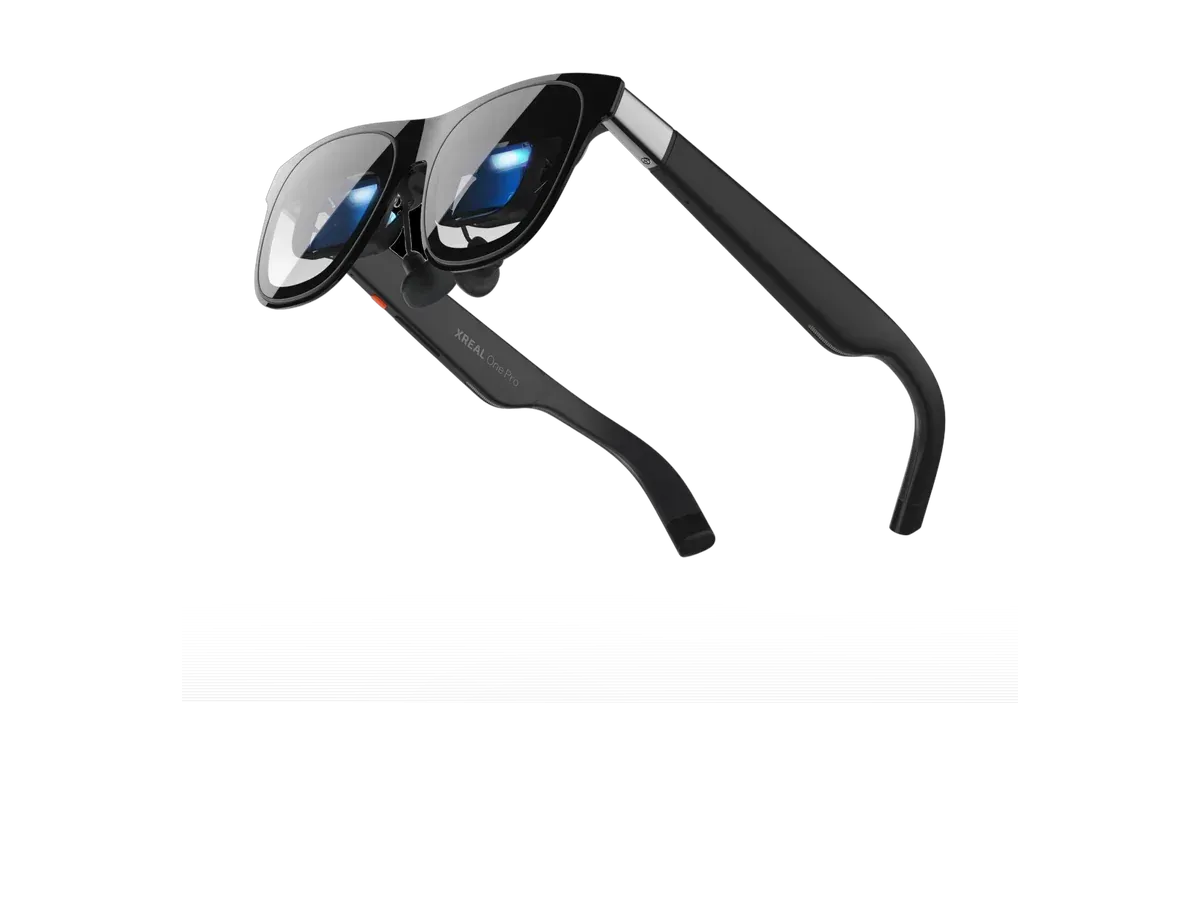
XREAL One Pro
XREAL · $599
The widest field of view (57 degrees) and best display quality in any consumer display glasses. HDR support, 120Hz refresh rate, and broad device compatibility make it the top choice for immersive entertainment and productivity.
The XREAL One Pro sits at the top of our list because it delivers the most compelling display experience available in consumer AR glasses today. The 57-degree field of view is the widest you can get without stepping up to enterprise hardware, and the combination of Sony Micro-OLED panels with HDR support produces genuinely cinematic visuals. At 120Hz, motion clarity during gaming is noticeably better than the 60Hz panels in cheaper alternatives.
The One Pro is not perfect. At 87 grams, it is heavier than most display glasses, and the tethered USB-C connection means you are always physically attached to your phone, laptop, or gaming handheld. But for anyone whose primary use case is watching content, gaming, or using a massive virtual desktop, nothing else matches the One Pro’s combination of image quality, field of view, and device compatibility.
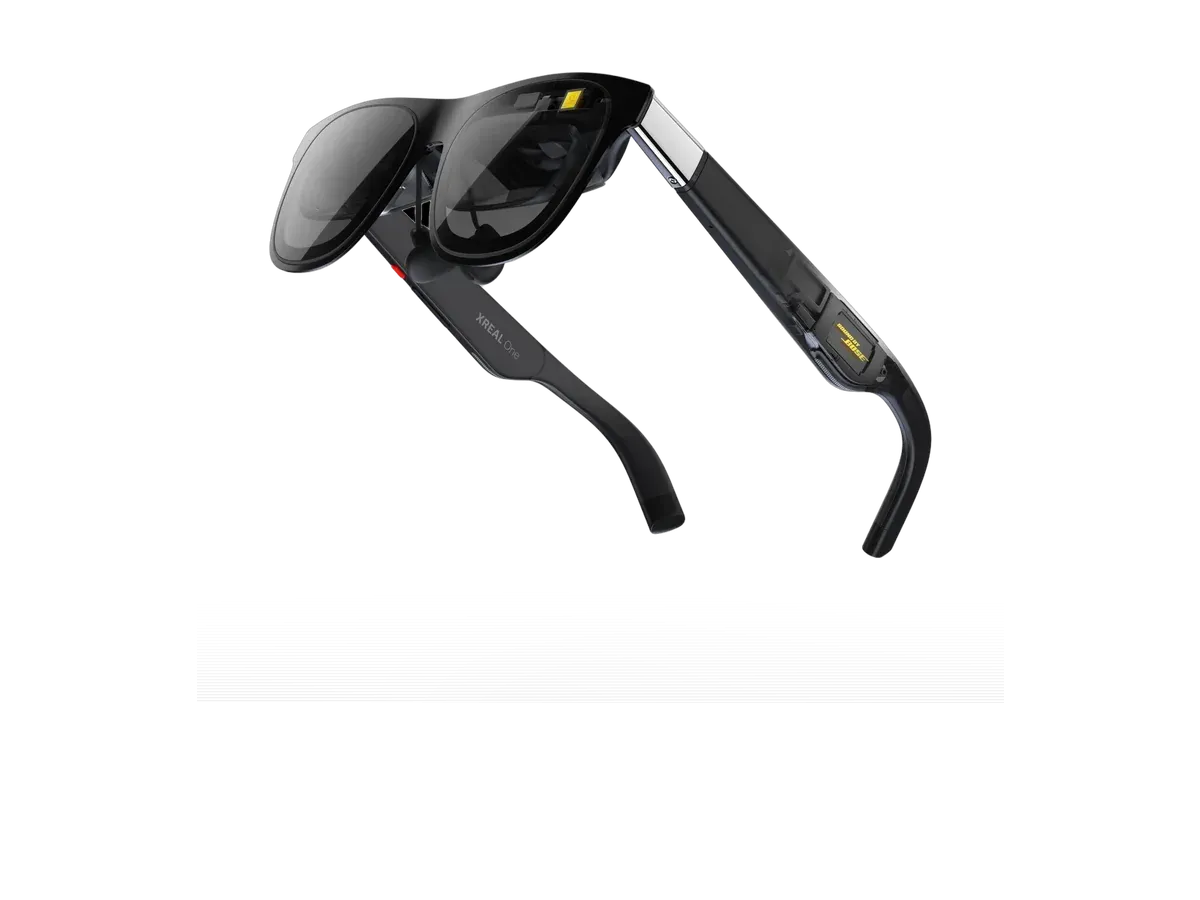
At $649, it is a premium purchase. If that stretches your budget, the standard XREAL One at $499 offers the same X1 spatial computing chip with a slightly narrower 50-degree FOV — still excellent for most users, and our best budget AR glasses under $350 picks go lower still.
Best Smart Glasses: Ray-Ban Meta Gen 2
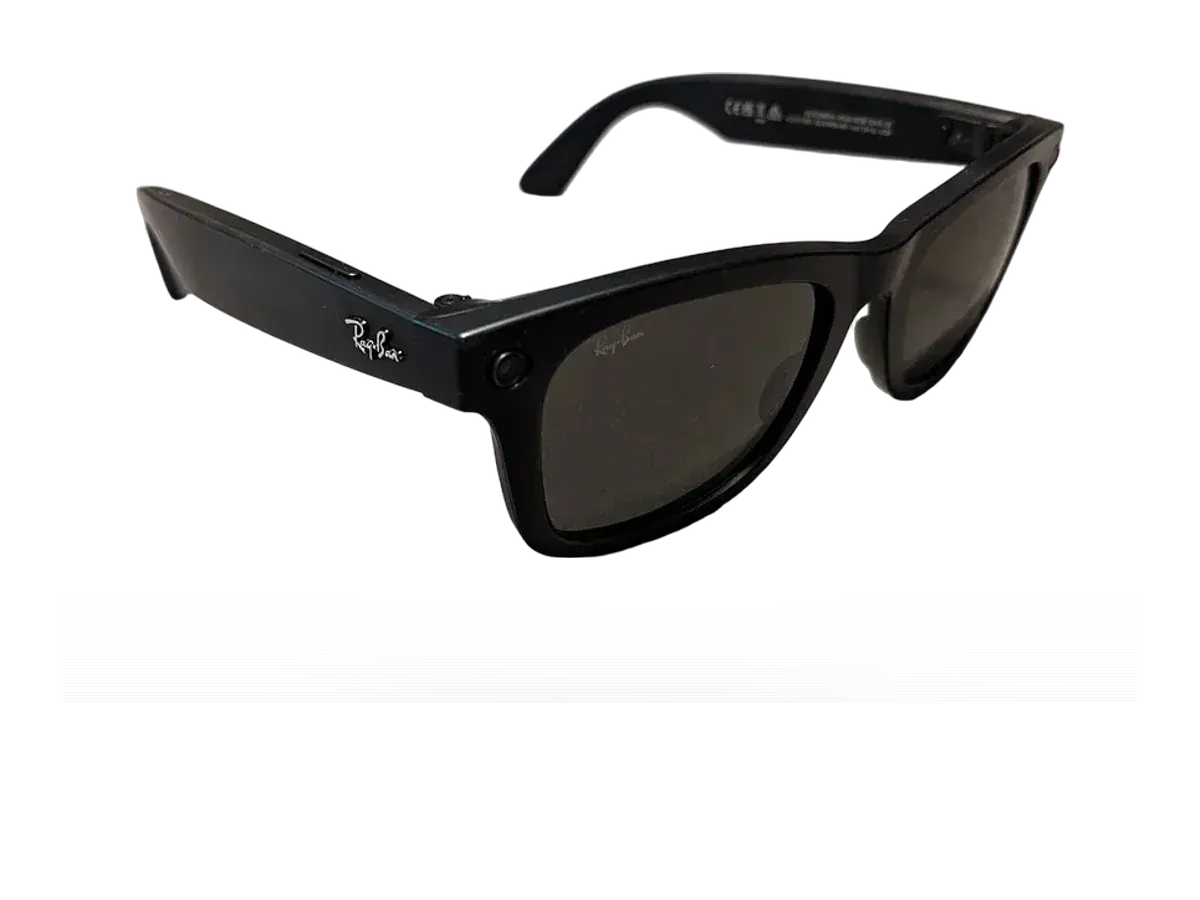
Ray-Ban Meta Gen 2
Meta · $379
The only smart glasses that people actually want to wear daily. Genuine Wayfarer styling, excellent Meta AI with visual understanding, a quality 12MP camera, and spatial audio in a package indistinguishable from regular sunglasses.
The Ray-Ban Meta Gen 2 wins this category by solving the fundamental problem that has plagued smart glasses for a decade: nobody wants to wear ugly technology on their face. These look and feel like real Ray-Ban Wayfarers because they are real Ray-Ban Wayfarers, with smart technology integrated so seamlessly that most people will not notice you are wearing anything unusual.
Meta AI is the standout software feature. Point the glasses at a restaurant menu and ask for recommendations. Look at a plant and ask what species it is. The visual understanding capabilities work surprisingly well in practice, and the conversational AI is responsive enough to feel natural rather than gimmicky.
The 12MP camera captures solid photos and 1080p video for social sharing. Battery life runs about 4 hours of moderate use, which is enough for a morning outing but will leave power users reaching for the charging case by afternoon. The most significant limitation is the complete absence of a display — everything is audio-based, which means no visual notifications, no navigation overlays, no captions.
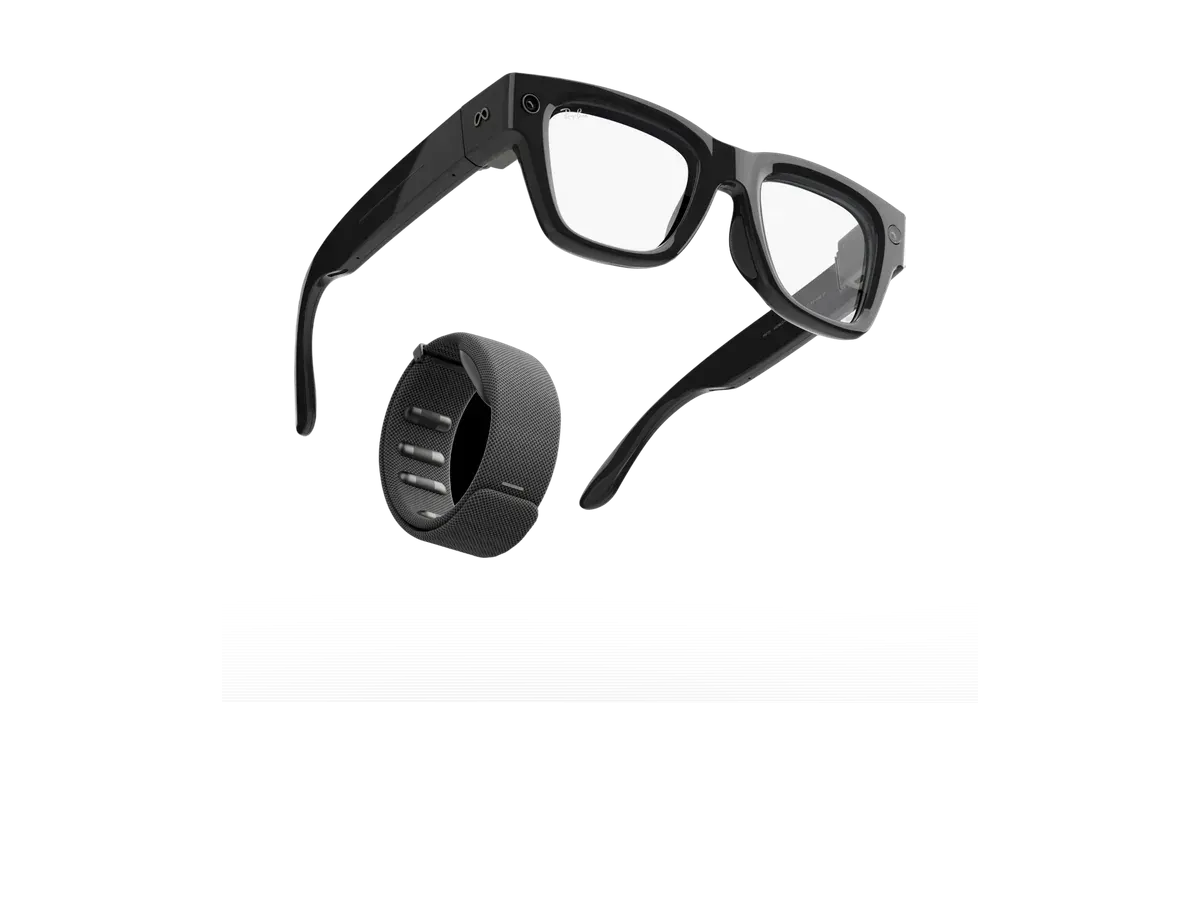
For buyers who want AI glasses with a display, Meta’s upcoming Ray-Ban Meta Display adds a monocular microLED screen for $799, though it has not shipped yet at the time of writing.
Best Value Display Glasses: RayNeo Air 4 Pro
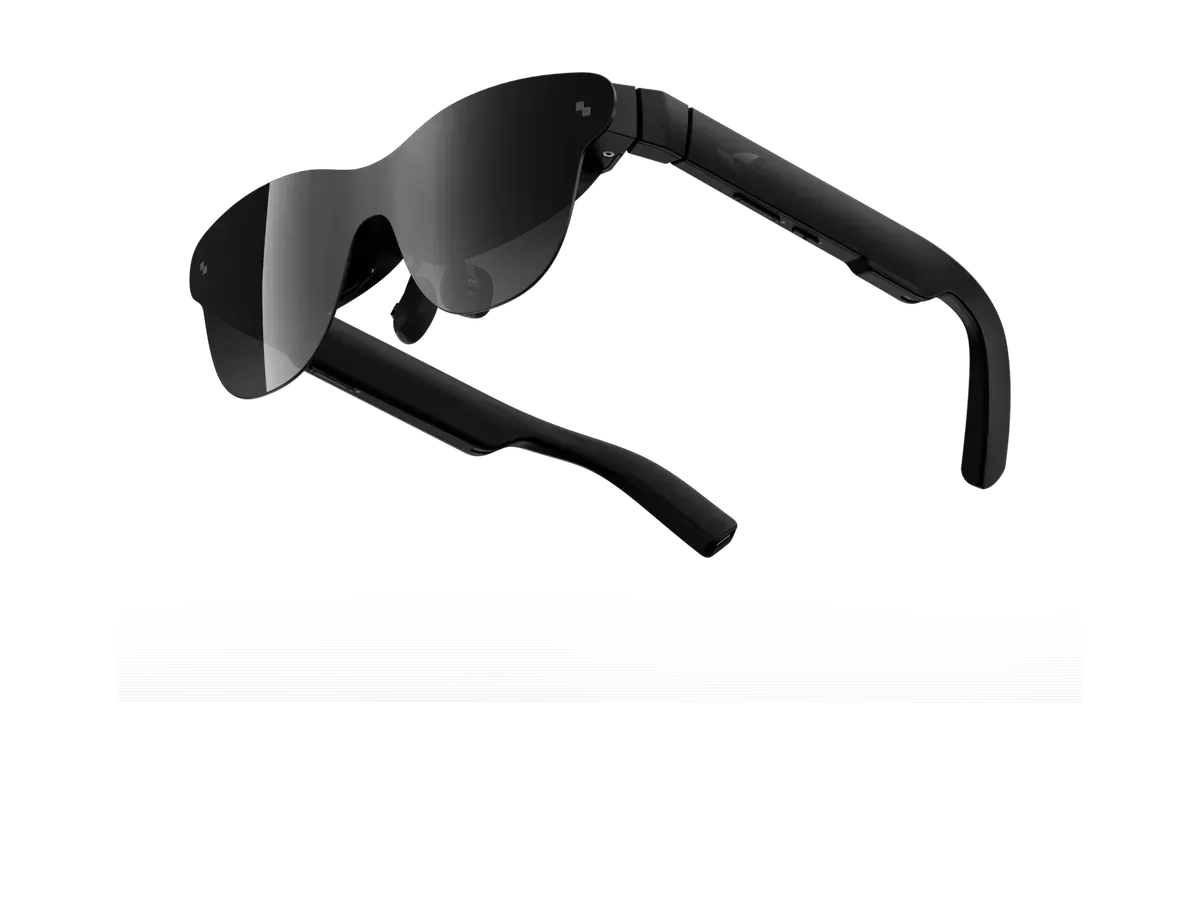
RayNeo Air 4 Pro
RayNeo · $299
World's first HDR10 display glasses at just $299. Tandem Micro-OLED technology delivers 1200-nit brightness, and B&O quad-speaker audio is best-in-class at this price. Remarkable value for display glass buyers.
At $299, the RayNeo Air 4 Pro is the most impressive value proposition in the display glasses market right now. It is the world’s first pair of display glasses with HDR10 support, using a tandem Micro-OLED architecture that pushes brightness to 1200 nits — significantly brighter than the XREAL One Pro’s 600 nits at roughly half the price.
The Pixelworks Vision 4000 chip handles real-time SDR-to-HDR upscaling and 2D-to-3D conversion, features you typically find only in premium models. The quad-speaker B&O audio system is a genuine upgrade over the dual speakers in most competitors. At 75 grams, it matches the weight of the standard XREAL One and feels lighter than the heavier XREAL One Pro.
The trade-off is a slightly narrower 46-degree field of view compared to the One Pro’s 57 degrees. For most users, 46 degrees still provides an immersive virtual screen experience, and the HDR capability and superior brightness more than compensate. If you want the best display glasses experience without spending $500 or more, this is the obvious choice.
Best for Outdoor Use: VITURE Pro XR
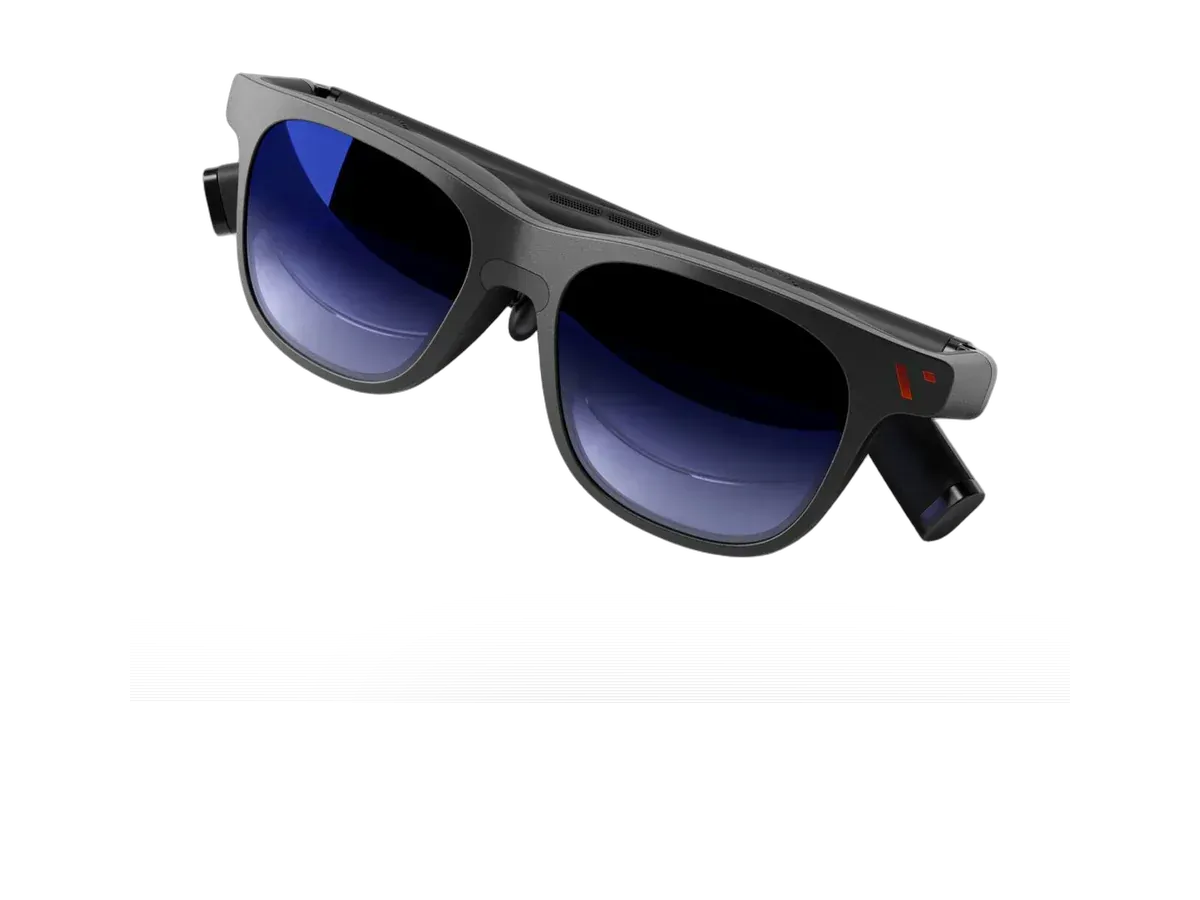
VITURE Pro XR
VITURE · $459
Industry-leading 4000-nit peak brightness makes it the only display glasses truly usable in bright outdoor conditions. Built-in myopia adjustment eliminates the need for prescription inserts, and HARMAN audio is excellent.
The VITURE Pro XR exists for a specific scenario that most display glasses handle poorly: using them outside in bright light. With a peak brightness of 4000 nits, it is more than six times brighter than the XREAL One Pro and over three times brighter than the RayNeo Air 4 Pro. In direct sunlight, that difference is not subtle — it is the difference between a visible screen and a washed-out blur.
Beyond brightness, the Pro XR earns its place through thoughtful design. Built-in myopia adjustment from 0 to -5.0 diopters means nearsighted users can ditch the prescription inserts entirely, just turn the diopter wheel until the image is sharp. HARMAN-tuned reverse sound field audio delivers better spatial audio than most competitors. At $459, it costs less than the XREAL One Pro while offering genuine advantages for outdoor use.
The 43-degree field of view is narrower than our top picks, and 60Hz refresh rate means gamers should look elsewhere. But for streaming, travel entertainment, and outdoor productivity, the Pro XR is the specialist tool that nothing else matches.
Best for Daily Wear: Even Realities G2
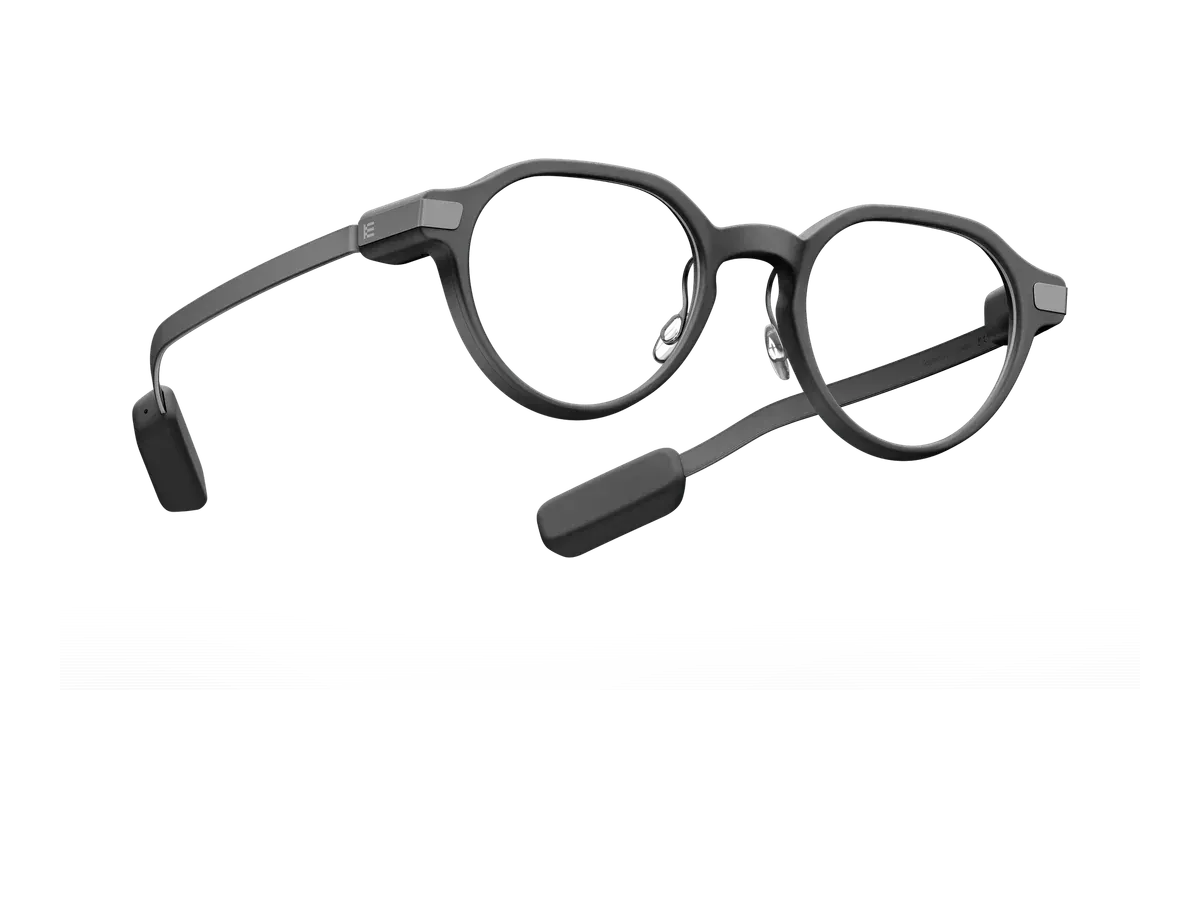
Even Realities G2
Even Realities · $599
At 36 grams with 48-hour battery life, prescription support ground into the lenses, and no camera (privacy-friendly), the G2 is the smart glasses designed to be worn every waking hour. Genuine all-day wearability that no competitor matches.
The Even Realities G2 takes a radically different approach to smart glasses. Where every other product on this list compromises on weight, battery, or social acceptability to pack in more features, the G2 strips away everything unnecessary to create glasses you can genuinely wear from morning to night. It inherits this slot from the original G1 — the pair that invented the category — which Even Realities has now discontinued per its own sales notice; the G2 is its direct successor and improves on it in nearly every dimension.
At 36 grams, the G2 weighs less than many regular prescription frames. The 48-hour battery life means charging is something you do every other day, not every afternoon. There is no camera — a deliberate choice that makes these socially acceptable in meetings, restaurants, and everywhere else cameras-on-your-face feels intrusive.
What you get is a sharp green micro-LED waveguide display for notifications, navigation prompts, live translation with a dedicated dual-view mode, and AI assistant responses. It is not flashy, but it is useful in a way that blends into daily life rather than demanding attention. Prescription correction from -12.00 to +12.00 ground directly into the waveguide lenses through Even Realities’ optical program makes the G2 a genuine replacement for regular glasses rather than an additional gadget.
The G2 is not for gaming, entertainment, or anything that demands visual immersion. It is for people who want smart glasses that are actually glasses first and smart second.
Best True AR Glasses: RayNeo X3 Pro
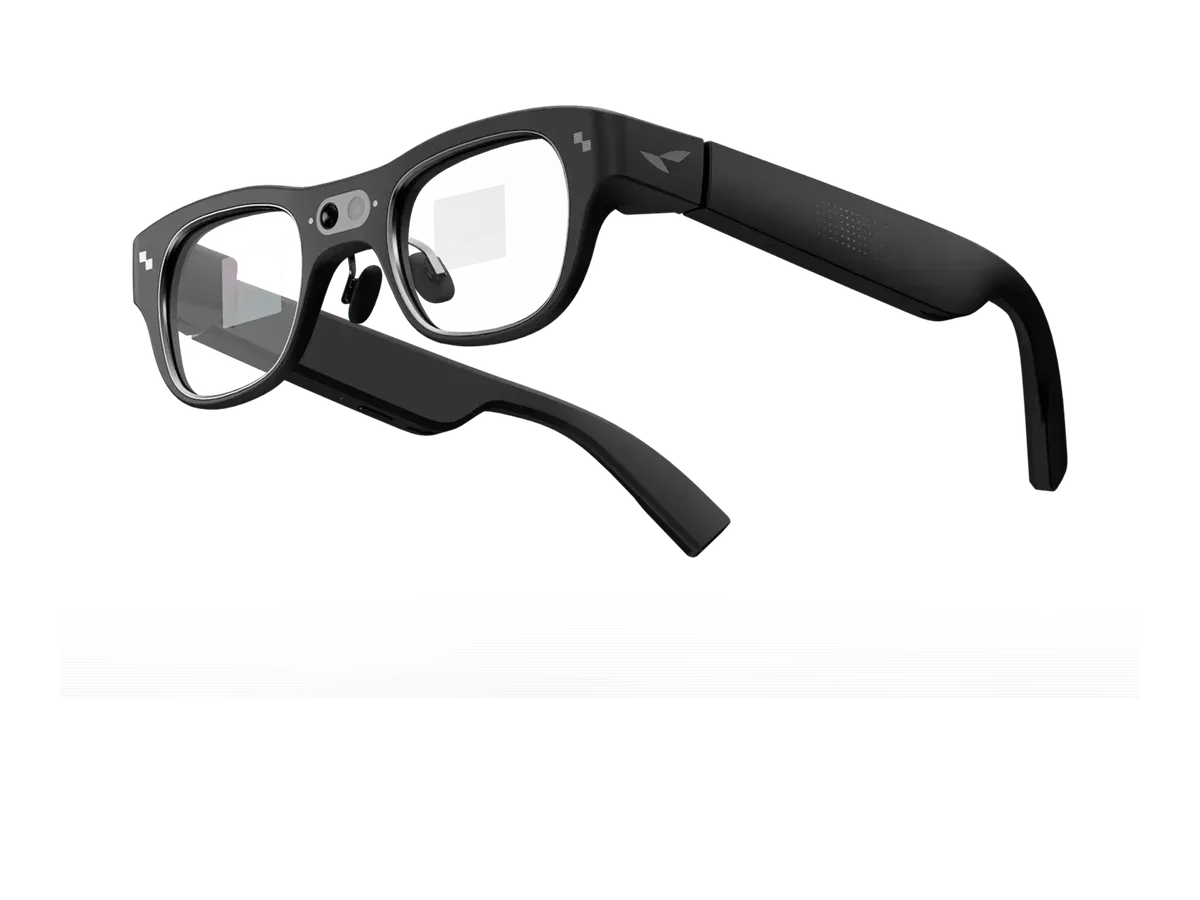
RayNeo X3 Pro
RayNeo · $1,299
The most advanced consumer AR glasses available, with full-color Micro-LED waveguide, Google Gemini AI, 6000-nit peak brightness, and standalone processing. The first AR glasses that can overlay digital information onto the real world convincingly.
True augmented reality — digital content overlaid onto the real world through transparent lenses — has been the holy grail of the AR glasses industry for years. The RayNeo X3 Pro is the closest any consumer product has come to delivering on that promise.
RayNeo X3 Pro AR Specs
Display: Full-color Micro-LED waveguide, 6000 nits peak
Field of View: 30 degrees
Processing: Qualcomm Snapdragon AR1 Gen 1 (standalone)
AI: Google Gemini integration
Camera: 12MP Sony IMX681 + B/W spatial camera
Weight: 76 grams (titanium frame)
The Micro-LED waveguide display pushes 6000 nits of peak brightness through transparent lenses, making AR overlays visible even in direct sunlight. Google Gemini AI integration enables contextual information overlays, real-time translation, and conversational AI that can see and understand your surroundings through the built-in camera.
At $1,299 and with only a 30-degree field of view, the X3 Pro is still early-adopter territory. The narrow FOV means digital content appears in a small window in front of you rather than filling your peripheral vision. Battery life claims five hours but delivers closer to 40 minutes of continuous active AR use in practice. But for anyone who wants a genuine glimpse of where AR glasses are heading, the X3 Pro is the most convincing consumer product available today.
Best AR Platform: Snap Spectacles Gen 5
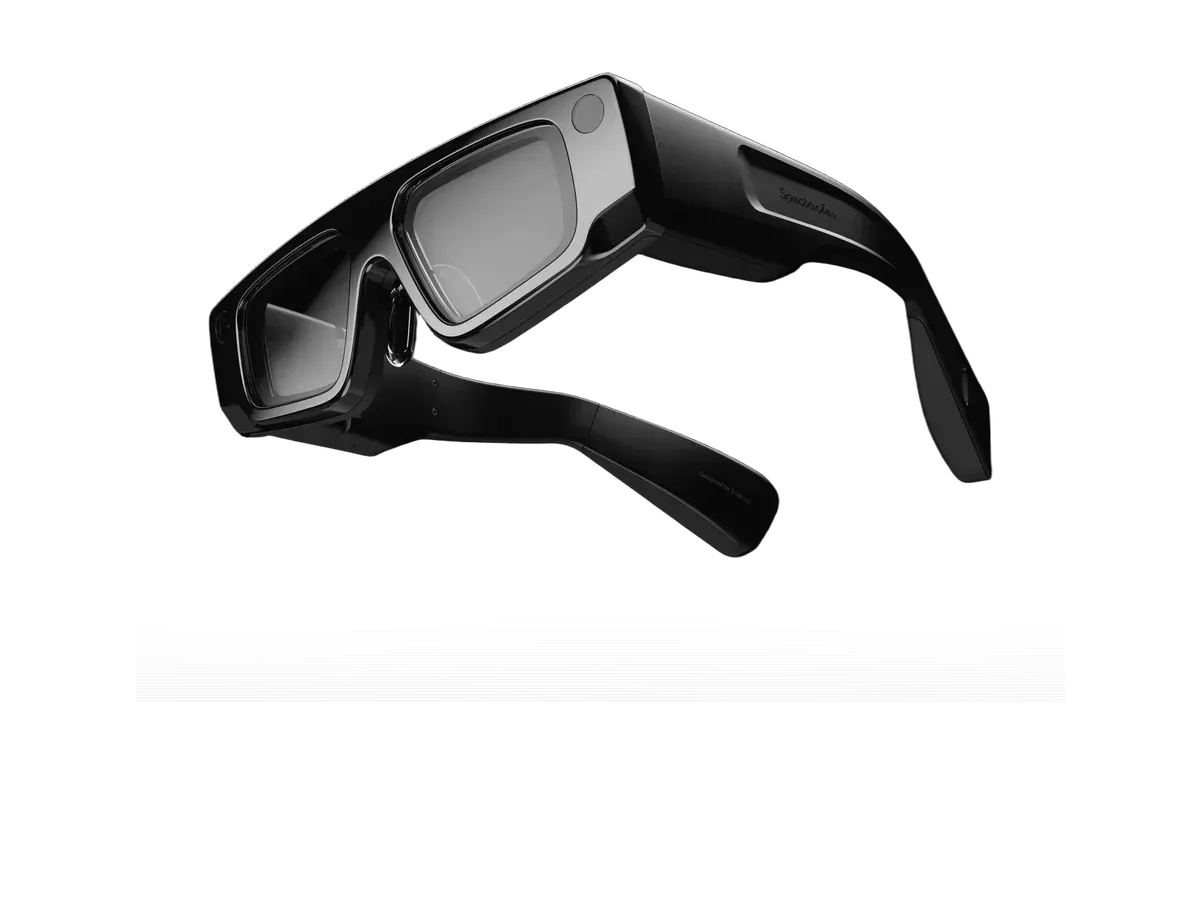
Snap Spectacles Gen 5
Snap
Access to 375,000+ Snapchat Lens AR experiences through the most mature AR development platform. Standalone 6DoF tracking and hand gesture controls deliver the most interactive consumer AR experience available.
If the RayNeo X3 Pro wins on hardware sophistication, the Snap Spectacles Gen 5 wins on software ecosystem. With access to Snapchat’s Lens Studio platform and its 375,000+ AR experiences, no other consumer AR device comes close to the depth of available content.
The Spectacles Gen 5 is a standalone AR device with 6DoF tracking and hand gesture recognition, meaning you can interact with AR content without controllers or a phone. The development platform is the most accessible in the industry, which means the content library grows daily.
The catch is significant: at $99 per month with a subscription model and no purchase option, the Spectacles demand ongoing investment. Battery life is limited to about 45 minutes of active AR use, which is genuinely constraining. At 226 grams, these are heavy enough to cause discomfort during extended wear.
The Spectacles Gen 5 is best understood as a developer and enthusiast device rather than a mainstream consumer product. Snap has already announced a consumer-focused version that promises to be smaller and lighter, but until it ships, the Gen 5 remains the best way to experience a rich AR content ecosystem.
Buying Advice: How to Choose the Right Pair
The single most important question is what you want AR glasses to actually do. Here is a framework:
“I want a massive personal screen for movies, gaming, or productivity.” Get display glasses. The XREAL One Pro ($649) is the best if budget allows, the RayNeo Air 4 Pro ($299) is the value champion, and the VITURE Pro XR ($459) is best for outdoor use. All require a wired connection to a phone, laptop, or gaming device.
“I want AI assistance and smart features that blend into daily life.” Get AI-enabled smart glasses. The Ray-Ban Meta Gen 2 ($299) is the best overall, and the Even Realities G2 ($599) is best for all-day wear with prescription support.
“I want digital content overlaid onto the real world.” Get true AR glasses, but understand this category is still maturing. The RayNeo X3 Pro ($1,299) has the best hardware, and the Snap Spectacles Gen 5 (developer lease) has the best software ecosystem.
Key Specs to Compare
When evaluating AR glasses, focus on these specifications:
- Field of view determines how much of your vision the display covers. Wider is better for immersion. Range: 20 to 57 degrees in current products.
- Weight directly impacts comfort during extended wear. Under 80 grams is comfortable for most people. Over 100 grams will cause fatigue.
- Brightness measured in nits determines outdoor visibility. Under 500 nits is indoor-only. Over 1000 nits works in bright conditions. Over 4000 nits handles direct sunlight.
- Refresh rate matters for gaming and motion smoothness. 60Hz is adequate for video. 120Hz is noticeably smoother for gaming and scrolling.
- Battery life varies enormously by category. Display glasses draw power from connected devices (no battery needed). AI glasses last 4-36 hours. True AR glasses last 45 minutes to 5 hours of active use.
- Prescription support is critical for the 60% of adults who need vision correction. Some glasses offer built-in diopter adjustment, others require prescription inserts at additional cost.
What to Expect in Late 2026
The AR glasses landscape is about to shift dramatically. Samsung is entering the market with smart glasses designed by Gentle Monster and powered by Android XR and Google Gemini. Warby Parker is developing intelligent eyewear backed by a $150 million Google investment, with the advantage of 200+ retail stores for prescription fitting. XREAL’s Project Aura promises true AR in a glasses form factor with a split-compute architecture. And Apple’s widely rumored smart glasses could reshape the entire category.
The best advice for buyers right now: if you have a clear use case today, buy today. If you are just curious, the entry-level options at $299 or less let you experience the technology without a massive investment. The products launching in late 2026 and early 2027 will be significantly more capable, but waiting means missing out on a category that is already genuinely useful for the right applications.
The Bottom Line
The AR glasses market in 2026 rewards informed buyers. There is no single “best” pair because the three categories serve fundamentally different needs. Our top picks represent the best options in each category based on extensive hands-on testing:
- XREAL One Pro ($649) — Best overall display glasses
- Ray-Ban Meta Gen 2 ($299) — Best AI-enabled smart glasses
- RayNeo Air 4 Pro ($299) — Best value display glasses
- VITURE Pro XR ($459) — Best for outdoor use
- Even Realities G2 ($599) — Best for all-day daily wear
- RayNeo X3 Pro ($1,299) — Best true AR glasses
- Snap Spectacles Gen 5 (developer lease) — Best AR software platform
Every product on this list has been tested, compared against its competitors, and recommended because it genuinely excels in its niche. Use the detailed product pages and comparison tools on this site to dig deeper into any pairing that interests you.