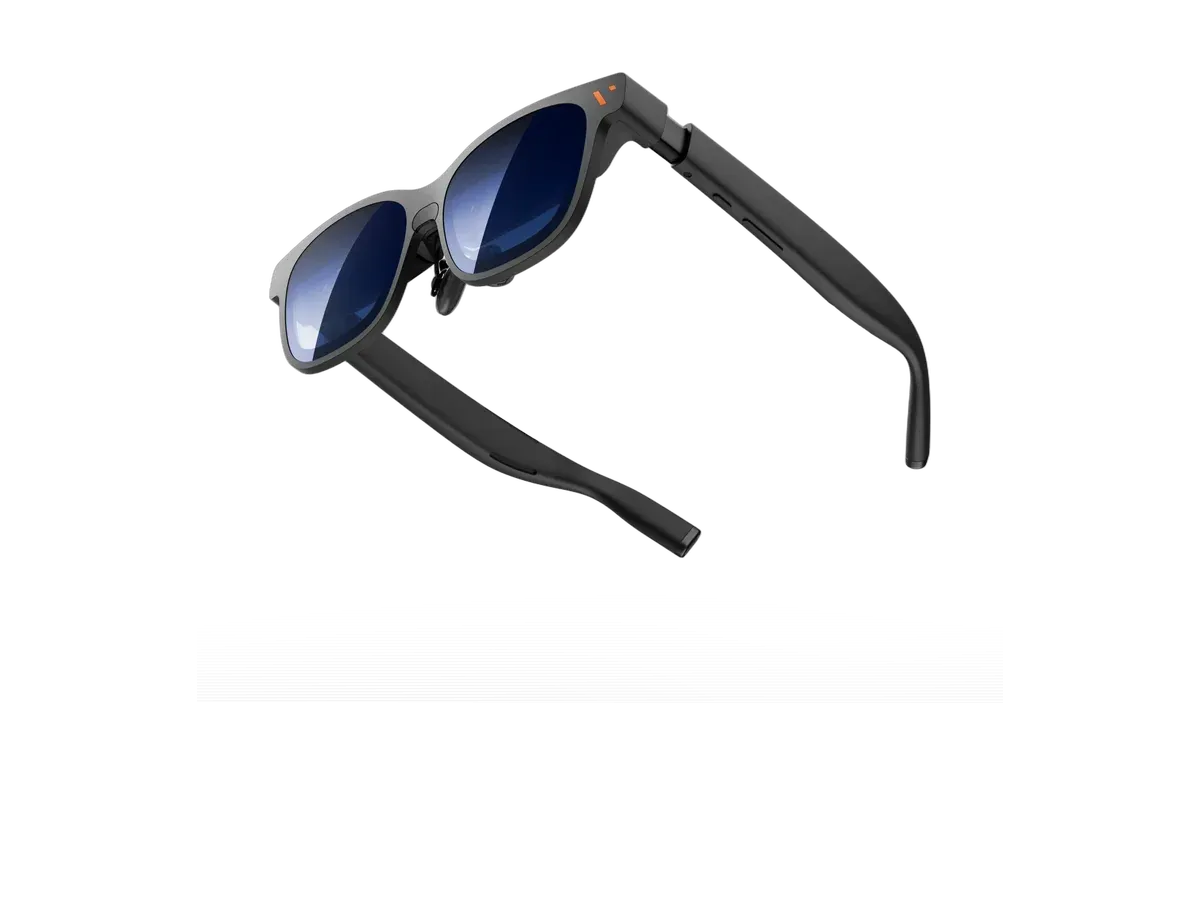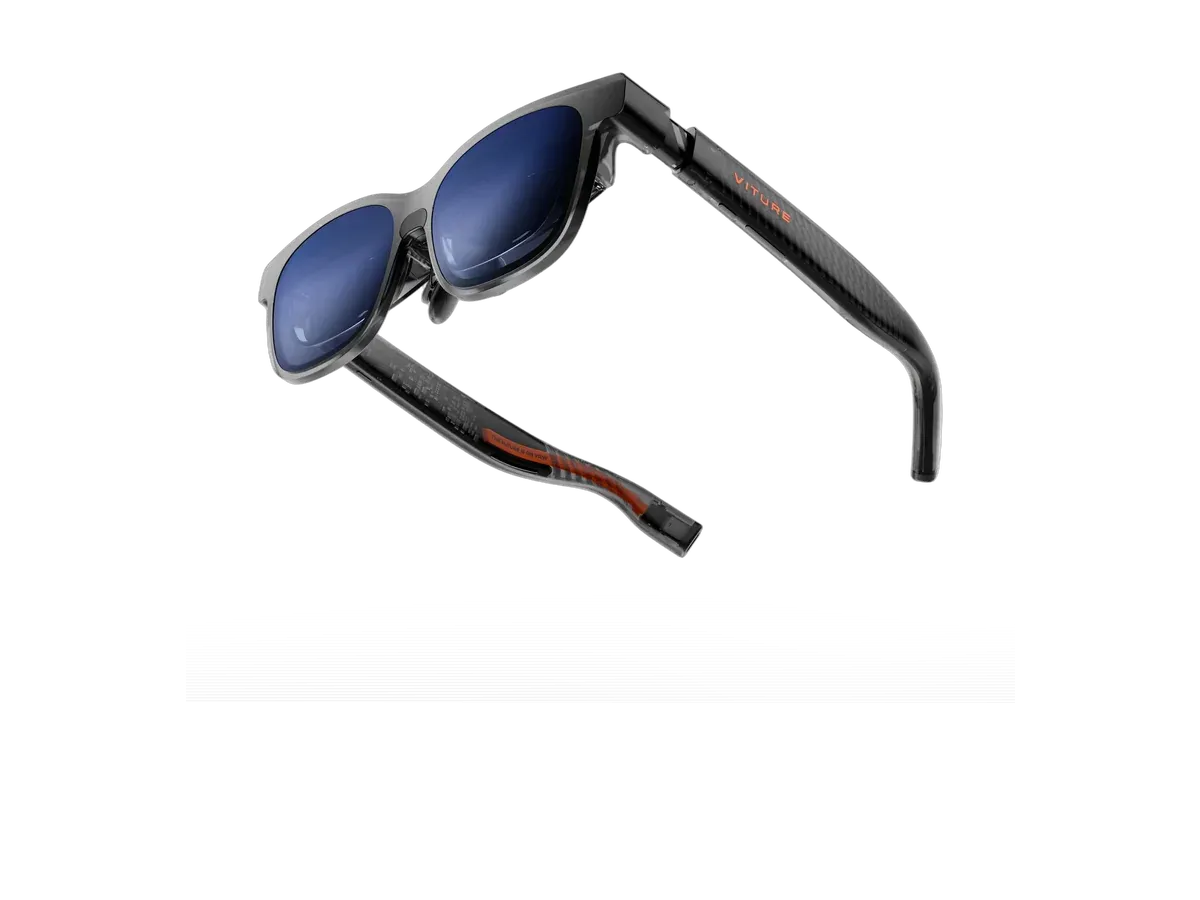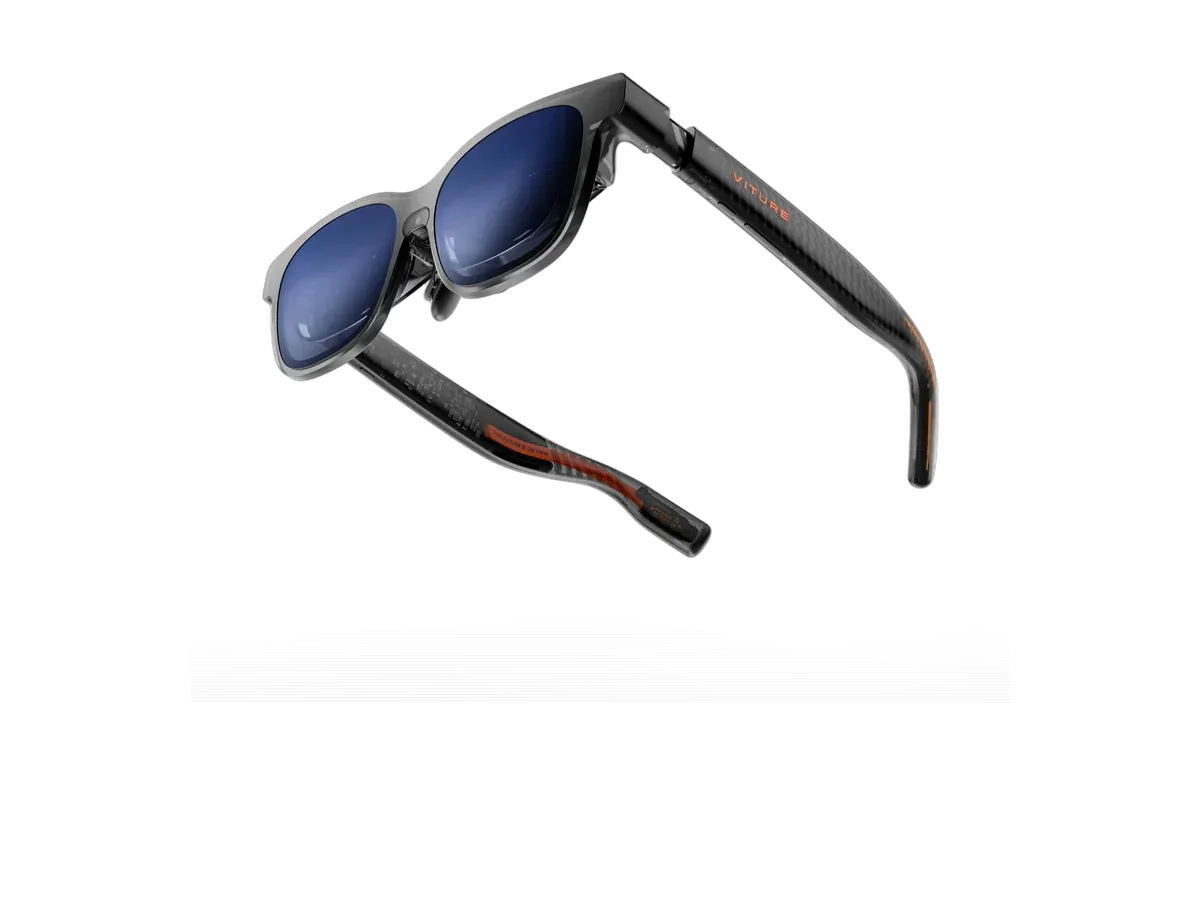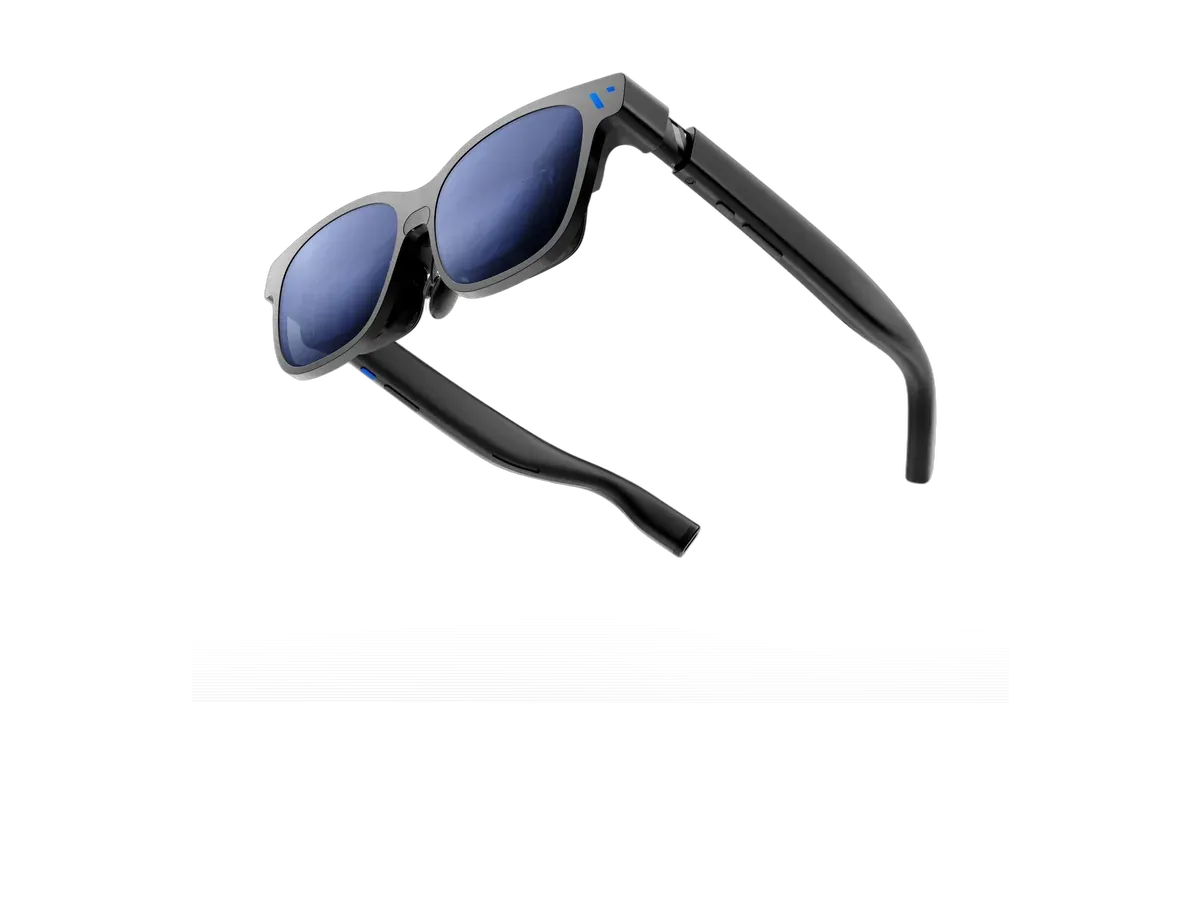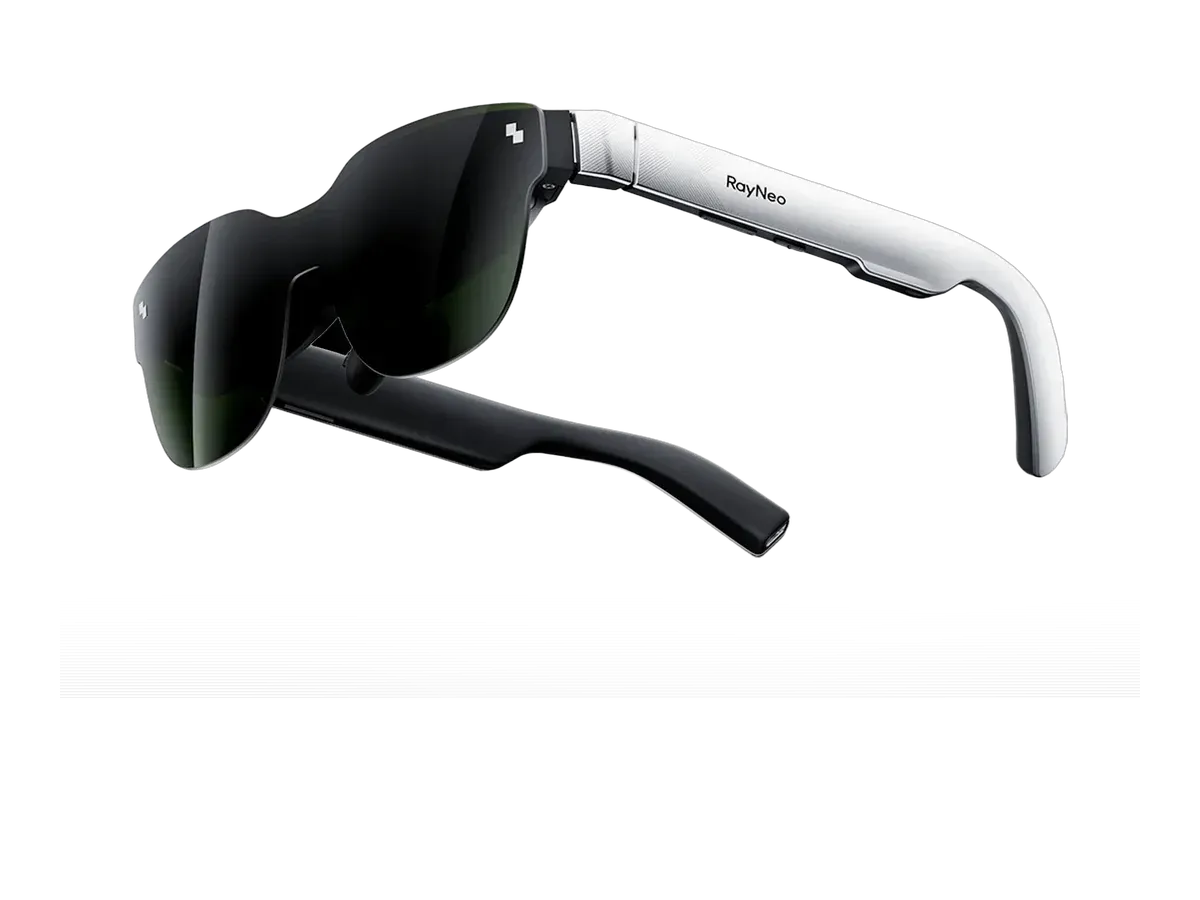
RayNeo
Evidence confidence: 7 of 7 scoring inputs documented
Why it ranks here:
- Linux driver made with the glasses maker's help (+30)
- 42 pixels per degree (+10)
- 46° field of view (+8)
- 120Hz refresh rate (+10)
- $269 price (+15)
- 76g weight (+6)
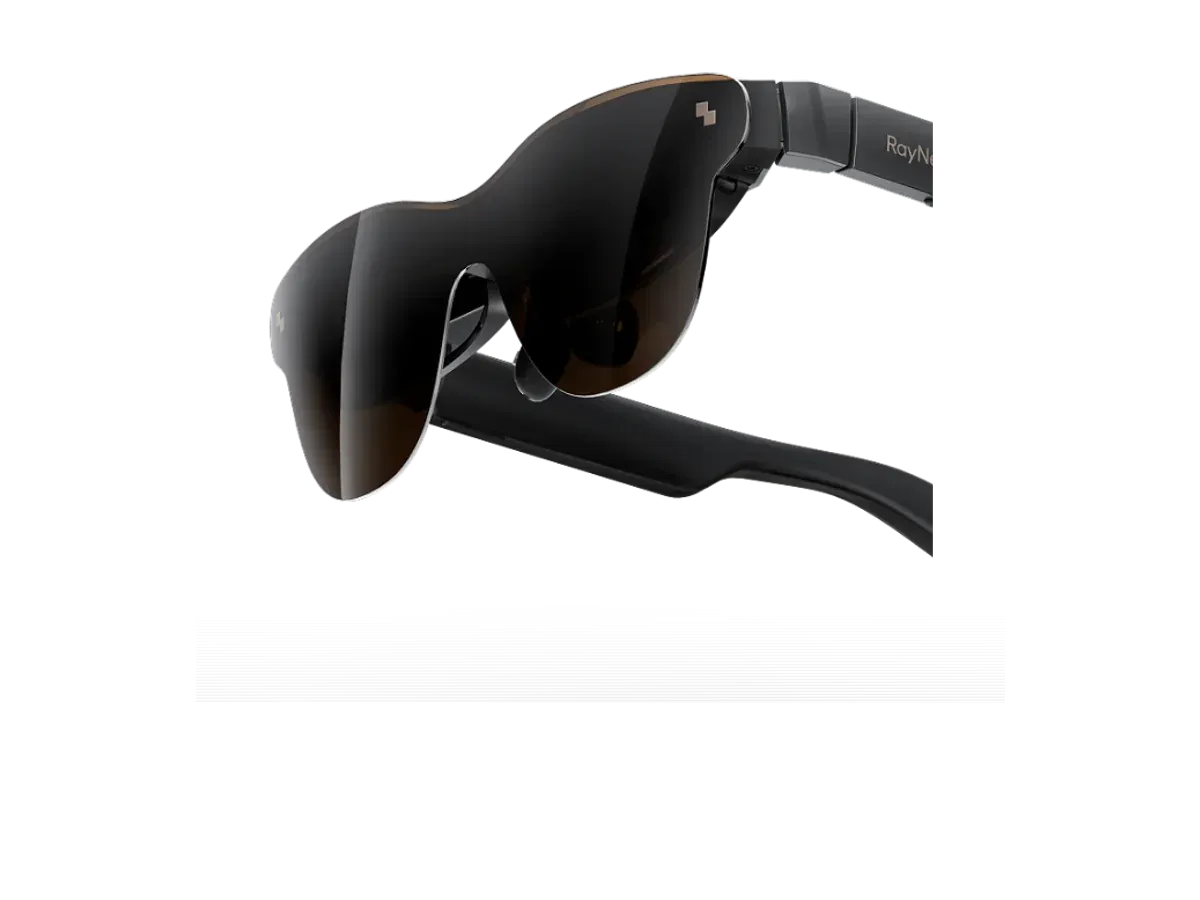
Best of
Glasses supported by the open-source XR Linux Driver, ranked for a Linux desktop or a Steam Deck.
Our top pick for Linux users is the RayNeo Air 3s at $269.
Product data last updated
The best AR glasses for Linux are the ones the open-source XR Linux Driver supports, because that driver is what adds head tracking and Breezy Desktop's virtual screens on Linux. Without it, any of these glasses still works as a plain external monitor over a USB-C port that carries video. The driver's developer works with VITURE, RayNeo and Rokid, and those brands rank first here. XREAL glasses also work, through a community-built driver, but the developer warns of some drift and does not recommend them. The ranking then scores sharpness, field of view (how much of your vision the screen fills), refresh rate and price.
| # | Pick | Price | Best for |
|---|---|---|---|
| 1 | RayNeo Air 3s | $269 | Top pick overall |
| 2 | RayNeo Air 3s Pro AR/XR Glasses | $299 | — |
| 3 | VITURE Pro 2 XR Glasses | $299 | Brightest display here |
| 4 | VITURE Luma XR | $399 | — |
| 5 | VITURE Luma Pro | $499 | — |
| 6 | VITURE Beast XR Glasses | $549 | Widest view here |
Ranked by Linux driver support · Sharpness · Field of view · Refresh rate · Price · Weight · Lens dimming. Prices verified at RayNeo Store and VITURE Store.
Every pick is scored on the same criteria — a spec the maker doesn’t publish scores zero, and the Best for column marks where a pick leads this list. How we rank and check prices
Any of these glasses works on Linux as a plain second monitor, as long as your computer’s USB-C port carries video. The extras, a screen that stays still when you turn your head and several virtual screens, come from two projects by the same developer: the XR Linux Driver and Breezy Desktop. The glasses makers’ own desktop apps don’t run on Linux.
| Brand | Driver support | Notes |
|---|---|---|
| VITURE | Made with VITURE | Beast drifts slightly more for now |
| RayNeo and TCL | Made with RayNeo | Air 2, 2s, 3s, 3s Pro and NxtWear S; GT and GT Max still in testing |
| Rokid | Made with Rokid | Max and Air only |
| XREAL | Community-built | Works, but not recommended by the developer |
Breezy Desktop runs on GNOME and KDE Plasma 6. It comes with a two-month free trial, then the productivity features cost $10 a year or $25 once for the basic plan. On a Steam Deck, the driver installs as the XR Gaming plugin from the Decky Loader store, and the Steam Deck setup guide walks through it.
Every eligible product is scored on the recorded specs below. Missing data scores zero — we never guess a value. Points shown next to each pick add up to its total score. Our full method
RayNeo
Evidence confidence: 7 of 7 scoring inputs documented
Why it ranks here:
RayNeo
Evidence confidence: 7 of 7 scoring inputs documented
Why it ranks here:
VITURE
Evidence confidence: 6 of 7 scoring inputs documented
Why it ranks here:
VITURE
Evidence confidence: 6 of 7 scoring inputs documented
Why it ranks here:
VITURE
Evidence confidence: 6 of 7 scoring inputs documented
Why it ranks here:
VITURE
Evidence confidence: 6 of 7 scoring inputs documented
Why it ranks here:
Buy the RayNeo Air 3s if…
Buy the RayNeo Air 3s if you want to spend $30 less ($269 vs $299).
Buy the RayNeo Air 3s Pro AR/XR Glasses if…
Buy the RayNeo Air 3s Pro AR/XR Glasses if you need the brighter 1200-nit display (vs 650 nits), you want spatial audio, and you play on Xbox.
Yes, as a monitor. Display glasses show up as an external screen on any Linux computer whose USB-C port carries video. What Linux lacks is the glasses makers' own apps, so head tracking and virtual screens come from the free, open-source XR Linux Driver and the Breezy Desktop app built on it.
An app from the same developer that turns supported glasses into a virtual desktop, with screens that stay pinned in place when you turn your head. It runs on GNOME and on KDE Plasma 6. On KDE, the extra virtual screens need a Wayland session. It comes with a two-month free trial, then the productivity features need a paid license: $10 a year or $25 once for the basic plan, more for the version with 6DoF.
VITURE, RayNeo and Rokid. The developer lists them as official collaborations, built with the makers' own software kits. XREAL glasses are supported through a community-built driver without XREAL's help, and the developer does not recommend them. On XREAL One-series glasses you must turn off the glasses' own screen-stabilizing features first.
Yes. On a Steam Deck the driver comes as the XR Gaming plugin in the Decky Loader store. Breezy Desktop also runs in the Deck's Desktop Mode, though its virtual screens need you to switch the desktop to Wayland first.
Plain-English explainers on the models and questions this ranking covers.
Rankings that share the most top picks with this one.
Provenance: use case derived from Linux and Steam Deck desktop users: glasses listed as supported by the XR Linux Driver (0060). Rankings are computed from recorded product specs only.