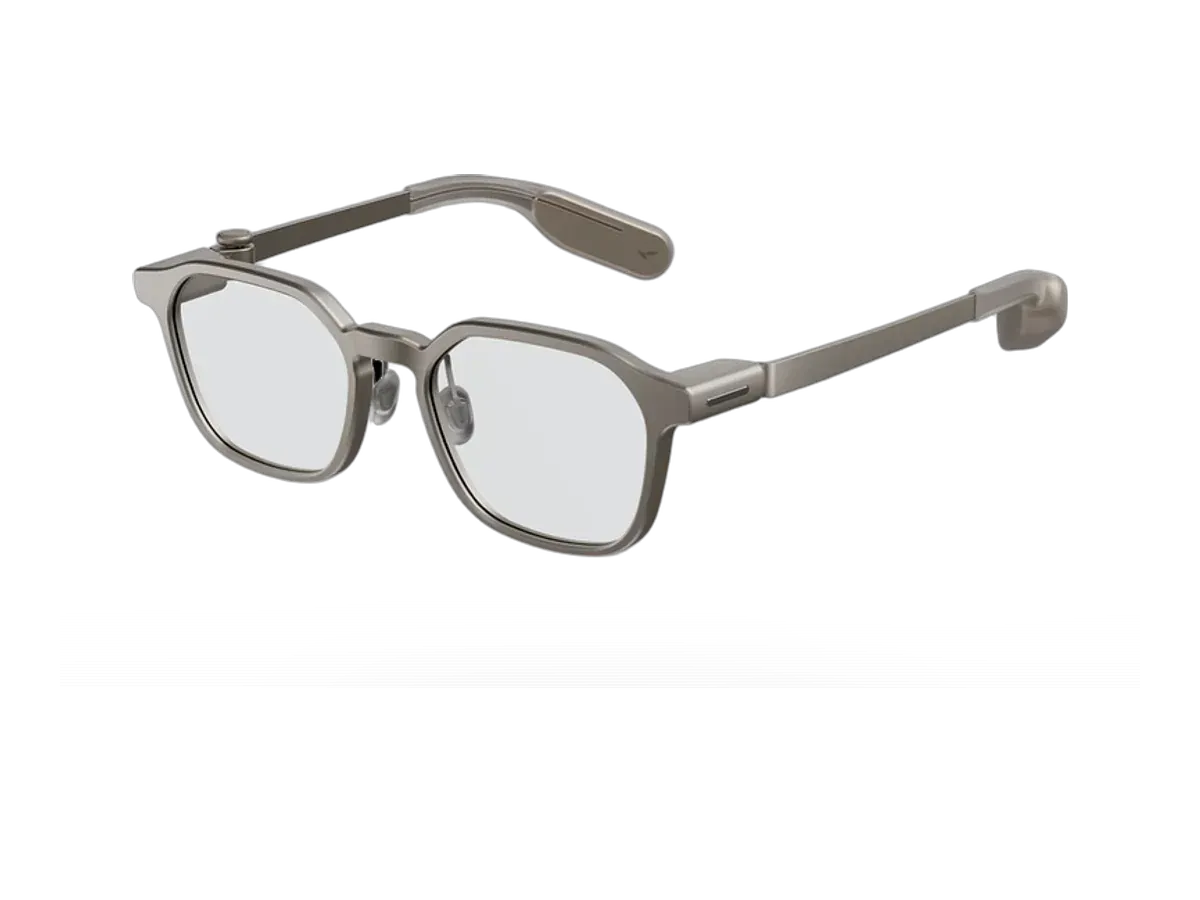
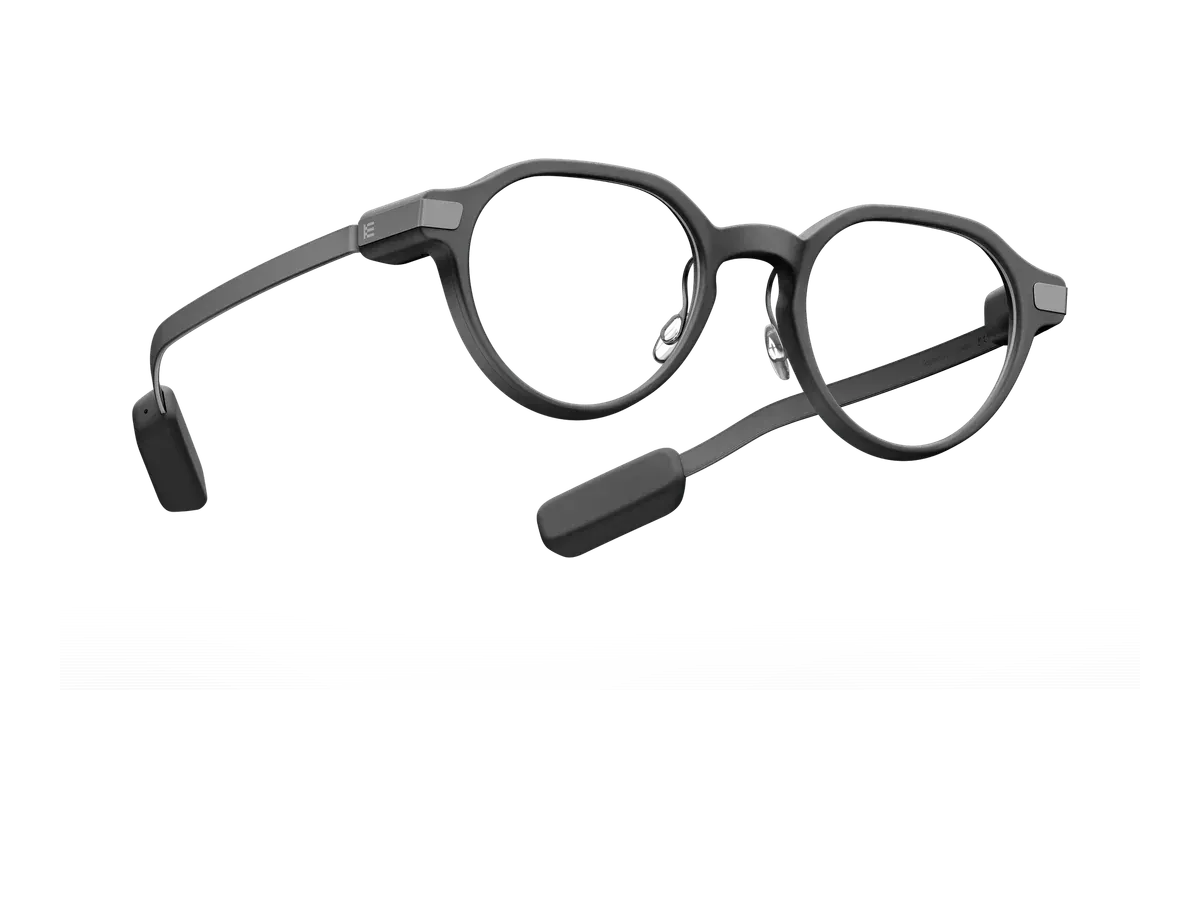
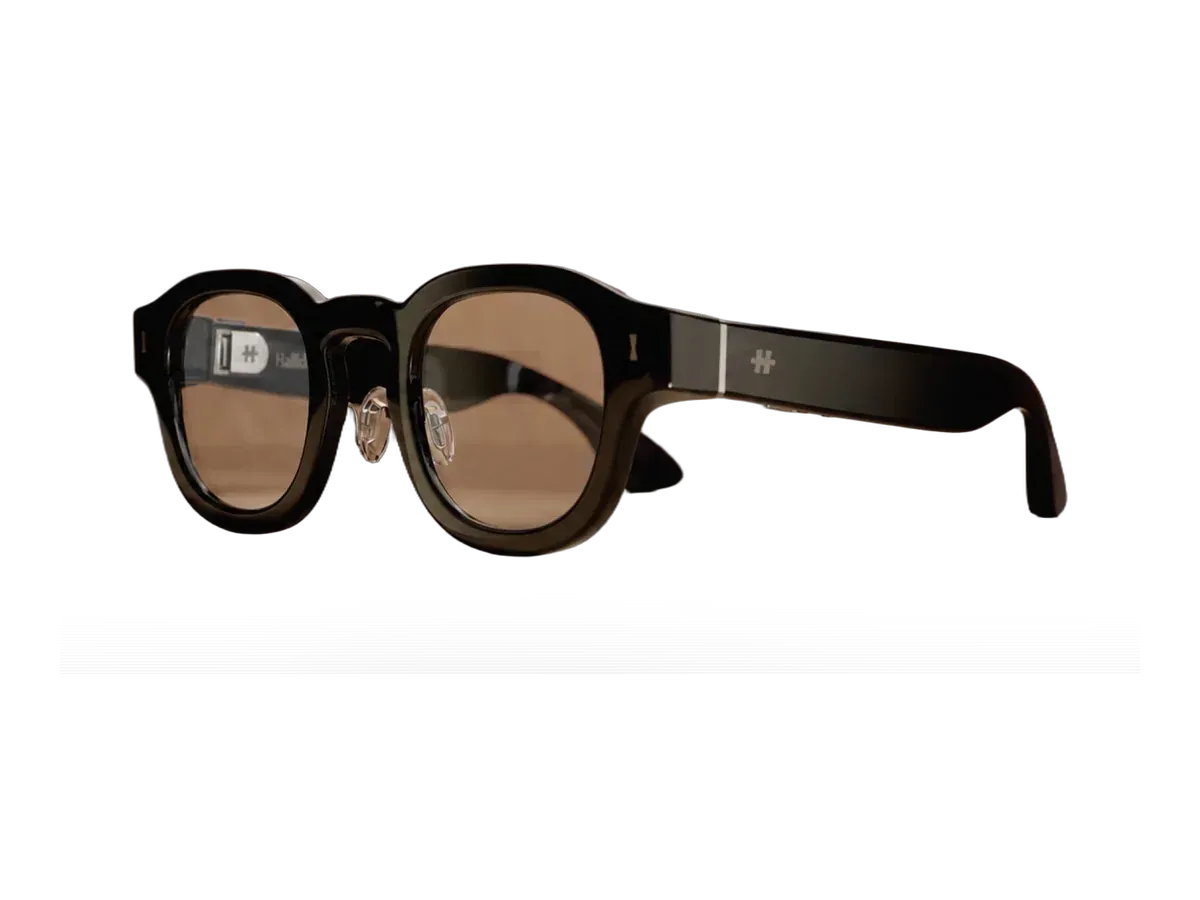
Teleprompter glasses solve a problem every presenter, lecturer, and video creator knows: the moment you look at your notes, you stop looking at your audience. A conventional teleprompter fixes that with a half-mirrored box in front of a camera lens — effective, but bulky, tripod-bound, and useless the moment you step away from the camera. Teleprompter glasses move the scrolling text into the frame on your face. A miniature projector paints your script onto a transparent waveguide in the lens, focused so the words float readably in your eyeline, and a phone app scrolls them at your pace. To everyone else in the room you are simply a person wearing glasses and, unusually for a speaker, actually looking at them.
Every pair ranked on this page declares teleprompter use in its recorded catalog data, and all of them are heads-up-display frames rather than the tethered big-screen kind — if a large virtual monitor is what you are after, that is a different category served by our display glasses ranking. The ranking above weighs the recorded specs that decide whether a prompter frame actually survives a real speaking day: weight, battery life, display brightness, waveguide optics, prescription support, and voice control.
How the display actually works
All five ranked models use waveguide optics: the projector sits in the temple or the frame, and its light is guided through a thin, transparent layer etched into the lens before being directed at your eye. That construction is why these frames pass as ordinary glasses — there is no visible screen hanging in front of the lens, which is also the practical difference between waveguides and the birdbath optics used in big-screen display glasses, explained in our birdbath vs waveguide guide.
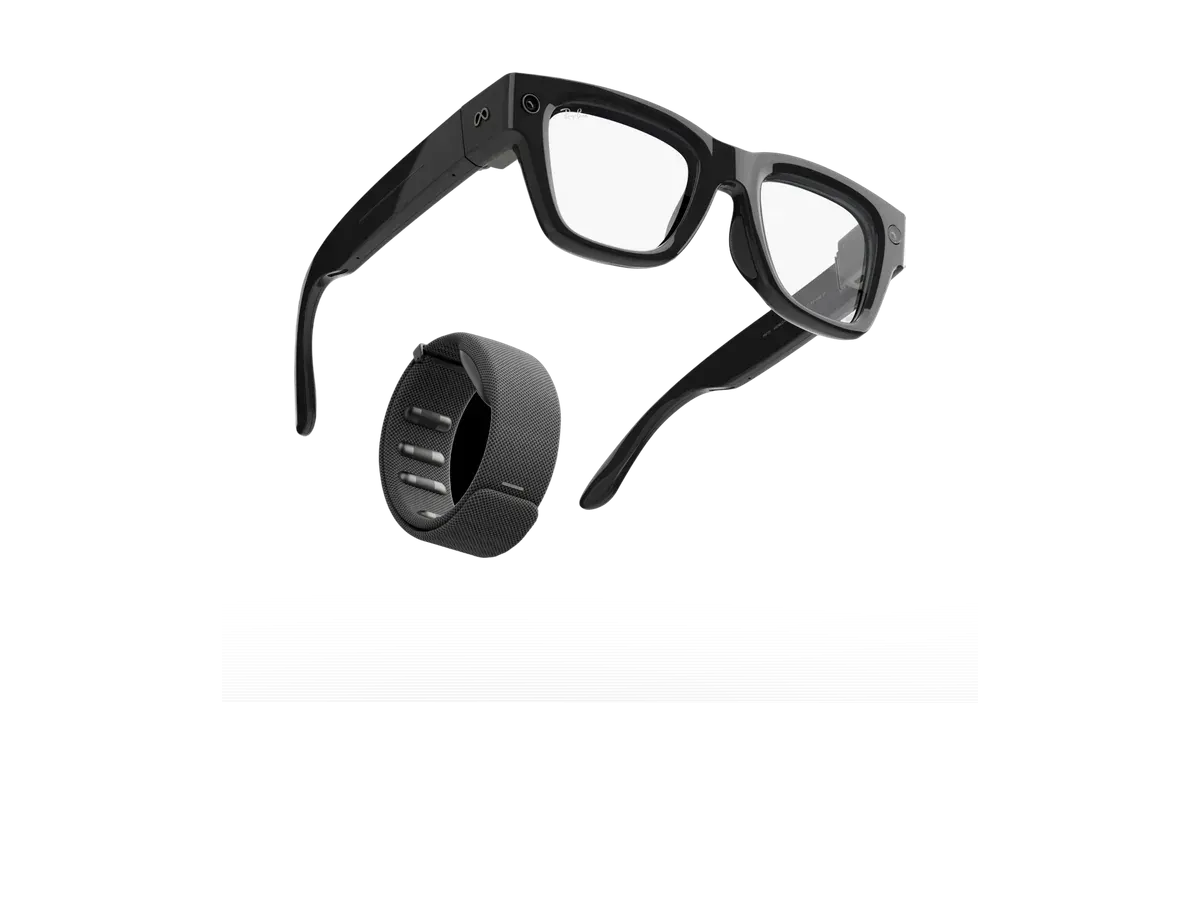
Most of the category projects monochrome green text. That is an engineering choice, not a cost cut: a single-color MicroLED light engine can run far brighter per milliwatt than a full-color one, and bright green on the real world is close to ideal for reading a script. Recorded panel brightness across the ranked models runs from 1200 nits up to 5000 nits on the one full-color model in the set, the Meta Ray-Ban Display — and brightness is worth taking seriously, because a stage wash or a window behind your camera will happily bleach a dim display into invisibility. Resolution numbers look tiny beside phone screens (the recorded panels run from 640x200 up to 640x350 in the Even Realities frames, with the Display’s full-color panel at 600x600), but a prompter only needs to render a few lines of crisp text at a time, and these panels are engineered for exactly that.
One layout detail matters more than any spec sheet admits: binocular versus monocular. The Even Realities frames project the same text into both lenses, so the words sit centred in your view and reading feels like reading. A monocular display draws in front of one eye only — perfectly workable for glanceable notes, but some readers find long passages more tiring on one eye. Neither is wrong; they are different reading experiences, and it is worth knowing which one a given frame uses before you buy.
The display shows the words; the companion app decides whether your delivery sounds human. There are three common control schemes. Timed scrolling advances the script at a fixed rate, like a classic prompter — fine for rehearsed reads, unforgiving when you ad-lib. Manual advance moves the text when you tap a ring, a remote, or the frame itself — precise, but it gives your hands a job. The scheme that has made this category genuinely useful is voice-following: the app listens to what you say, matches it against the script, and keeps the display in step with you. Pause to take a question and the text waits; skip a paragraph and it follows. When you evaluate any model, the recorded voice-control flag in its specs is the first thing to check, and the maker’s app documentation is the second — the frame is only ever as good as the script app behind it.
Camera or no camera
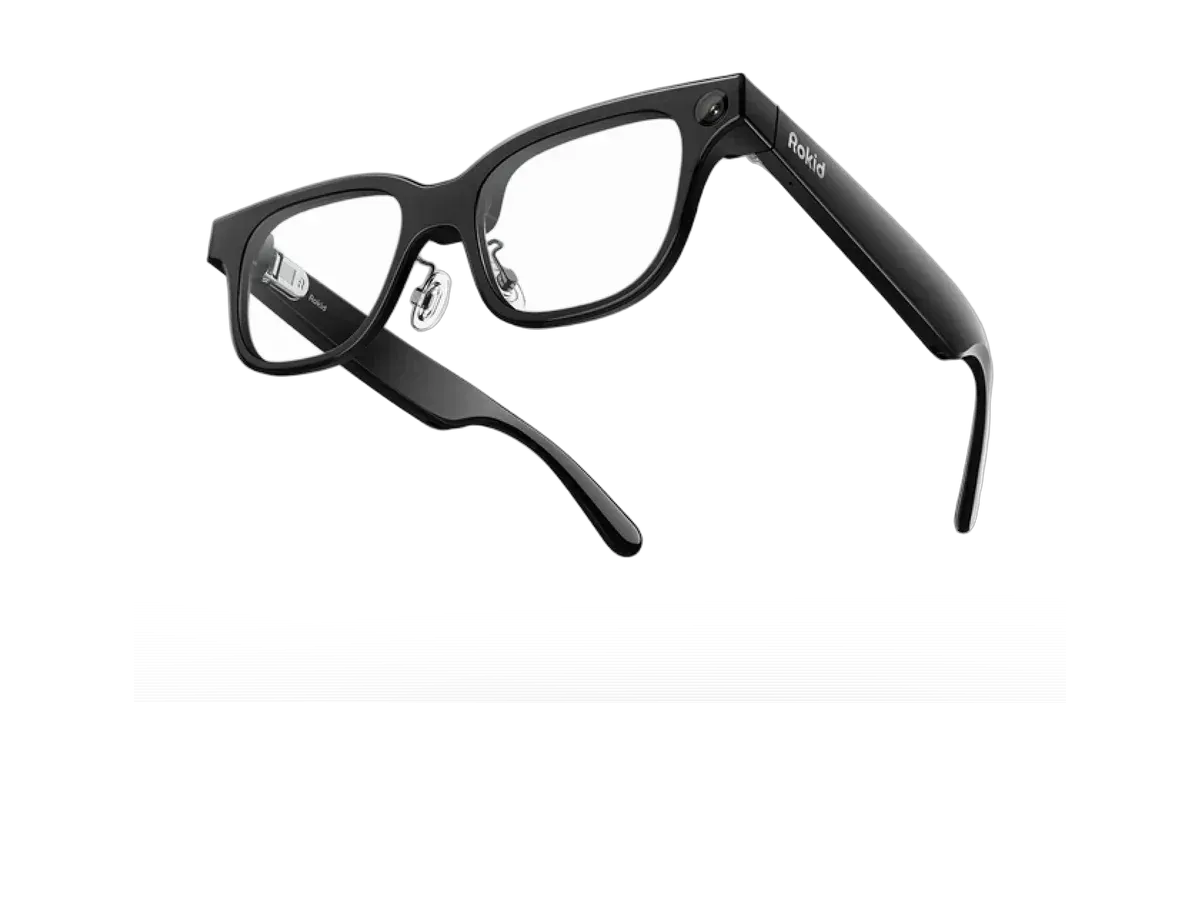
The ranked set splits cleanly on a question worth deciding before you look at prices. Frames without any camera — the Even Realities pair and the RayNeo iO — are prompters you can wear into boardrooms, hospitals, and courtrooms without a conversation about recording. That discretion is a feature: nobody wonders what the glasses are doing because they cannot do anything except show you text. Frames with a camera, the Rokid Glasses and the Meta Ray-Ban Display, trade some of that social invisibility for a creator workflow: they can capture point-of-view photos and video, take calls, and run visual AI assistants alongside the prompter. For a working videographer that is one less device; for a keynote speaker it is one more thing to explain. Our camera glasses guide covers the capture-first side of that trade in depth.
Note what the camera does not do: it does not film you. Your framing camera stays on its tripod either way — the glasses’ job is to keep your eyes pointed at it.
Prescription support is the spec that disqualifies
If you wear corrective lenses, start here, because this is where models leave the shortlist. The recorded prescription data across the ranked set spans real engineering differences: the Even Realities G2 records support from -12.00 to +12.00 diopters with the correction built into the lenses at order time, the Meta Ray-Ban Display records a narrower -4.00 to +4.00 range, and the Rokid Glasses take a magnetic clip-in corrective frame rather than ground lenses. The RayNeo iO is sold as a complete prescription bundle on RayNeo’s own store (from $608 against the $449 base pair), but the maker publishes neither the lens mechanics nor a supported diopter range — so if your prescription is strong or includes astigmatism, confirm it with RayNeo before ordering, because a script you cannot focus on is not a script. Treat the prescription line in each pick’s recorded specs as a hard gate, and see our prescription-wearers ranking if corrected vision is your primary constraint.
Battery life: the 6-hour and the 48-hour class
The recorded battery figures in this category split into two honest classes. Notification-first HUD frames — the Even Realities pair and the RayNeo iO — record 36 to 48 hours per charge, because a display that lights up on demand spends most of its life dark. The full-featured camera frames record 6 to 9 hours, because a camera, a speaker set, and a brighter full-color display all bill the same small battery. For prompter work specifically, remember that reading is a continuous-display activity: whatever a frame records for mixed use, a long recording session with the text lit the whole time will land below it. The practical read: an all-day conference is comfortably inside the 36-to-48-hour class’s envelope, while the 6-to-9-hour class wants its charging case within reach between takes — a real constraint, but a manageable one for shoot days that happen in takes anyway.
What the audience actually sees
Waveguide displays leak a small amount of light outward, so the honest answer is: almost nothing, but not strictly nothing. At conversational distance the lenses read as plain glasses; at close range and the right angle, a faint glimmer where the text sits can be caught, more visible in a dark room than a lit one. On camera, lens glimmer is generally invisible at normal framing distances. What an audience notices far sooner than any glimmer is prompter behavior: the fixed thousand-yard stare of someone reading. The glasses remove the mechanical tells — no glancing down, no sideways drift toward an off-camera screen — but the delivery is still yours to rehearse.
When you should not buy teleprompter glasses
An honest hub owes you the cases where the answer is a different product. If you present seated at a desk on video calls, a phone or tablet prompter app positioned at the camera does the same job for the cost of an app. If you record scripted studio video with a fixed camera and full production control, a mirror-box prompter still offers unlimited text size and zero battery anxiety. And if what you want is a big private screen for writing, editing, or gaming rather than glanceable script text, you are shopping the wrong category entirely — start with the productivity ranking or the display glasses hub instead. Teleprompter glasses win in exactly the situations the alternatives fail: on your feet, off the tripod, in front of people, where the script has to come to your eyes because your eyes cannot go to it.
How to choose from the ranked list
The ranking above is computed from recorded specs, so the way to use it is to apply your own hard constraints in order. Prescription first — it eliminates candidates outright. Then decide the camera question, which cuts the field in half. Then weigh battery class against your working pattern: all-day wear favors the 36-to-48-hour frames, take-based shooting tolerates the shorter class. Weight matters more than it looks on paper — the recorded range runs from 33 g to 69 g, and the difference between the ends of that range is the difference between forgetting the frame and feeling it by the second hour. Price across the ranked set runs from $449 to $799 at current recorded prices, and every pick’s page carries its price history, full specs, and side-by-side comparisons against the alternatives you are weighing it against.