RayNeo Air 4 Pro vs VITURE Luma Ultra XR/AR Glasses
Side-by-side comparison of specs, features, and pricing
Specs updated
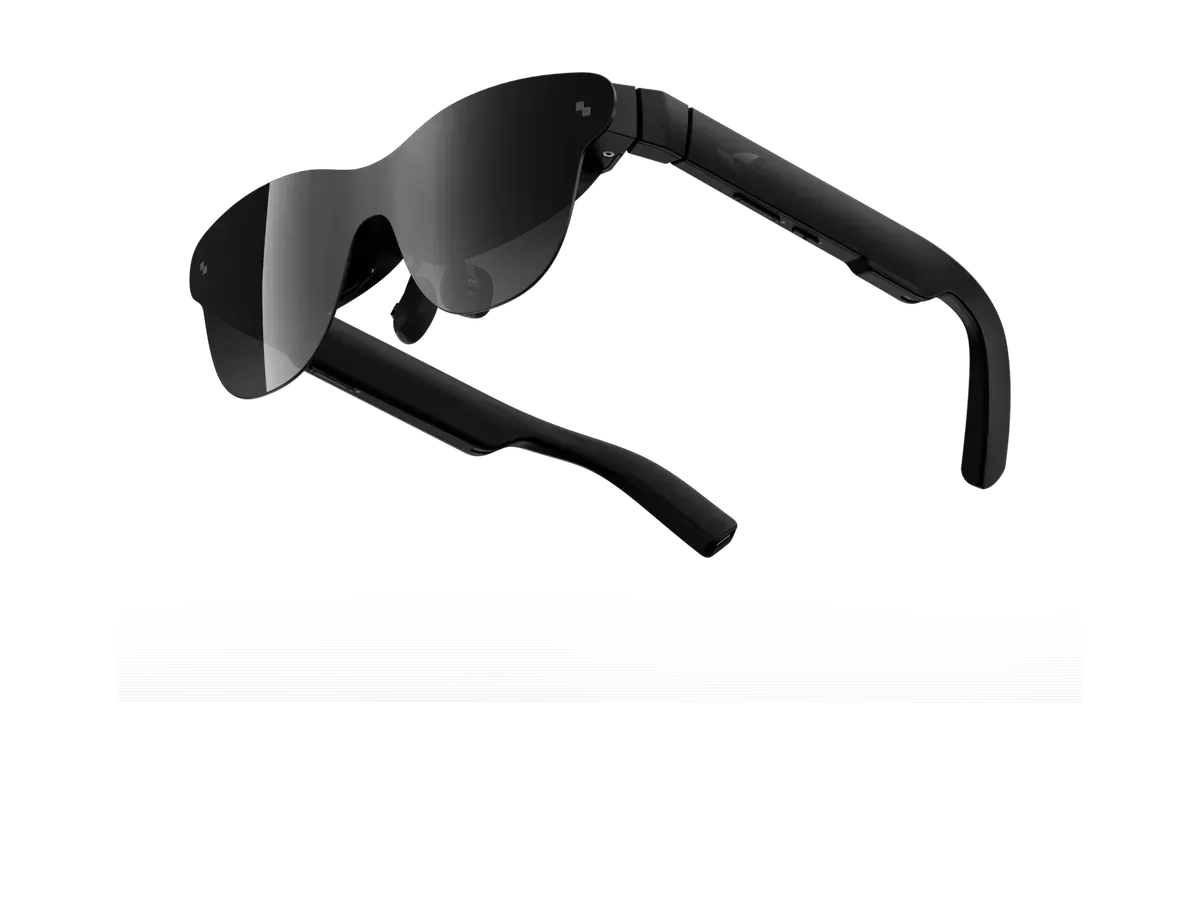
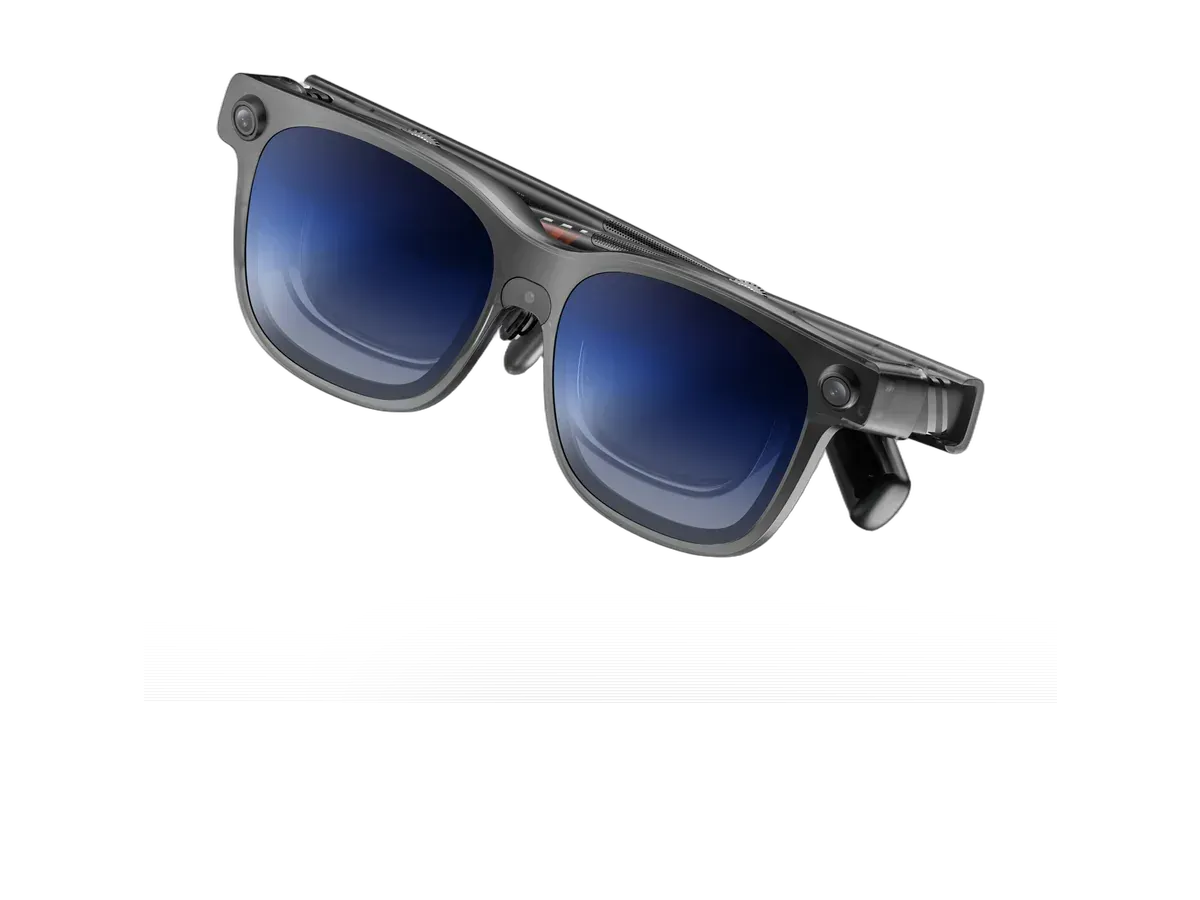
Which should you buy?
Bottom line: the RayNeo Air 4 Pro is the better buy for most people at $300 less, unless you need the wider field of view.
We may earn a commission on purchases made through links on this page.
Buy the RayNeo Air 4 Pro if…
- You want to spend $300 less ($299 vs $599)
- You want the lighter 76g fit (vs 83g)
- You want HDR support
- You want spatial audio
Buy the VITURE Luma Ultra XR/AR Glasses if…
- You want the wider 52° field of view (vs 47°)
- You need the brighter 1500-nit display (vs 1200 nits)
- You want adjustable lens dimming
- You play on Xbox
Verdict generated from the recorded spec differences shown in the table below — when a spec is missing for either product, it is left out rather than guessed.
See the full rankings
Specs Comparison
Specs last verified
| Specification |  RayNeo Air 4 Pro $299 RayNeo Air 4 Pro $299 |  VITURE Luma Ultra XR/AR Glasses $599 VITURE Luma Ultra XR/AR Glasses $599 |
|---|---|---|
| Price | ||
| Price | $299 | $599 |
| Display | ||
| Display type | Micro-OLED with HDR10 (first AR glasses with HDR10 display), Vision 4000 co-processor | Sony Micro-OLED (latest-gen panels) |
| Resolution | 1920x1080 | 1920x1200 |
| Pixels per degree | 41 | — |
| Field of view (°) | 47 | 52 |
| Refresh rate (Hz) | 120 | 120 |
| Brightness (nits) | 1200 | 1500 |
| Virtual screen size (in) | 201 | 152 |
| HDR support | ✓ Yes | — |
| Color support | Full color | Full color |
| Optics | ||
| Optics type | birdbath | birdbath |
| Dimming control | ✕ No | ✓ Yes |
| Transparency level | 3840Hz PWM hybrid dimming, 10-level brightness | — |
| Prescription support | ✓ Yes | ✓ Yes |
| Diopter range | Prescription lens insert frame (sample in box); lenses via Lensology | Built-in myopia adjustment up to -4.0D; clip-on Rx frame for astigmatism/hyperopia (SPH -16 to +12, CYL 6) |
| Physical | ||
| Weight (g) | 76 | 83 |
| Frame style | wraparound | — |
| Color options | Black | — |
| Foldable | ✓ Yes | ✕ No |
| Battery & power | ||
| Charging method | USB-C (powered by connected device) | — |
| Connectivity | ||
| Connectivity | USB-C | USB-C (DP Alt Mode) |
| Tethered | ✓ Yes | — |
| Compatible devices | Android, iOS, PC, Mac, Steam Deck, Nintendo Switch 2, PlayStation 5, ROG Ally | Android, iOS, PC, Mac, Steam Deck, Nintendo Switch 2, PlayStation, Xbox, ROG Ally, Lenovo Legion Go, iPad |
| Computing | ||
| Processing type | tethered | — |
| Operating system | None (plug-and-play external display) | iPhone, Android, Mac, PC, Switch/Switch 2, Steam Deck |
| Chipset | Vision 4000 image chip (co-developed with Pixelworks) for AI SDR-to-HDR upscaling and 2D-to-3D conversion | Host-powered (6DoF works on Pro Neckband, macOS, Windows via SpaceWalker) |
| Sensors & input | ||
| Camera | ✕ No | ✕ No |
| Microphones | 2 | — |
| Speakers | directional · spatial audio | open-ear |
| Tracking | — | 6DoF |
Buy the RayNeo Air 4 Pro
Buy the VITURE Luma Ultra XR/AR Glasses
Keep shopping
Jump straight to full specs and where to buy either model, or keep exploring related picks.
More ways to decide
All VITURE vs RayNeo comparisons
RayNeo Air 4 Pro vs VITURE Luma Ultra XR/AR Glasses: FAQs
Which is newer: the RayNeo Air 4 Pro or the VITURE Luma Ultra XR/AR Glasses?
The RayNeo Air 4 Pro is newer, released January 2026, versus August 2025 for the VITURE Luma Ultra XR/AR Glasses.
Which is cheaper: the RayNeo Air 4 Pro or the VITURE Luma Ultra XR/AR Glasses?
The RayNeo Air 4 Pro costs $299 and the VITURE Luma Ultra XR/AR Glasses costs $599, making the RayNeo Air 4 Pro $300 cheaper.
Which has the larger field of view: the RayNeo Air 4 Pro or the VITURE Luma Ultra XR/AR Glasses?
The VITURE Luma Ultra XR/AR Glasses has the larger field of view: RayNeo Air 4 Pro measures 47 degrees vs 52 degrees for the VITURE Luma Ultra XR/AR Glasses.
Which is lighter: the RayNeo Air 4 Pro or the VITURE Luma Ultra XR/AR Glasses?
The RayNeo Air 4 Pro is lighter at 76g. The RayNeo Air 4 Pro weighs 76g and the VITURE Luma Ultra XR/AR Glasses weighs 83g.
Which has the brighter display: the RayNeo Air 4 Pro or the VITURE Luma Ultra XR/AR Glasses?
The VITURE Luma Ultra XR/AR Glasses is brighter at 1500 nits (RayNeo Air 4 Pro: 1200 nits, VITURE Luma Ultra XR/AR Glasses: 1500 nits).
What is the main difference between the RayNeo Air 4 Pro and the VITURE Luma Ultra XR/AR Glasses?
Based on recorded specs, the RayNeo Air 4 Pro leads on price ($300 cheaper) while the VITURE Luma Ultra XR/AR Glasses leads on field of view (5 degrees wider FOV).