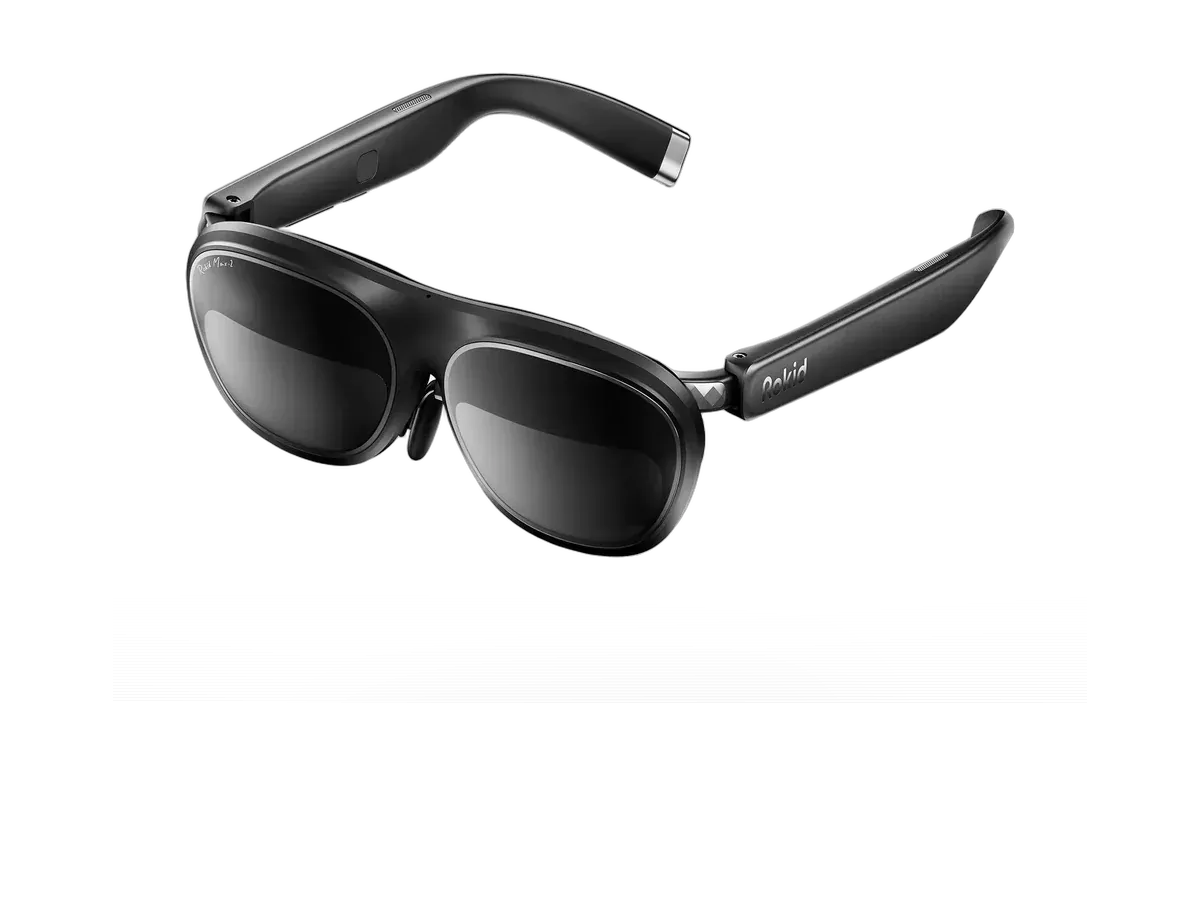
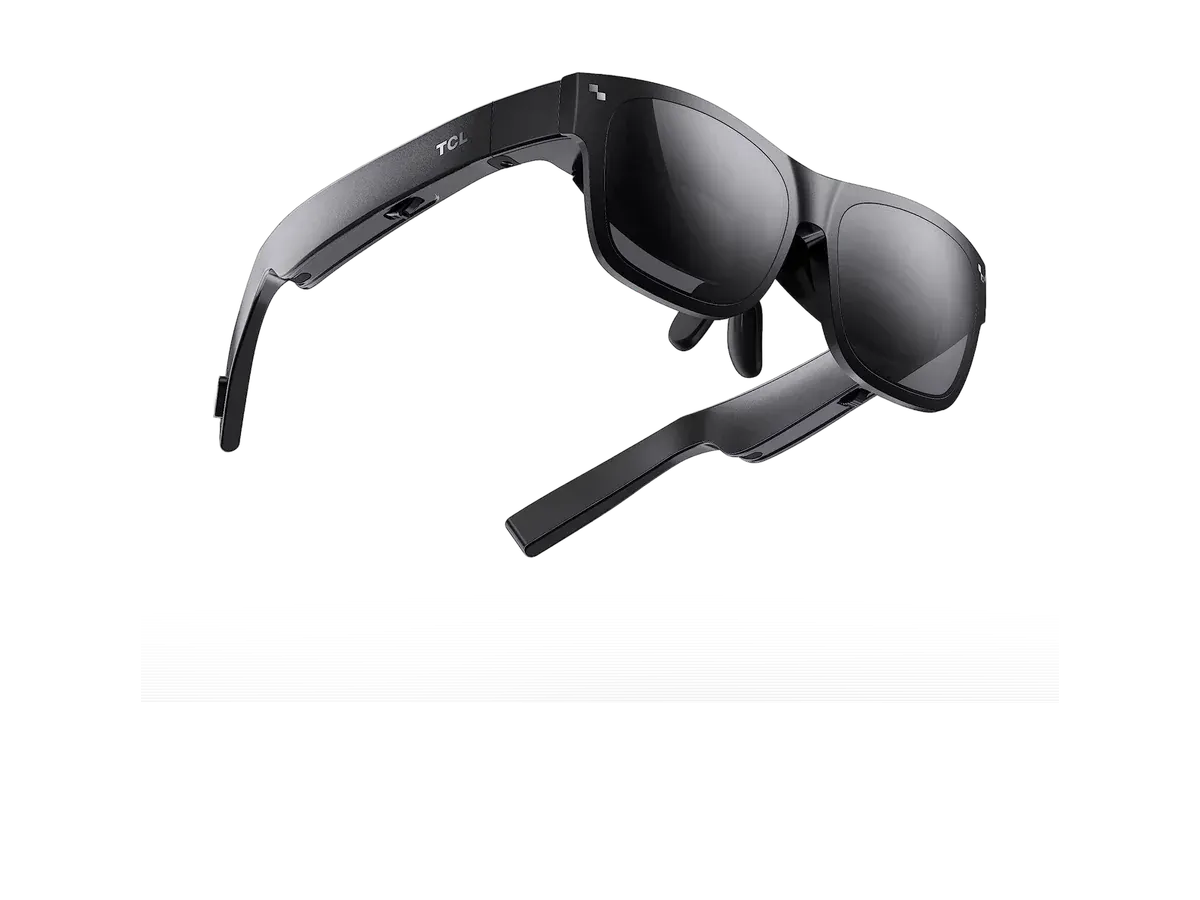
Rokid Max 2 vs TCL NxtWear S
Side-by-side comparison of specs, features, and pricing
Specs updated
Which should you buy?
Bottom line: the TCL NxtWear S is the better buy for most people at $30 less, unless you need the wider field of view.
We may earn a commission on purchases made through links on this page.
Buy the Rokid Max 2 if…
- You want the wider 50° field of view (vs 45°)
- You need the brighter 600-nit display (vs 400 nits)
- You want the lighter 75g fit (vs 89g)
- You want smoother 120Hz motion (vs 60Hz)
Buy the TCL NxtWear S if…
- You want to spend $30 less ($399 vs $429)
Verdict generated from the recorded spec differences shown in the table below — when a spec is missing for either product, it is left out rather than guessed.
See the full rankings
Specs Comparison
Specs last verified
| Specification |  Rokid Max 2 $429 Rokid Max 2 $429 |  TCL NxtWear S $399 TCL NxtWear S $399 |
|---|---|---|
| Price | ||
| Price | $429 | $399 |
| Display | ||
| Display type | Sony 0.68" Micro-OLED | Sony Micro-OLED |
| Resolution | 1920x1200 | 1920x1080 |
| Pixels per degree | 38 | 49 |
| Field of view (°) | 50 | 45 |
| Refresh rate (Hz) | 120 | 60 |
| Brightness (nits) | 600 | 400 |
| Virtual screen size (in) | 215 | 130 |
| HDR support | ✕ No | ✕ No |
| Color support | Full color | Full color |
| Optics | ||
| Optics type | birdbath | birdbath |
| Dimming control | ✓ Yes | ✓ Yes |
| Transparency level | — | electrochromic (adjustable tint) |
| Prescription support | ✓ Yes | ✓ Yes |
| Diopter range | 0.00 to -6.00 | Prescription inserts available |
| Physical | ||
| Weight (g) | 75 | 89 |
| Frame style | wraparound | wraparound |
| Color options | Night Black, Dawn Silver | Dark Gray |
| Foldable | ✓ Yes | ✓ Yes |
| Battery & power | ||
| Charging method | USB-C (powered by connected device) | USB-C (powered by connected device) |
| Connectivity | ||
| Connectivity | USB-C | USB-C |
| Tethered | ✓ Yes | ✓ Yes |
| Compatible devices | Android, iOS, PC, Mac, Steam Deck, ROG Ally, Nintendo Switch, PlayStation, Xbox | Android, iOS, PC, Mac, Steam Deck, ROG Ally, PlayStation, Xbox, Nintendo Switch |
| Computing | ||
| Processing type | tethered | tethered |
| Operating system | None standalone; YodaOS-Master via Rokid Station 2 | — |
| Chipset | None (tethered display glasses) | — |
| Sensors & input | ||
| Camera | ✕ No | ✕ No |
| Microphones | 1 | 2 |
| Speakers | directional | open-ear |
Buy the Rokid Max 2
Buy the TCL NxtWear S
Keep shopping
Jump straight to full specs and where to buy either model, or keep exploring related picks.
Rokid Max 2 vs TCL NxtWear S: FAQs
Which is newer: the Rokid Max 2 or the TCL NxtWear S?
The Rokid Max 2 is newer, released November 2024, versus June 2023 for the TCL NxtWear S.
Which is cheaper: the Rokid Max 2 or the TCL NxtWear S?
The Rokid Max 2 costs $429 and the TCL NxtWear S costs $399, making the TCL NxtWear S $30 cheaper.
Which has the larger field of view: the Rokid Max 2 or the TCL NxtWear S?
The Rokid Max 2 has the larger field of view: Rokid Max 2 measures 50 degrees vs 45 degrees for the TCL NxtWear S.
Which is lighter: the Rokid Max 2 or the TCL NxtWear S?
The Rokid Max 2 is lighter at 75g. The Rokid Max 2 weighs 75g and the TCL NxtWear S weighs 89g.
Which has the brighter display: the Rokid Max 2 or the TCL NxtWear S?
The Rokid Max 2 is brighter at 600 nits (Rokid Max 2: 600 nits, TCL NxtWear S: 400 nits).
What is the main difference between the Rokid Max 2 and the TCL NxtWear S?
Based on recorded specs, the Rokid Max 2 leads on weight (14g lighter) while the TCL NxtWear S leads on price ($30 cheaper).