RayNeo Air 4 Pro vs XREAL One
Side-by-side comparison of specs, features, and pricing
Specs updated
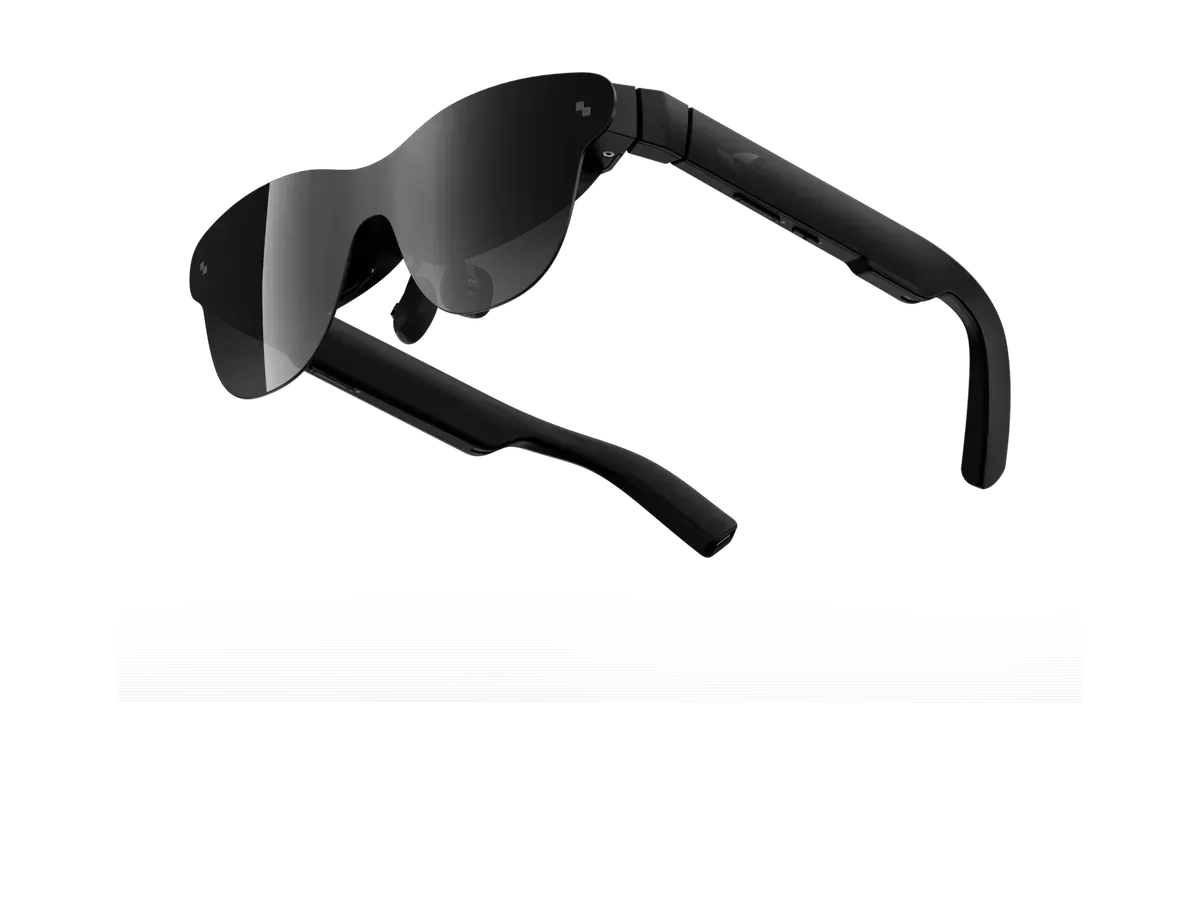
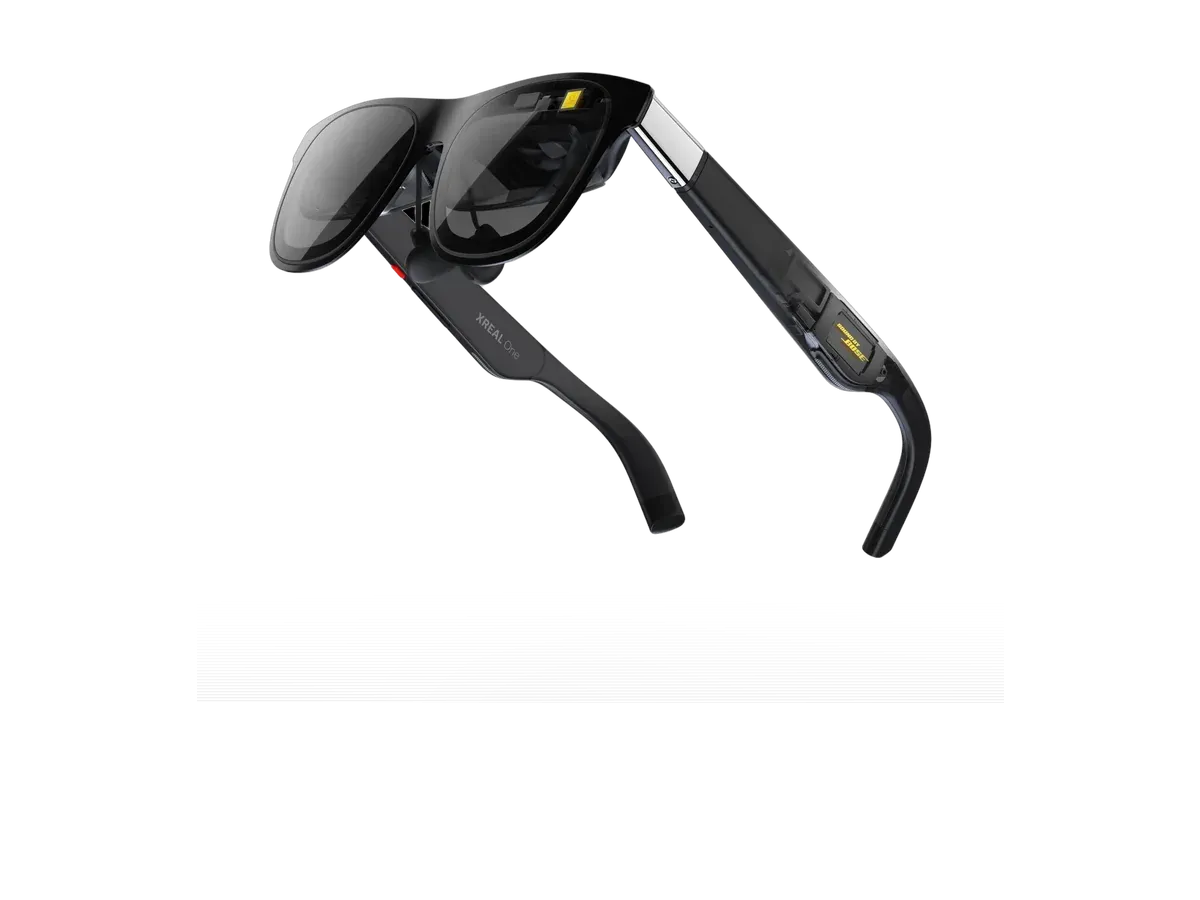
Which should you buy?
Bottom line: the RayNeo Air 4 Pro is the better buy for most people at $100 less, unless you need the wider field of view.
We may earn a commission on purchases made through links on this page.
Buy the RayNeo Air 4 Pro if…
- You want to spend $100 less ($299 vs $399)
- You need the brighter 1200-nit display (vs 600 nits)
- You want the lighter 76g fit (vs 84g)
- You want HDR support
Buy the XREAL One if…
- You want the wider 50° field of view (vs 47°)
- You want adjustable lens dimming
- You play on Xbox
Verdict generated from the recorded spec differences shown in the table below — when a spec is missing for either product, it is left out rather than guessed.
See the full rankings
Specs Comparison
| Specification |  RayNeo Air 4 Pro $299 RayNeo Air 4 Pro $299 |  XREAL One $399 XREAL One $399 |
|---|---|---|
| Price | ||
| Price | $299 | $399 |
| Display | ||
| Display type | Micro-OLED with HDR10 (first AR glasses with HDR10 display), Vision 4000 co-processor | 0.68-inch Sony Micro-OLED |
| Resolution | 1920x1080 | 1920x1080 |
| Pixels per degree | 41 | 42 |
| Field of view (°) | 47 | 50 |
| Refresh rate (Hz) | 120 | 120 |
| Brightness (nits) | 1200 | 600 |
| Virtual screen size (in) | 201 | 147 |
| HDR support | ✓ Yes | ✕ No |
| Color support | Full color | Full color |
| Optics | ||
| Optics type | birdbath | birdbath |
| Dimming control | ✕ No | ✓ Yes |
| Transparency level | 3840Hz PWM hybrid dimming, 10-level brightness | 3-level electrochromic (0%, 35%, 100%) |
| Prescription support | ✓ Yes | ✓ Yes |
| Diopter range | Prescription lens insert frame (sample in box); lenses via Lensology | Prescription lens inserts (shared One/1S SKU, $49.90 at XREAL; no maker-published range) |
| Physical | ||
| Weight (g) | 76 | 84 |
| Frame style | wraparound | wraparound |
| Color options | Black | Black |
| Foldable | ✓ Yes | ✓ Yes |
| Battery & power | ||
| Charging method | USB-C (powered by connected device) | USB-C (powered by connected device) |
| Connectivity | ||
| Connectivity | USB-C | USB-C |
| Tethered | ✓ Yes | ✓ Yes |
| Compatible devices | Android, iOS, PC, Mac, Steam Deck, Nintendo Switch 2, PlayStation 5, ROG Ally | Android, iOS, PC, Mac, Steam Deck, Nintendo Switch, PlayStation, Xbox, Samsung DeX, iPad |
| Computing | ||
| Processing type | tethered | tethered |
| Operating system | None (plug-and-play external display) | Works with iPhone/iPad, Android, Windows, macOS, Steam Deck, consoles (via adapter/Hub) |
| Chipset | Vision 4000 image chip (co-developed with Pixelworks) for AI SDR-to-HDR upscaling and 2D-to-3D conversion | XREAL X1 spatial computing chip (~3ms M2P latency) |
| Sensors & input | ||
| Camera | ✕ No | ✕ No |
| Microphones | 2 | 2 |
| Speakers | directional · spatial audio | directional · spatial audio |
| Tracking | — | 3DoF |
Buy the RayNeo Air 4 Pro
Buy the XREAL One
Keep shopping
Jump straight to full specs and where to buy either model, or keep exploring related picks.
More ways to decide
All XREAL vs RayNeo comparisons
RayNeo Air 4 Pro vs XREAL One: FAQs
Which is newer: the RayNeo Air 4 Pro or the XREAL One?
The RayNeo Air 4 Pro is newer, released January 2026, versus December 2024 for the XREAL One.
Which is cheaper: the RayNeo Air 4 Pro or the XREAL One?
The RayNeo Air 4 Pro costs $299 and the XREAL One costs $399, making the RayNeo Air 4 Pro $100 cheaper.
Which has the larger field of view: the RayNeo Air 4 Pro or the XREAL One?
The XREAL One has the larger field of view: RayNeo Air 4 Pro measures 47 degrees vs 50 degrees for the XREAL One.
Which is lighter: the RayNeo Air 4 Pro or the XREAL One?
The RayNeo Air 4 Pro is lighter at 76g. The RayNeo Air 4 Pro weighs 76g and the XREAL One weighs 84g.
Which has the brighter display: the RayNeo Air 4 Pro or the XREAL One?
The RayNeo Air 4 Pro is brighter at 1200 nits (RayNeo Air 4 Pro: 1200 nits, XREAL One: 600 nits).
What is the main difference between the RayNeo Air 4 Pro and the XREAL One?
Based on recorded specs, the RayNeo Air 4 Pro leads on price ($100 cheaper) while the XREAL One leads on field of view (3 degrees wider FOV).