Rokid Max vs XREAL Air
Side-by-side comparison of specs, features, and pricing
Specs updated
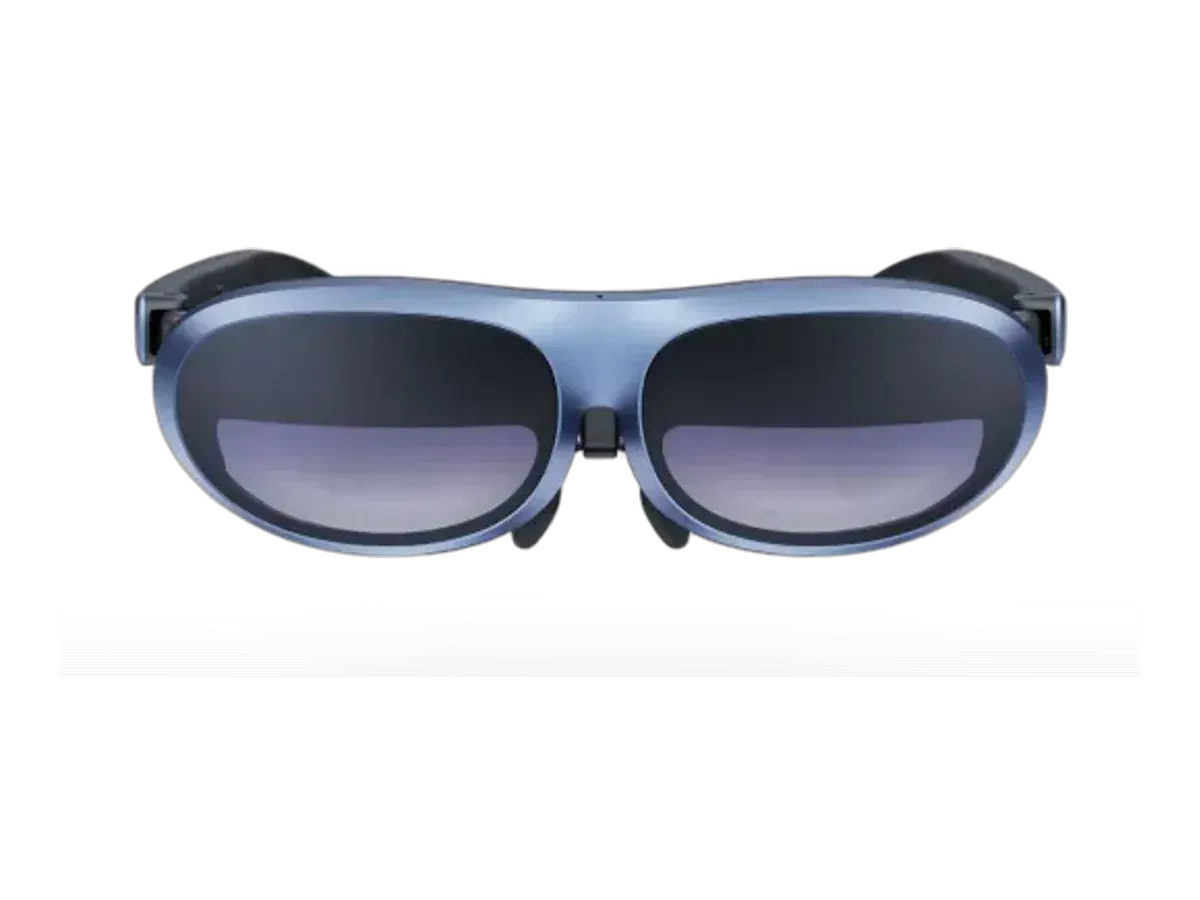
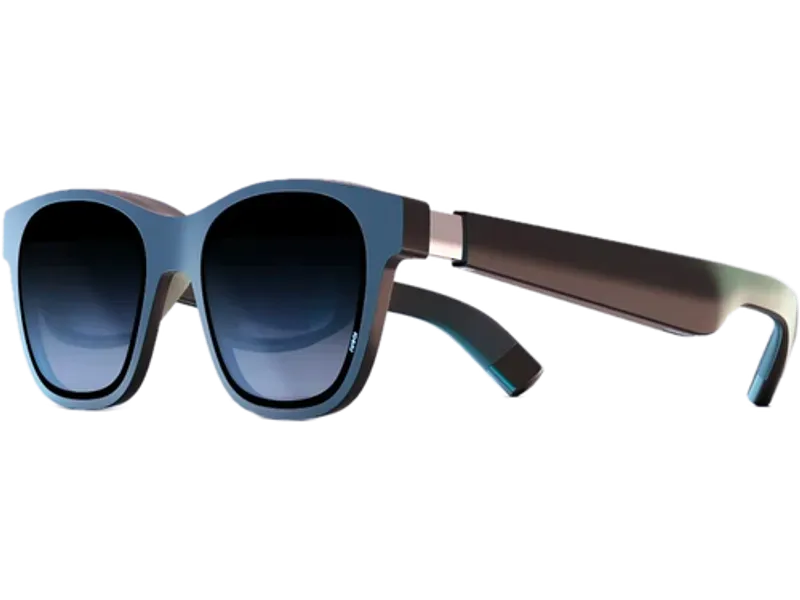
Which should you buy?
Bottom line: the Rokid Max is the better buy for most people at $220 less, unless you need adjustable lens dimming.
We may earn a commission on purchases made through links on this page.
Buy the Rokid Max if…
- You want to spend $220 less ($159 vs $379)
- You want the wider 50° field of view (vs 46°)
- You need the brighter 600-nit display (vs 400 nits)
Buy the XREAL Air if…
- You want adjustable lens dimming
Verdict generated from the recorded spec differences shown in the table below — when a spec is missing for either product, it is left out rather than guessed.
See the full rankings
Specs Comparison
Specs last verified
| Specification |  Rokid Max $159 |  XREAL Air $379 |
|---|---|---|
| Price | ||
| Price | $159 | $379 |
| Display | ||
| Display type | Sony Micro-OLED | Sony 0.68-inch Micro-OLED |
| Resolution | 1920x1080 | 1920x1080 |
| Pixels per degree | — | 49 |
| Field of view (°) | 50 | 46 |
| Refresh rate (Hz) | 120 | 120 |
| Brightness (nits) | 600 | 400 |
| Virtual screen size (in) | 215 | 201 |
| HDR support | ✕ No | — |
| Color support | Full color | Full color |
| Optics | ||
| Optics type | birdbath | birdbath |
| Dimming control | — | ✓ Yes |
| Prescription support | ✓ Yes | ✓ Yes |
| Diopter range | 0.00 to -6.00 | Prescription lens insert frame ships in the box; lenses fitted by an optician — XREAL published no partner list or diopter range for the original Air |
| Physical | ||
| Weight (g) | 75 | 79 |
| Frame style | wraparound | — |
| Color options | Space Blue | — |
| Foldable | ✓ Yes | ✕ No |
| Battery & power | ||
| Charging method | USB-C (powered by connected device) | — |
| Connectivity | ||
| Connectivity | USB-C | USB-C (DP Alt Mode) |
| Tethered | ✓ Yes | — |
| Compatible devices | Android, iOS, PC, Mac, Steam Deck, ROG Ally, Nintendo Switch, PlayStation, Xbox | Android, iOS, PC, Mac, Steam Deck, Nintendo Switch, PlayStation, Xbox, ROG Ally |
| Computing | ||
| Processing type | tethered | — |
| Operating system | — | Android, Windows, macOS, Steam Deck, ROG Ally; iPhone and HDMI hosts via the XREAL Adapter; consoles via XREAL Beam |
| Chipset | — | None on-device (plain USB-C display; spatial features require XREAL Beam or host app) |
| Sensors & input | ||
| Camera | ✕ No | ✕ No |
| Microphones | 1 | 2 |
| Speakers | directional | open-ear |
| Tracking | 3DoF | 3DoF |
Buy the Rokid Max
Buy the XREAL Air
Keep shopping
Jump straight to full specs and where to buy either model, or keep exploring related picks.
More ways to decide
All XREAL vs Rokid comparisons
Two originals, both retired
XREAL Air vs Rokid Max is a used-and-clearance decision now: these are the glasses that started their makers' consumer lines, and neither is sold new any more — Rokid's own store carries the Max 2 in its place, and XREAL's current range has moved on entirely. Both are discontinued tethered viewers: they draw power from whatever phone, console, or computer they are plugged into over USB-C, so there is no battery inside to age out, and both put the same 1920x1080 picture in front of each eye.
On the recorded sheets the older Rokid frame holds the stronger hand. Its window is wider at 50 degrees against 46, its picture is rated brighter at 600 nits against 400, and it is a little lighter at 75 grams against 79. It also carries a feature the Air never had: focus dials above each lens that let nearsighted wearers adjust from 0.00 to -6.00 without inserts — Rokid's published range, with stronger prescriptions pointed to an add-on lens mount. The Air answers with reach rather than numbers: it rode XREAL's adapters and software across phones, consoles, and desktops, and it projects a 201-inch virtual screen against the Max's 215.
Who should still buy one — and who should move on
If either turns up at a genuinely low used price, the decision tilts the way the numbers do: the Max gives you more window, more brightness, and the built-in focus dials, so it is the stronger secondhand pick for most people. The Air makes sense when it comes bundled with XREAL accessories you plan to use, or when it is simply the cheaper find. Treat both as what they are — first-generation hardware bought secondhand — and check hinge and cable wear before paying.
Most people reading this in 2026 are better served one shelf up. The Rokid Max 2 keeps the 50-degree window and the same 0.00 to -6.00 focus dials while sharpening the panels to 1920x1200, and XREAL's One line adds an on-glasses spatial chip the originals never had, with the One Pro stretching the window to 57 degrees. Pick the Rokid Max when a bargain appears and the focus dials matter to your eyes; pick the XREAL Air only when its price or bundle beats the Max's — and if you are buying new, start with the Rokid Max 2 or the XREAL One instead.
Rokid Max vs XREAL Air: FAQs
Which is newer: the Rokid Max or the XREAL Air?
The Rokid Max is newer, released March 2023, versus September 2022 for the XREAL Air.
Which is cheaper: the Rokid Max or the XREAL Air?
The Rokid Max costs $159 and the XREAL Air costs $379, making the Rokid Max $220 cheaper.
Which has the larger field of view: the Rokid Max or the XREAL Air?
The Rokid Max has the larger field of view: Rokid Max measures 50 degrees vs 46 degrees for the XREAL Air.
Which is lighter: the Rokid Max or the XREAL Air?
The Rokid Max is lighter at 75g. The Rokid Max weighs 75g and the XREAL Air weighs 79g.
Which has the brighter display: the Rokid Max or the XREAL Air?
The Rokid Max is brighter at 600 nits (Rokid Max: 600 nits, XREAL Air: 400 nits).