Brilliant Labs Halo AI Glasses vs Even Realities G2
Side-by-side comparison of specs, features, and pricing
Specs updated
Which should you buy?
Bottom line: the Brilliant Labs Halo AI Glasses is the better buy for most people at $200 less, unless you need the longer battery life.
We may earn a commission on purchases made through links on this page.
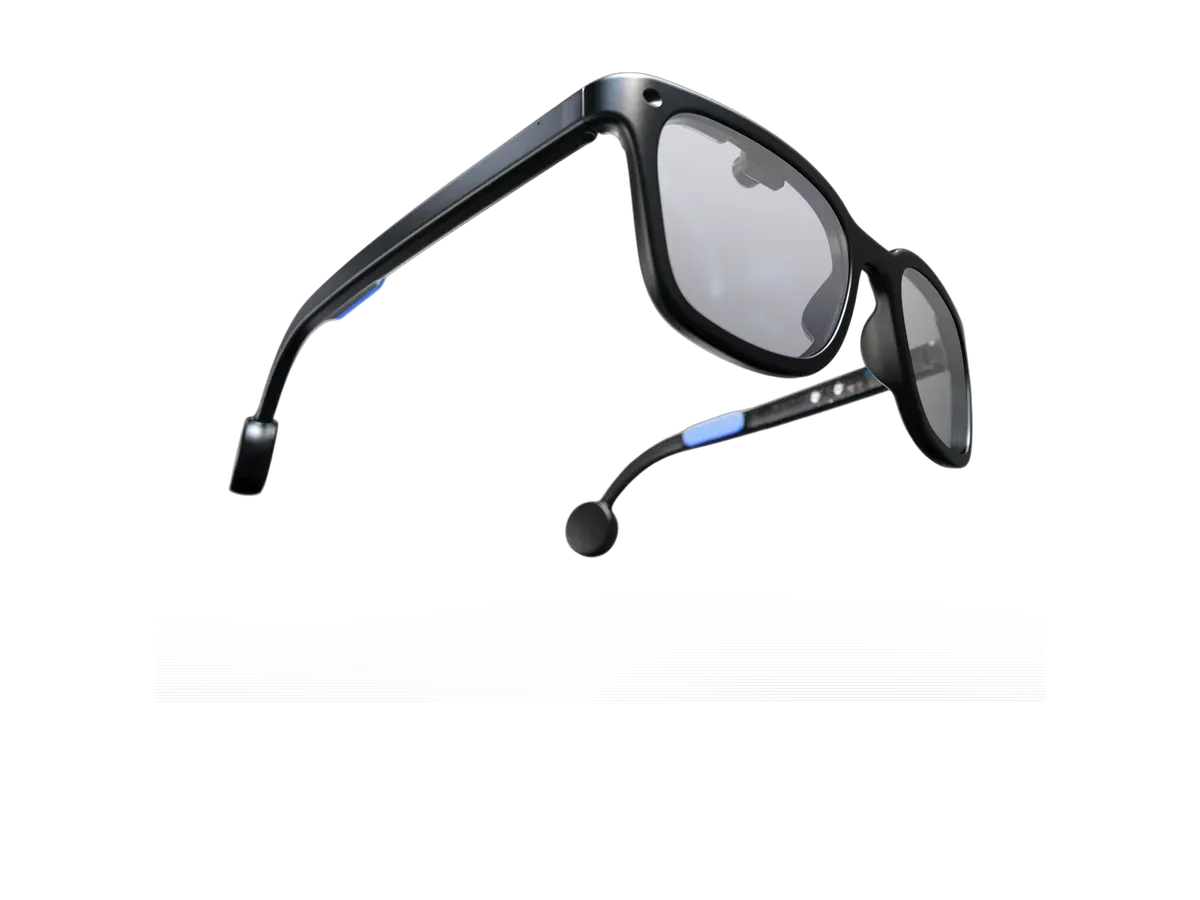
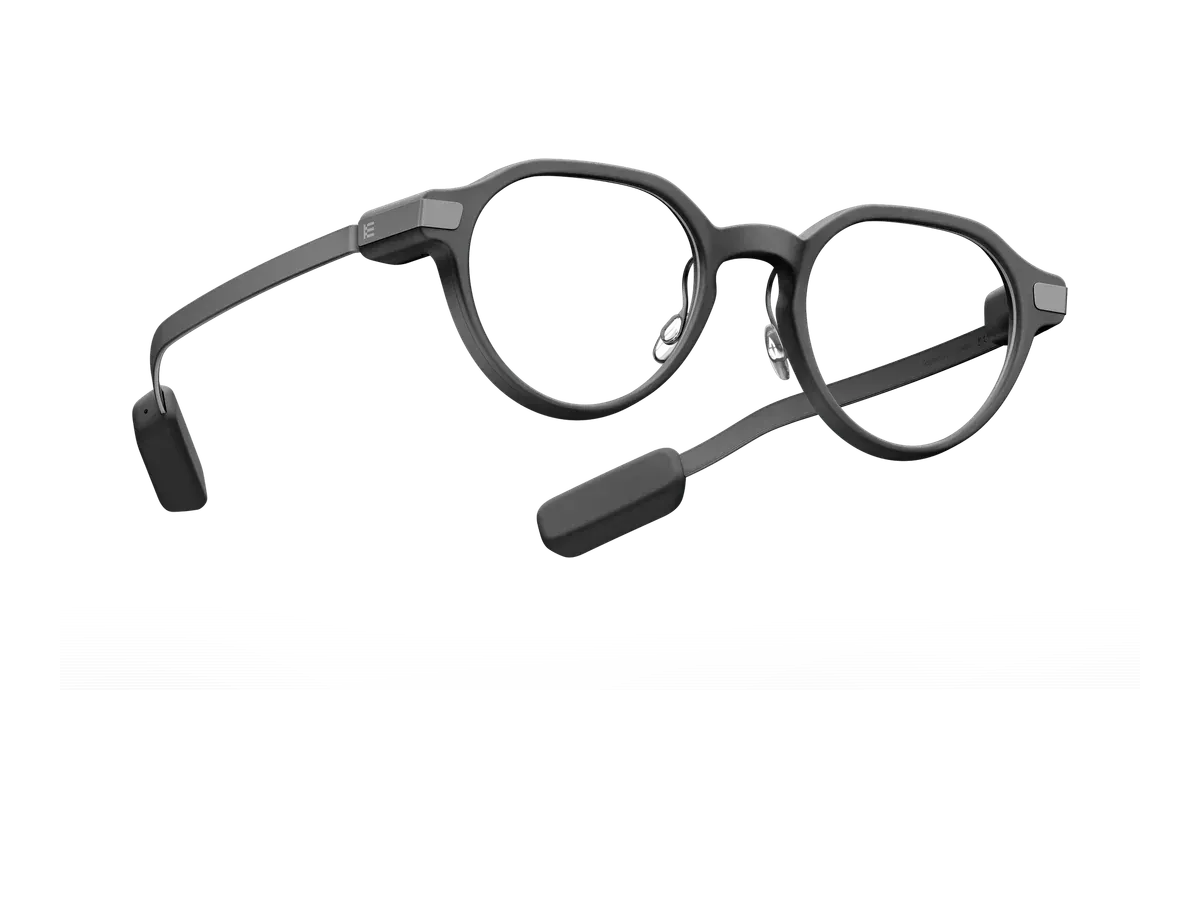
Two opposite answers to the everyday heads-up display: Even Realities hides a binocular green display inside ordinary-looking frames and leaves the camera out on purpose, while Brilliant Labs ships a full-color monocular module, an open-source stack, and a small vision camera that lets its assistant see what you see. The verdict weighs finished polish against hackability.
Buy the Brilliant Labs Halo AI Glasses if…
- You want to spend $200 less ($399 vs $599)
- You want a built-in camera
Buy the Even Realities G2 if…
- You need longer battery life (48 hours vs 14)
- You want adjustable lens dimming
Verdict generated from the recorded spec differences shown in the table below — when a spec is missing for either product, it is left out rather than guessed.
Specs Comparison
| Specification |  Brilliant Labs Halo AI Glasses $399 Brilliant Labs Halo AI Glasses $399 |  Even Realities G2 $599 Even Realities G2 $599 |
|---|---|---|
| Price | ||
| Price | $399 | $599 |
| Optics | ||
| Optics type | — | waveguide |
| Dimming control | ✕ No | ✓ Yes |
| Transparency level | — | 98% passthrough |
| Prescription support | ✓ Yes | ✓ Yes |
| Diopter range | yes, via SmartBuyGlasses partnership; display optic itself adjusts +2 to -6 D | -12.00 to +12.00 |
| Physical | ||
| Weight (g) | 40 | 36 |
| Frame style | — | classic panto and rectangular |
| Color options | — | Black, Silver, Brown |
| Foldable | ✕ No | ✓ Yes |
| IP rating | — | IP65 |
| Battery & power | ||
| Battery life (hours) | 14 | 48 |
| Charging method | — | Wireless charging case |
| Charging time (min) | — | 1.25 |
| Connectivity | ||
| Connectivity | — | Bluetooth 5.4 |
| Tethered | ✕ No | ✕ No |
| Compatible devices | iOS, Android | iOS, Android |
| Computing | ||
| Processing type | — | phone |
| Operating system | Noa AI agent with agentic long-term 'narrative memory'; Vibe Mode voice-coded mini apps | Even AI companion app; Conversate contextual AI, 31-language live translation, teleprompter, navigation with geomagnetic sensor |
| Chipset | Alif Ensemble B1 (Cortex-M55 + Ethos NPU) for on-device AI; Liquid AI LFM2-VL-450M vision-language model on-device | phone-tethered (Even AI app) |
| Sensors & input | ||
| Camera | 640x480 (0.3MP, global shutter) | ✕ No |
| Microphones | — | 4 |
| Speakers | bone-conduction | ✕ No |
| Tracking | 0DoF | — |
| Gesture control | ✕ No | ✕ No |
| Voice control | ✕ No | ✓ Yes |
| AI assistant | — | Even AI |
Buy the Brilliant Labs Halo AI Glasses
Buy the Even Realities G2
Keep shopping
Jump straight to full specs and where to buy either model, or keep exploring related picks.
More ways to decide
Two different ideas of what smart glasses should be
These two approach the same promise — useful information floating inside an ordinary-looking pair of glasses — from opposite directions. The Even Realities G2 is a finished consumer product: a binocular green display projected through waveguides into a 36-gram titanium-and-magnesium frame, built to be worn all day and forgotten. The Brilliant Labs Halo is an open platform in the same weight class: a single full-color monocular microOLED module in a 40-gram frame, aimed at people who want to program their glasses rather than just wear them. Its hardware and software are open source, and its Vibe Mode turns spoken descriptions into small on-glasses apps.
Daily-wear practicality leans clearly one way. The G2 carries an IP65 rating against dust and rain, runs about two days between charges — 48 hours against the Halo's claimed 14 — and its wireless charging case holds seven more full charges. It also covers prescriptions from -12 to +12 diopters with custom lenses. The Halo answers differently: its display optic adjusts from +2 to -6 diopters on its own, and a maker-named lens partner handles full prescriptions.
The camera is the real dividing line
The G2 deliberately has no camera at all: its assistant works from voice and text, which keeps the glasses welcome in meetings and places where camera eyewear raises eyebrows. The Halo takes the opposite bet with a small 640x480 global-shutter camera that feeds its Noa assistant — a computer-vision sensor rather than a photography camera, and the reason the Halo can answer questions about what is in front of you while the G2 cannot. The Halo also runs a small vision-language model on the frame itself, so some of that understanding happens without leaving the glasses.
Audio and display finish the split. The G2 ships no speakers — you bring your own earbuds — while the Halo plays through bone conduction. The G2's binocular display renders only in green; the Halo's is full color yet monocular, and Brilliant Labs has not published its resolution or field of view. Pick the G2 to wear a discreet, weather-sealed heads-up display every day; pick the Halo to tinker with an open, camera-equipped assistant that costs noticeably less.
Brilliant Labs Halo AI Glasses vs Even Realities G2: FAQs
Which is newer: the Brilliant Labs Halo AI Glasses or the Even Realities G2?
The Brilliant Labs Halo AI Glasses is newer, released August 2026, versus November 2025 for the Even Realities G2.
Which is cheaper: the Brilliant Labs Halo AI Glasses or the Even Realities G2?
The Brilliant Labs Halo AI Glasses costs $399 and the Even Realities G2 costs $599, making the Brilliant Labs Halo AI Glasses $200 cheaper.
Which is lighter: the Brilliant Labs Halo AI Glasses or the Even Realities G2?
The Even Realities G2 is lighter at 36g. The Brilliant Labs Halo AI Glasses weighs 40g and the Even Realities G2 weighs 36g.
What is the main difference between the Brilliant Labs Halo AI Glasses and the Even Realities G2?
Based on recorded specs, the Brilliant Labs Halo AI Glasses leads on price ($200 cheaper) while the Even Realities G2 leads on weight (4g lighter).