Skip to content

Best of

Best smart glasses for music

Ranked for listening: open-ear sound, recorded battery, weight and splash rating — not just a radio-chip checklist.

Our top pick for music is the Ray-Ban Meta Audio at $349.

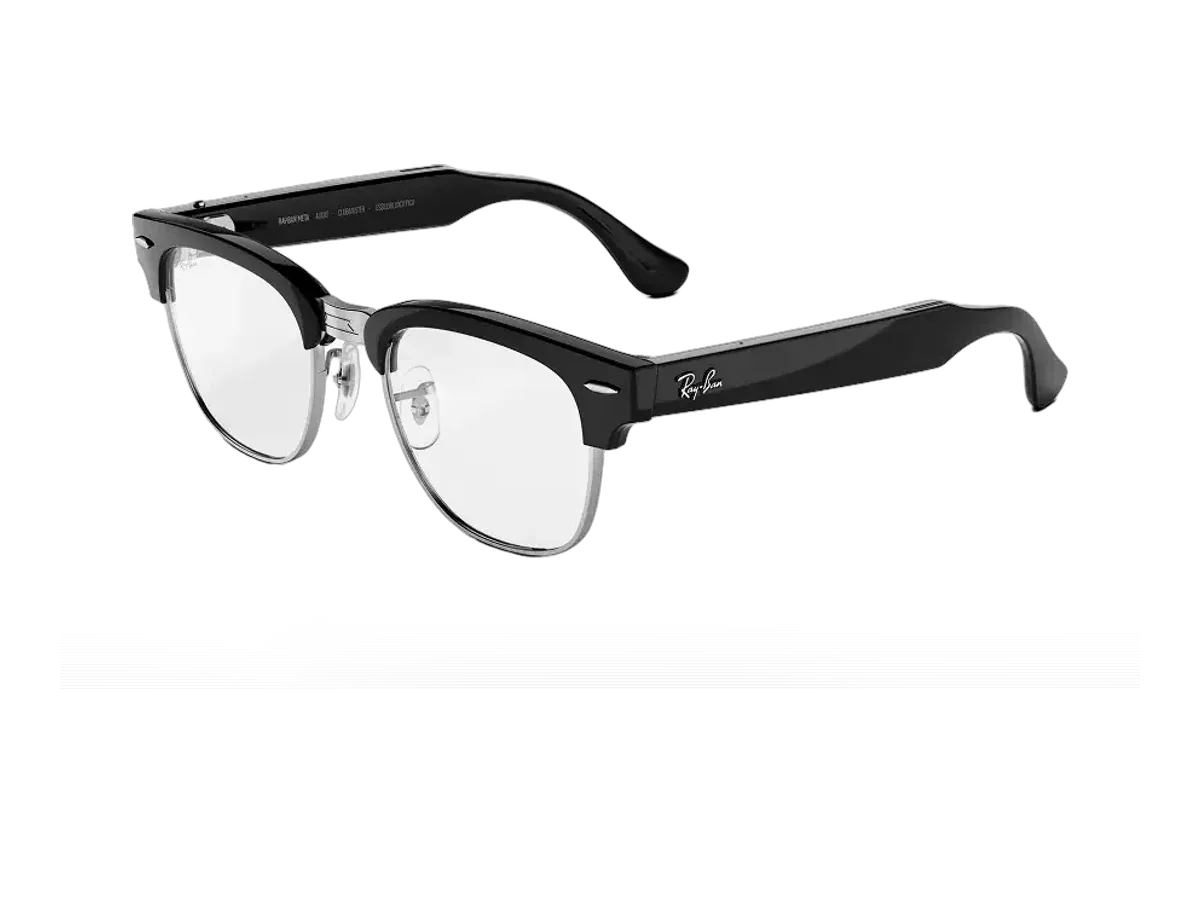
Ray-Ban Meta Audio

Our top pick

Ray-Ban Meta Audio · $349

Buy at Meta Store See full ranking ↓

Product data last updated

Updated November 16, 2026. Best smart glasses for music is a listening question, not a feature checklist: which frames sound good through a playlist, how long the recorded battery really holds, and what open-ear speakers leak to the person beside you. Every ranked pick is an in-stock, priced frame whose record lists music use and real speakers; the scoring then rewards recorded playback battery, light weight for all-day wear, and a published splash rating for sweat and weather. Smart glasses for music also means a trade-off stated up front: open-ear audio keeps you present in the room, and it will never isolate like earbuds — the leakage note below the picks says what that means at volume.

Looking for a different list? See Bluetooth audio glasses.

# Pick Price Best for
1 Ray-Ban Meta Audio $349 Top pick overall
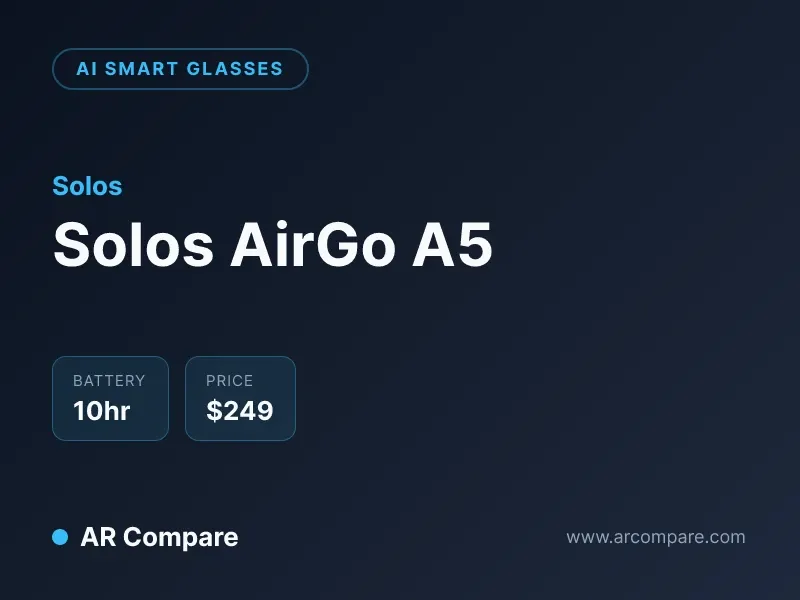
2 Solos AirGo A5 $249 —
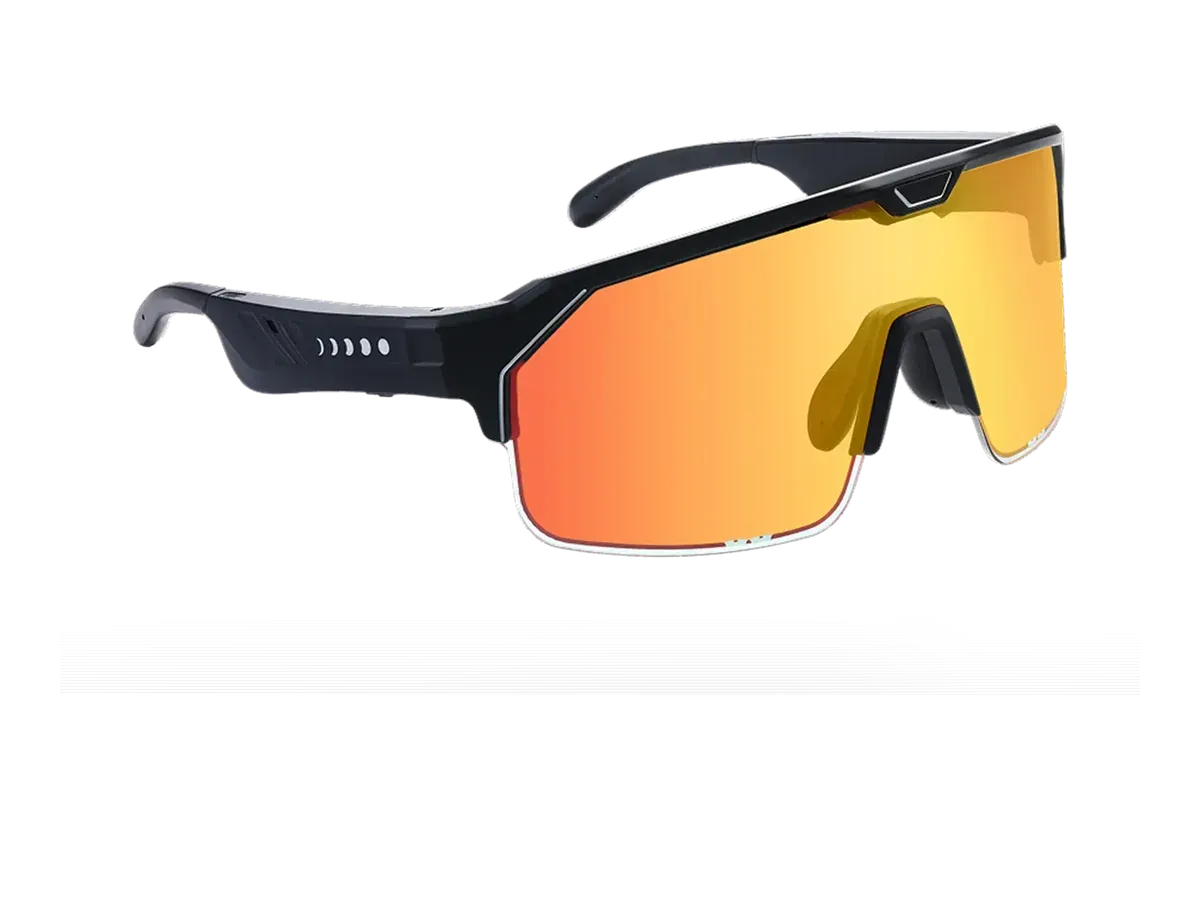
3 Chamelo Music Shield $179 Lowest price here

Ranked by Music use case · Open-ear speakers · battery · Weight · Splash rating · Voice control. Prices verified at Solos, except Ray-Ban Meta Audio (last verified at Meta Store) and Chamelo Music Shield (last verified at Chamelo).

Every pick is scored on the same criteria — a spec the maker doesn’t publish scores zero, and the Best for column marks where a pick leads this list. How we rank and check prices

A quick split saves you a wrong page: if your question is which glasses carry wireless audio at all, that device-class list lives at the Bluetooth glasses ranking; this page ranks the frames that are actually good at the listening itself.

What separates the three picks

The Ray-Ban Meta Audio tops the ranking on the simplest recorded math: 12 hours of recorded battery, the longest here, at 43 grams with an IPX4 splash rating, in a frame whose record is deliberately lens-first: no capture hardware, just speakers, microphones and an assistant. The Solos AirGo A5 brings ten recorded hours and an IP54 rating with swappable frame fronts, and at $249 it is the cheapest way into the group’s long-battery tier. The Chamelo Music Shield is the one built like sports gear: its maker page records 6.5 hours of playback in a 49-gram wraparound with lenses that change tint in a tenth of a second, the pick when your playlist lives outdoors. The Amazon Echo Frames and the Ray-Ban Meta AI Glasses (Gen 1) are not ranked because no store we track sells them new right now.

The open-ear leakage honesty

Every pick fires sound from the temples toward your ears without sealing anything, and the physics of that design is the same in every brand: at moderate volume the audio stays effectively yours; pushed loud in a quiet room, some of it reaches the person beside you. None of these makers publishes a leakage figure, so this page will not invent decibel numbers — the honest guidance is that open-ear frames are built for desks, streets and workouts, and sealed earbuds remain the tool for silent offices and loud commutes. The same openness is the category’s safety feature: your ears stay free for traffic and conversation, which is exactly why these frames work where earbuds are antisocial or unsafe.

Battery numbers, read honestly

The recorded figures in the ranking are maker numbers for typical use, and typical use is not maximum volume: expect continuous loud playback to land under every quoted figure. The spread is real — from 6.5 recorded hours on the Chamelo to twelve on the leader — and because a frame you must charge at lunch is a different product from one that lasts the workday, this ranking weights recorded battery hardest after the speakers themselves. Each pick’s score breakdown shows the exact recorded hours behind its points, so you can check the math rather than trust the order.

If your real question is calls or an assistant

These same frames take calls and talk to assistants, but this page ranks none of that. Voice support shows up as a small scored flag because music control mid-walk matters; assistant-led buying is a different question with its own page at the AI glasses with a display ranking, and frames whose records lead with capture rather than listening are ranked elsewhere entirely. One list, one question: which glasses are worth listening through.
How we rank: 6 scored criteria

Every eligible product is scored on the recorded specs below. Missing data scores zero — we never guess a value. Points shown next to each pick add up to its total score. Our full method

  • Music use caseup to 15 pts
  • Open-ear speakersup to 12 pts
  • Recorded batteryup to 18 pts
  • Weightup to 12 pts
  • Splash ratingup to 8 pts
  • Voice controlup to 8 pts

Ray-Ban Meta Audio or Solos AirGo A5?

Buy the Ray-Ban Meta Audio if…

Buy the Ray-Ban Meta Audio if you need longer battery life (12 hours vs 10) and you wear prescription lenses.

Buy the Solos AirGo A5 if…

Buy the Solos AirGo A5 if you want to spend $100 less ($249 vs $349).

Smart glasses FAQ

Can smart glasses replace earbuds for music?

For open-plan listening, yes; for isolation, no. The speakers on every ranked pick sit in the temples and fire toward your ears, which keeps you aware of traffic and conversations but cannot block a loud room the way sealed earbuds do. If your listening is mostly commute-on-a-train, earbuds still win; if it is desk, walk and workout listening, these frames do the job without anything in your ears.

Do people around you hear your music?

At moderate volume, open-ear speakers stay private enough for an office; pushed toward maximum, every open-ear design leaks some sound to someone close beside you. No ranked pick records an official leakage figure, so this page does not invent one — treat high-volume listening in quiet shared spaces as the honest limit of the category.

How long do music glasses actually play?

The recorded battery figures ranked here run from 4 to 12 hours, and makers usually quote mixed or moderate-volume use — continuous playback at high volume lands under the quoted number. The per-pick breakdown shows each frame's recorded hours, and the ranking deliberately weights that number hardest after the speakers themselves.

Guides that go deeper

Plain-English explainers on the models and questions this ranking covers.

More guides on these picks

Keep researching

Provenance: use case derived from the listening use case; owner-licensed probe set over declared music records with speakers. Rankings are computed from recorded product specs only.