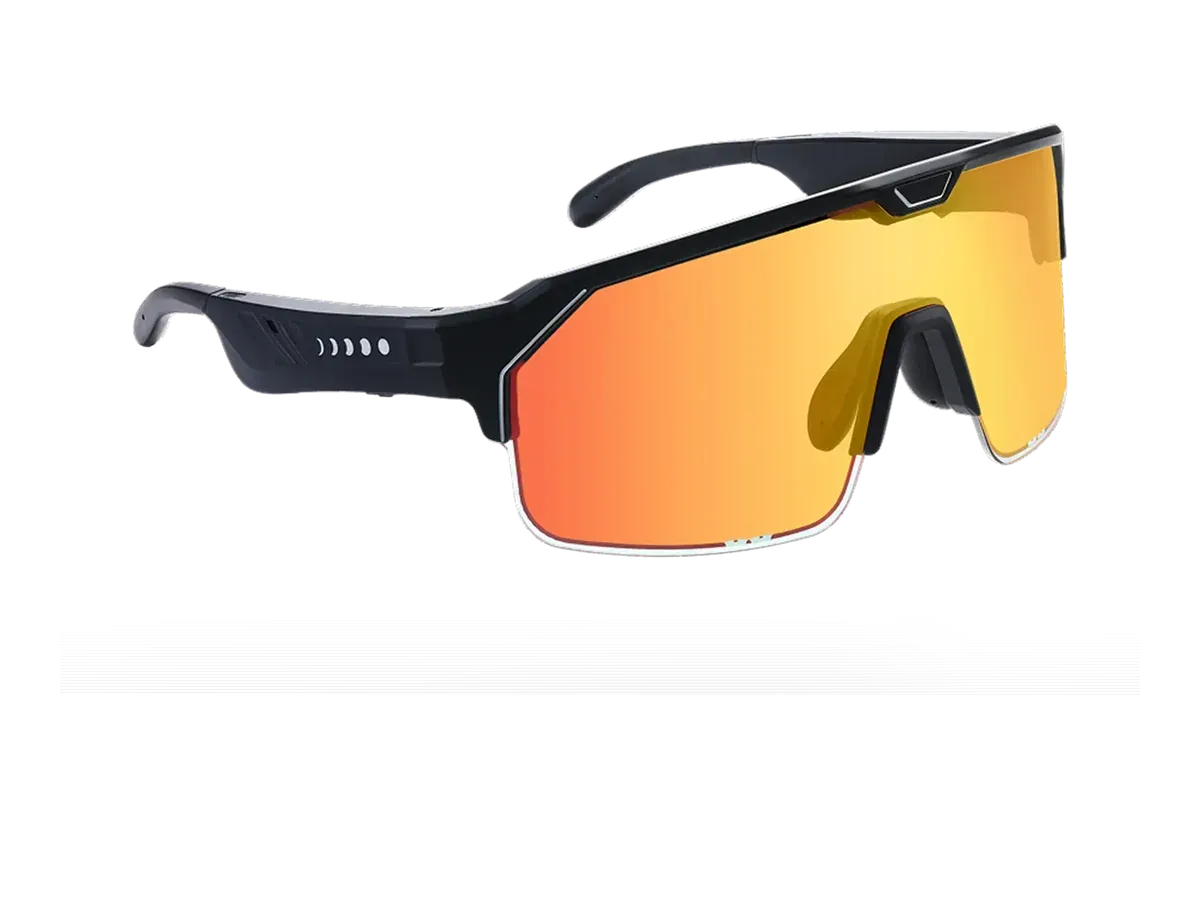
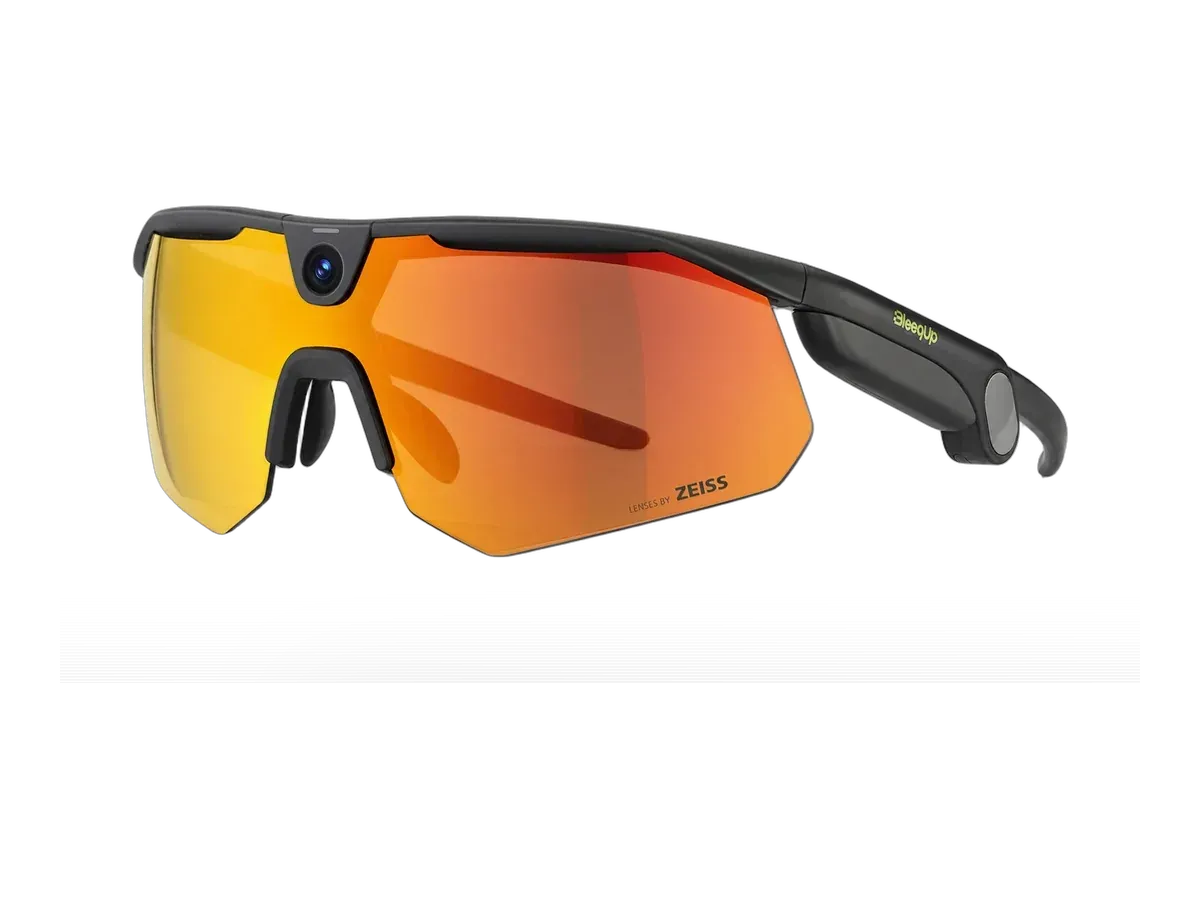
Two different products both call themselves running glasses, and the ranking above scores them on the same recorded facts. One kind puts your pace in your eye; the other puts your music in your ears. Deciding which job you want done is most of the buying decision.
The heads-up option: your watch data, eyes forward
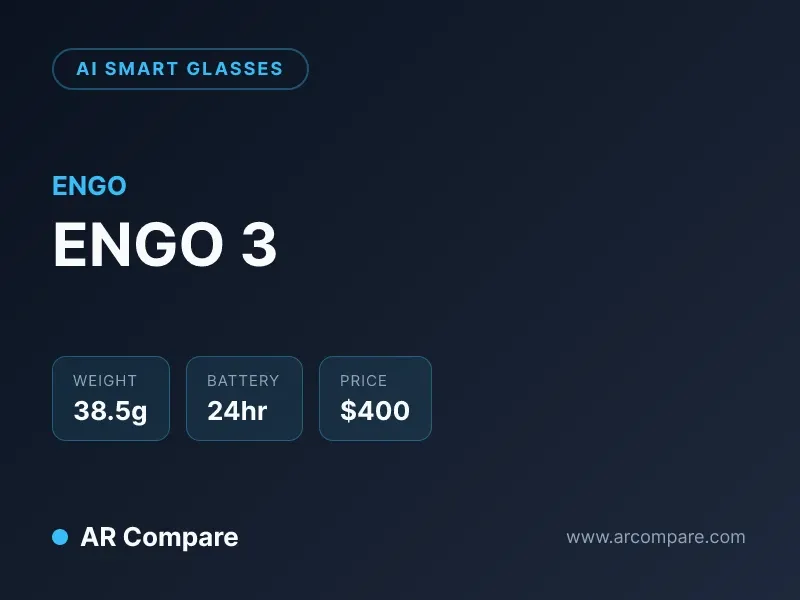
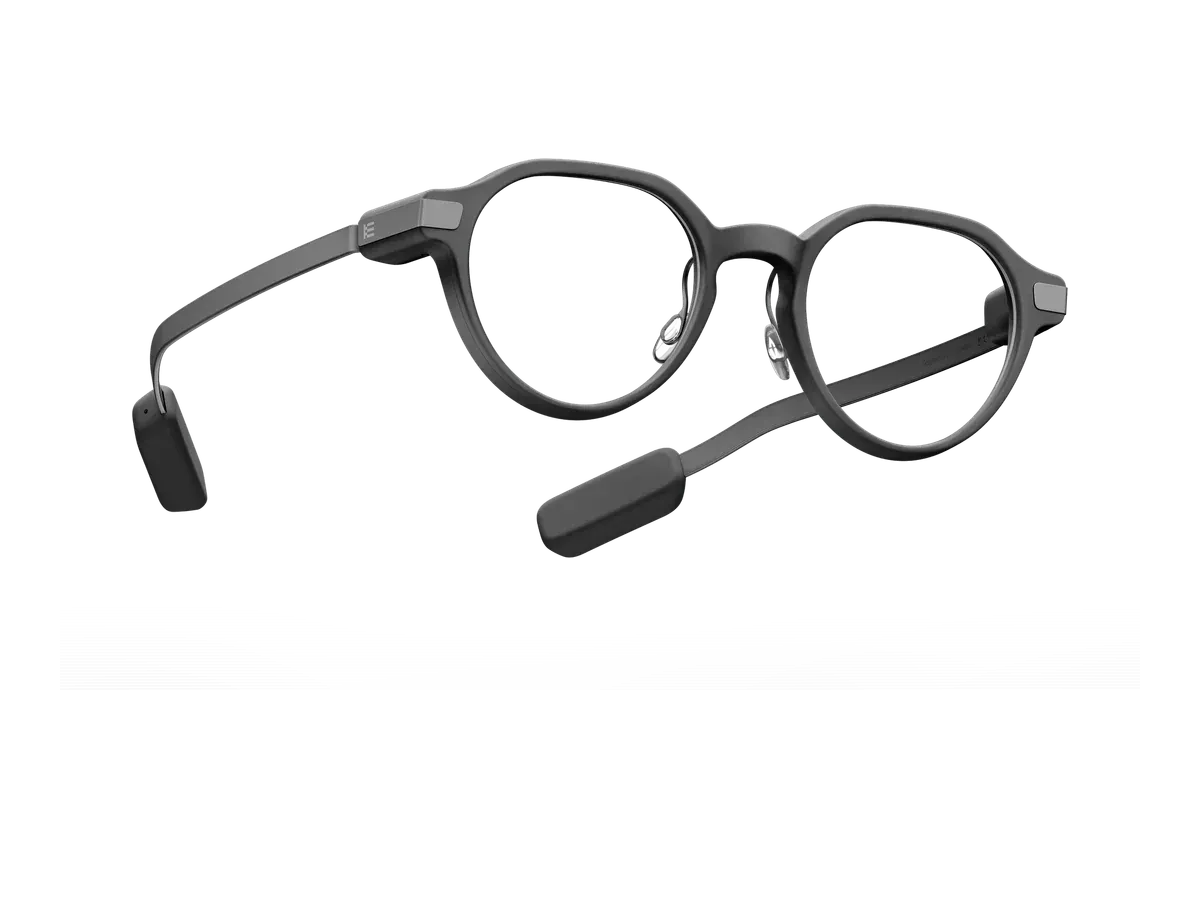
The ENGO 3 is the purpose-built option here, and its maker’s numbers explain the ranking: ENGO’s own product page commits to more than 20 hours of battery, an IP55 rating “resistant to sweat and water spray,” a 39-gram frame, and pace, heart rate and power projected into your field of view from a paired watch — with over 81 Garmin devices supported and Apple Watch covered through the ActiveLook app from watchOS 10.1. The practical effect on a hard interval day is simple: the target number floats ahead of you, shifting between red and green zones, and your wrist stays where it belongs. The Even Realities G2 earns its place differently — an everyday frame whose lens shows notifications and directions and whose record carries an IP65 rating, 36 grams and a two-day battery — a run-capable pair rather than a run-specialist one.
The audio option: open ears, light frame
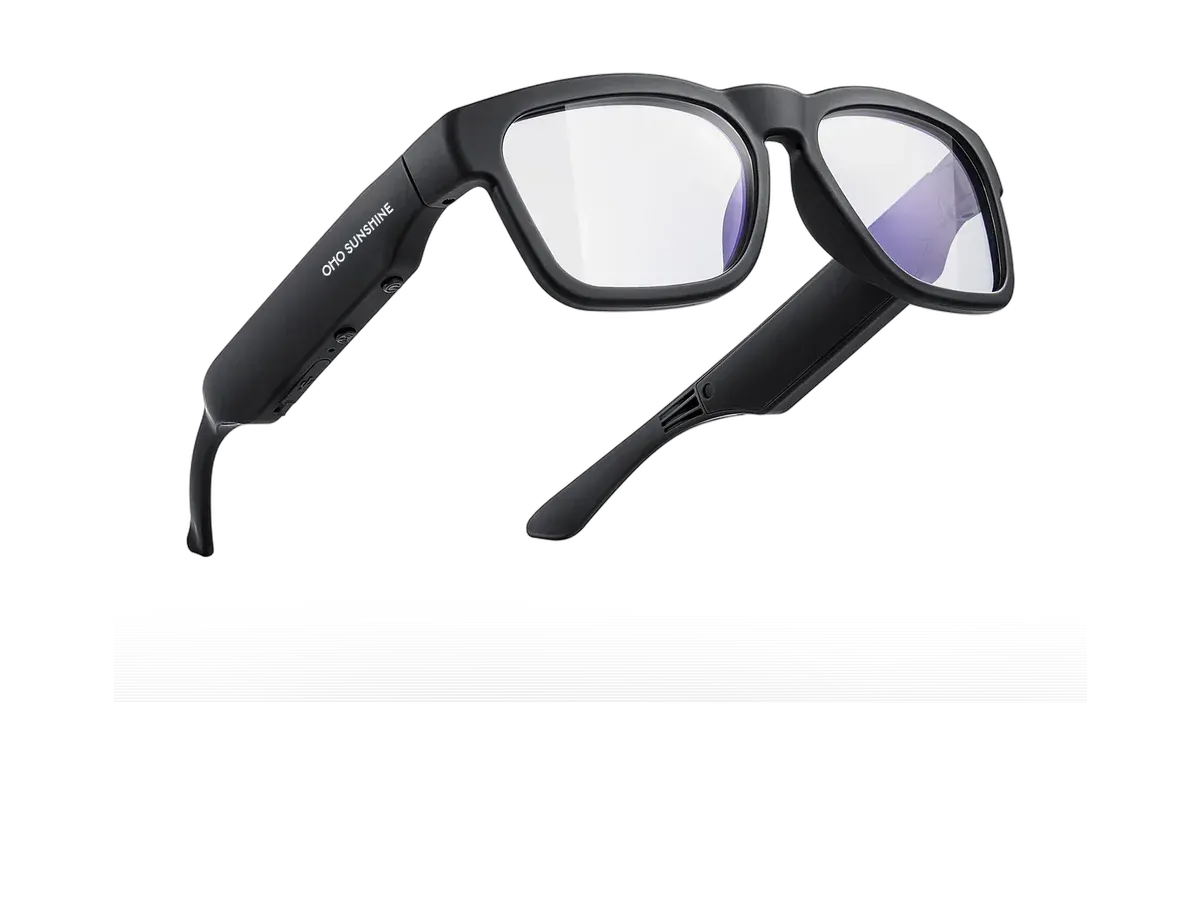
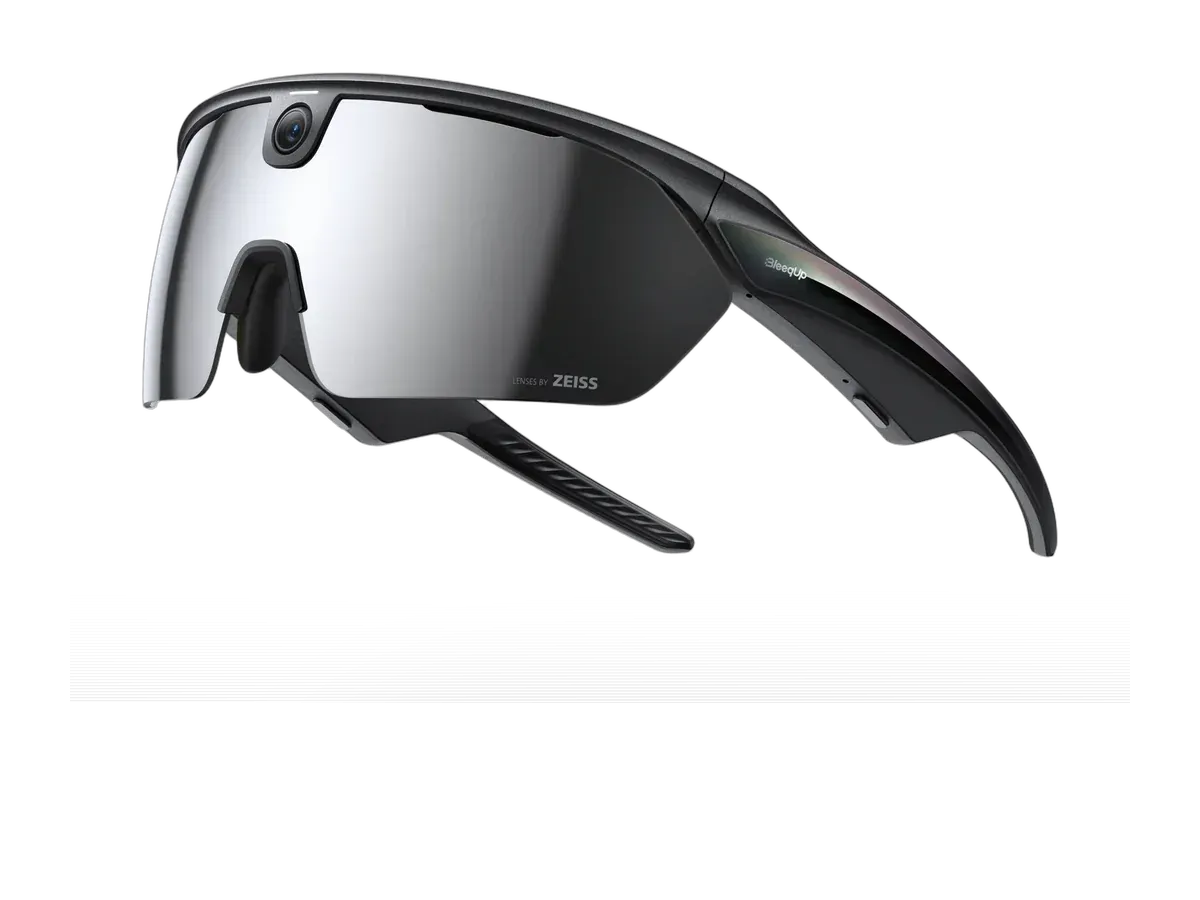
If what you want on a run is sound, the open-ear picks carry it without sealing your ears away from traffic. The Chamelo Music Shield is the sport-shaped one: its maker page records 6.5 hours of playback, a 49-gram wraparound frame with “enhanced grip” for hard efforts, and a tint slider that darkens the lenses in a tenth of a second when the sun comes out — useful on a road at dawn. The Solos AirGo 3 brings a recorded IP67 rating at 35 grams, the lightest sweat-sealed pick on the page. The Oakley Meta Vanguard is the heaviest ranked frame at a recorded 66 grams, and it buys something the others do not offer: hands-free capture of your runs plus Garmin pairing, which its record and ranking score honestly rather than generously — weight matters at mile eight.
Reading the table like a runner
Weight under 40 grams is the tier where frames stop announcing themselves on your face; that is where the top scores sit. A recorded sweat rating is a maker’s promise, not a reviewer’s impression — picks without one score zero on that criterion because silence is not protection. Every sweat- and rain-rated pair, ranked by water rating alone, is on the waterproof smart glasses page. Battery hours in the records are device hours, not music hours at full volume, so treat them as ceilings. And the on-lens display criterion marks the real split on this page: two picks can show you data, three cannot, and no amount of speaker quality turns one into the other.
Where this page hands off
How running use actually feels day to day — fit, sweat, what the displays are like mid-stride — is the running guide’s territory, and it pairs well with this ranking. Golfers wanting on-lens data at the range have their own page at the golf ranking, where the rules question gets answered too.