Skip to content

Best of

Best open source smart glasses with a display

The honest short list for hackable display eyewear: what is open, what is discontinued, and what is not in the catalog yet.

Our top pick for open-source tinkering is the Brilliant Labs Halo AI Glasses at $399.

Brilliant Labs Halo AI Glasses

Our top pick

Brilliant Labs Halo AI Glasses · $399

Buy at Brilliant Labs See full ranking ↓

Product data last updated

Updated November 16, 2026. Open source smart glasses with a display is a short, honest list in 2026: one pair in this catalog ships today with genuinely open hardware and code — the Brilliant Labs Halo, whose maker publishes its design files and source on GitHub — and its discontinued predecessor, the Frame, remains the best-documented open SDK story in the category even though you should no longer buy one. The ranking therefore holds a single pick, scored on its recorded facts rather than padded with closed devices wearing an 'open ecosystem' badge, and the guide below covers what open actually means per device, the Frame's status, and the open projects that are not in this catalog yet.

# Pick Price Best for
1 Brilliant Labs Halo AI Glasses $399 Top pick overall

Ranked by Development use case · AI assistant · Live translation · Battery life · Weight. Prices verified at Brilliant Labs.

Every pick is scored on the same criteria — a spec the maker doesn’t publish scores zero, and the Best for column marks where a pick leads this list. How we rank and check prices

“Open” gets claimed three different ways in this category, and the difference is the whole buying decision: an open SDK lets you build apps; open firmware lets you read and change what runs on the device; open hardware publishes the design files themselves. One shipping display pair in this catalog claims the full ladder.

The one you can buy: Halo

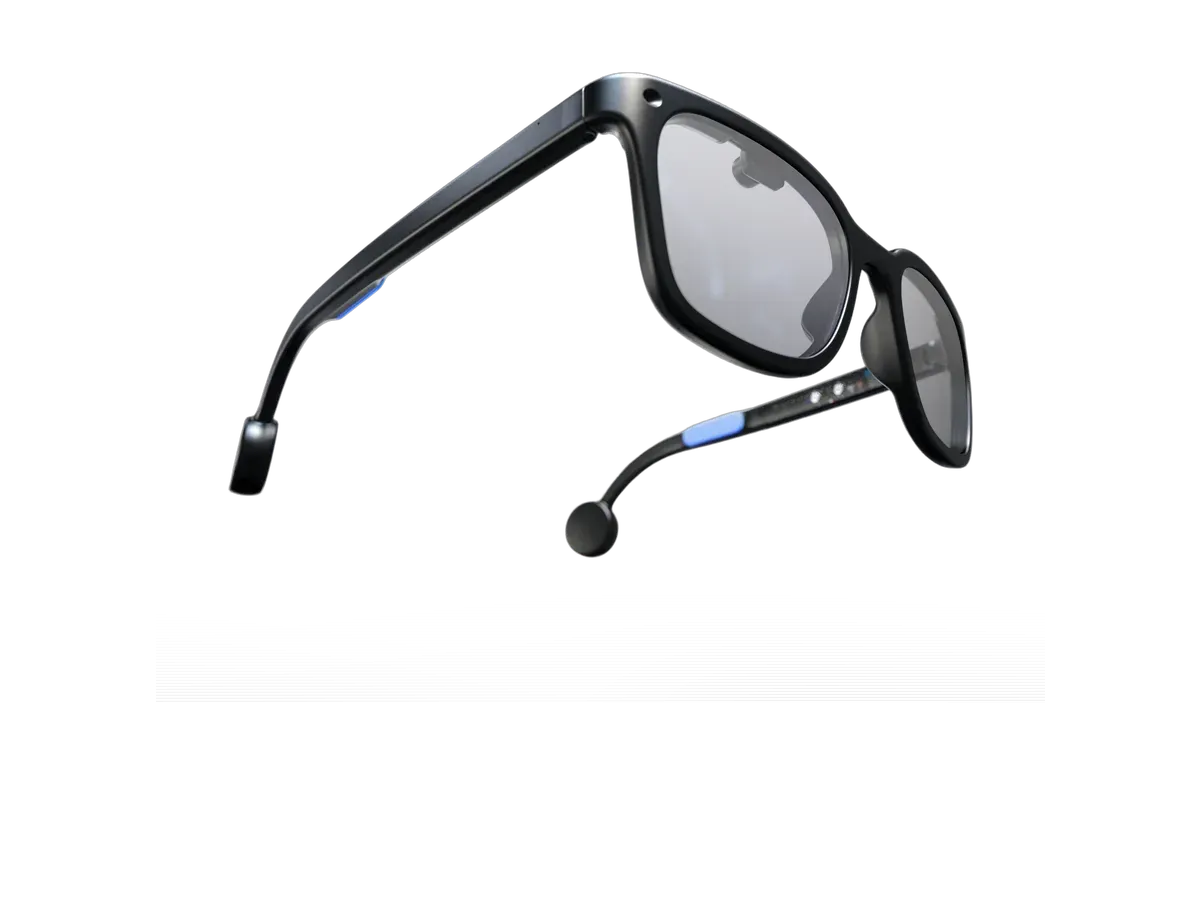
The Brilliant Labs Halo is the ranking’s single honest pick. Its maker’s own page is unambiguous about the ladder: “Halo is totally open source, design files and code are on Github,” with a Brilliant SDK plus Flutter SDK for iOS and Android apps, a color display behind an adjustable-diopter optic, dual microphones, bone-conduction speakers, a recorded 14-hour battery at about 40 grams, and a $399 price (brilliant.xyz). It is also, deliberately, a tinkerer’s device: the AI agent, the miniapp system and the openness are the product, and anyone wanting polished consumer eyewear is on the wrong page.

The one you should know but not buy: Frame

The Brilliant Labs Frame wrote the category’s best open developer story — an on-device Lua API with Python and Flutter SDKs on the host side, all documented in the maker’s own developer docs with the code living in the public brilliantlabsAR GitHub organization. The catalog records it as discontinued, which is why it does not rank above: the documentation and repositories remain a working reference for the Halo era, and secondhand Frames remain hackable, but a discontinued device is history, not a recommendation. Buyers weighing the family’s trade-offs have the Brilliant Labs alternatives guide for the full picture.

The gap the catalog does not cover yet

Honesty requires naming what this ranking cannot show. Mentra builds its frames around MentraOS, which its site states plainly is open source with an open SDK on GitHub — but its shipping Mentra Live is an enterprise-focused frame built around point-of-view calling and audio, with no lens display described, and the device is not in this catalog, so nothing here ranks or scores it. If an open-hardware display pair beyond Brilliant Labs reaches the catalog with a record and stock, this page’s membership rule admits it automatically; until then the list stays short because the truth is short.

If open-ness is negotiable

Most display glasses are closed products with developer programs of varying depth, and they are ranked where they belong: the whole display class, closed and open alike, lives at the display glasses ranking. This page exists for the buyer whose first question is “can I truly program and inspect it” — and for that buyer in 2026, the answer has one name on it.
How we rank: 5 scored criteria

Every eligible product is scored on the recorded specs below. Missing data scores zero — we never guess a value. Points shown next to each pick add up to its total score. Our full method

  • Development use caseup to 20 pts
  • AI assistantup to 10 pts
  • Live translationup to 8 pts
  • Battery lifeup to 12 pts
  • Weightup to 10 pts

Smart glasses FAQ

Are there open source smart glasses you can buy?

One display pair in this catalog ships today with open hardware and code: the Brilliant Labs Halo, whose design files and source live on the maker's GitHub. Its predecessor, the Frame, carries the category's best-documented open SDK but is discontinued, so it appears here as history and reference rather than a recommendation.

What does 'open source' actually mean for glasses?

Three different promises, worth separating: open SDK means you can build apps against documented interfaces; open firmware means the code running on the device is published; open hardware means the design files themselves are. The Halo's maker claims the full ladder — code and design files public — while most 'developer-friendly' glasses stop at the SDK rung.

Why is the list so short?

Because the honest answer is short. Several open projects exist outside this catalog — Mentra's open-source MentraOS runs on enterprise-focused frames without a lens display — and plenty of closed devices market developer programs. This page ranks only catalog records that are open and carry a display, and it would rather hold one true pick than pad the list.

More guides on these picks

Keep researching

Provenance: use case derived from the open-hardware/SDK question; membership = the catalog's open-source display records. Rankings are computed from recorded product specs only.