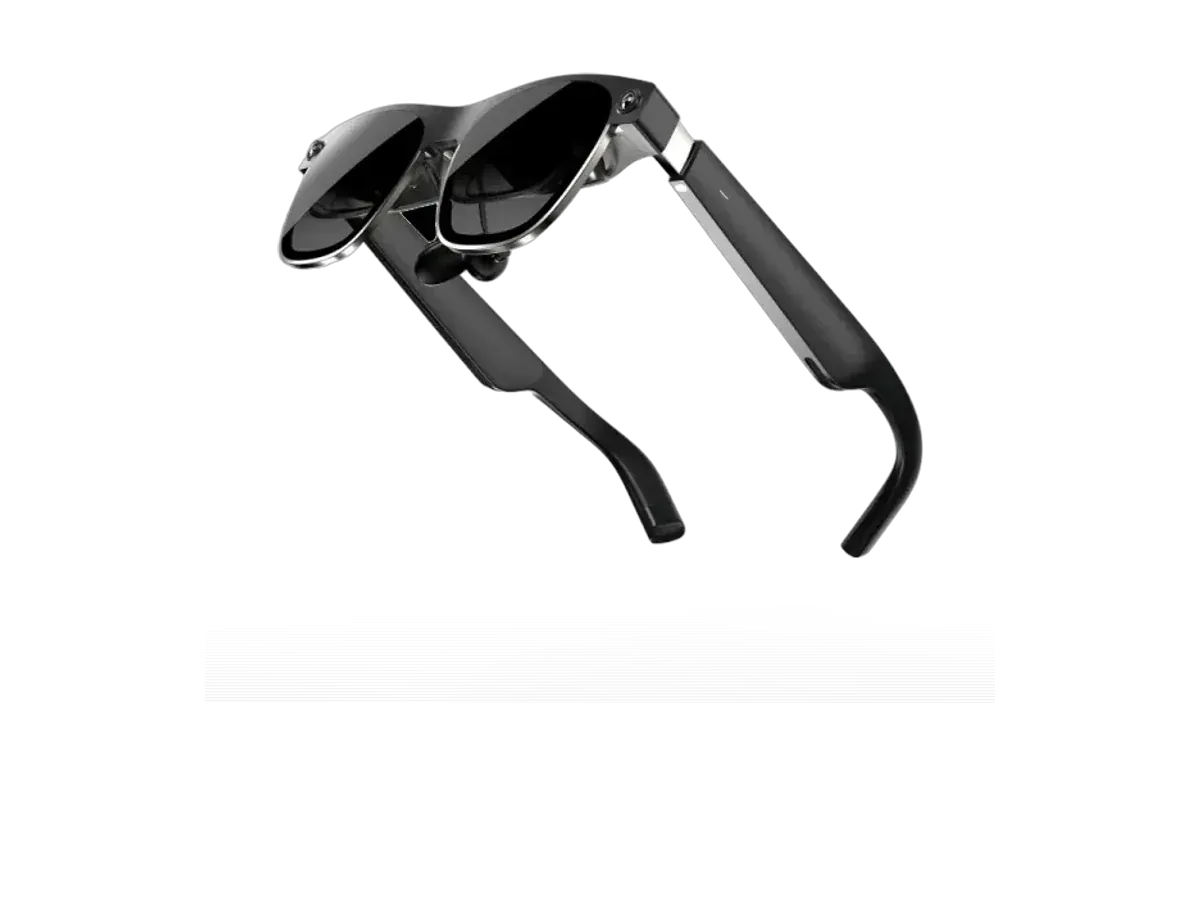
At a glance
- Display type
- Sony 0.55-inch Micro-OLED
- Resolution
- 1920x1080
- Field of view
- 52°
- Refresh rate
- 120 Hz
- Brightness
- 500 nits
- Weight
- 80 g
- Full 6DoF positional tracking via dual 3D cameras
- 52-degree FOV -- widest in the XREAL Air series
- Tethered via USB-C -- no standalone operation
- $699 is a significant premium over Air 2 Pro ($399)
XREAL Air 2 Ultra
XREAL
7/10 “According to the aggregated consensus of reviewers, the XREAL Air 2 Ultra was the most promising AR glasses hardware of its launch window -- and a spatial computing platform that never received its software. Tom's Guide called it the most promising VR/AR glasses yet, crediting the titanium build and the wider field of view, and Wareable found the clarity of the visuals the standout of its demo, while Engadget's session exposed imperfect hand tracking and warned that everything depended on an app ecosystem which never arrived -- the one flagship partner device built around these glasses was cancelled within the year. At $699 it was a developer bet, and AR Compare's record now marks it discontinued. Scores below are an editorial aggregate of that cited coverage, not AR Compare hands-on measurements.” Read the full review$699
See current alternatives- Field of view
- 52°
- Weight
- 80 g
- Camera
- 2×
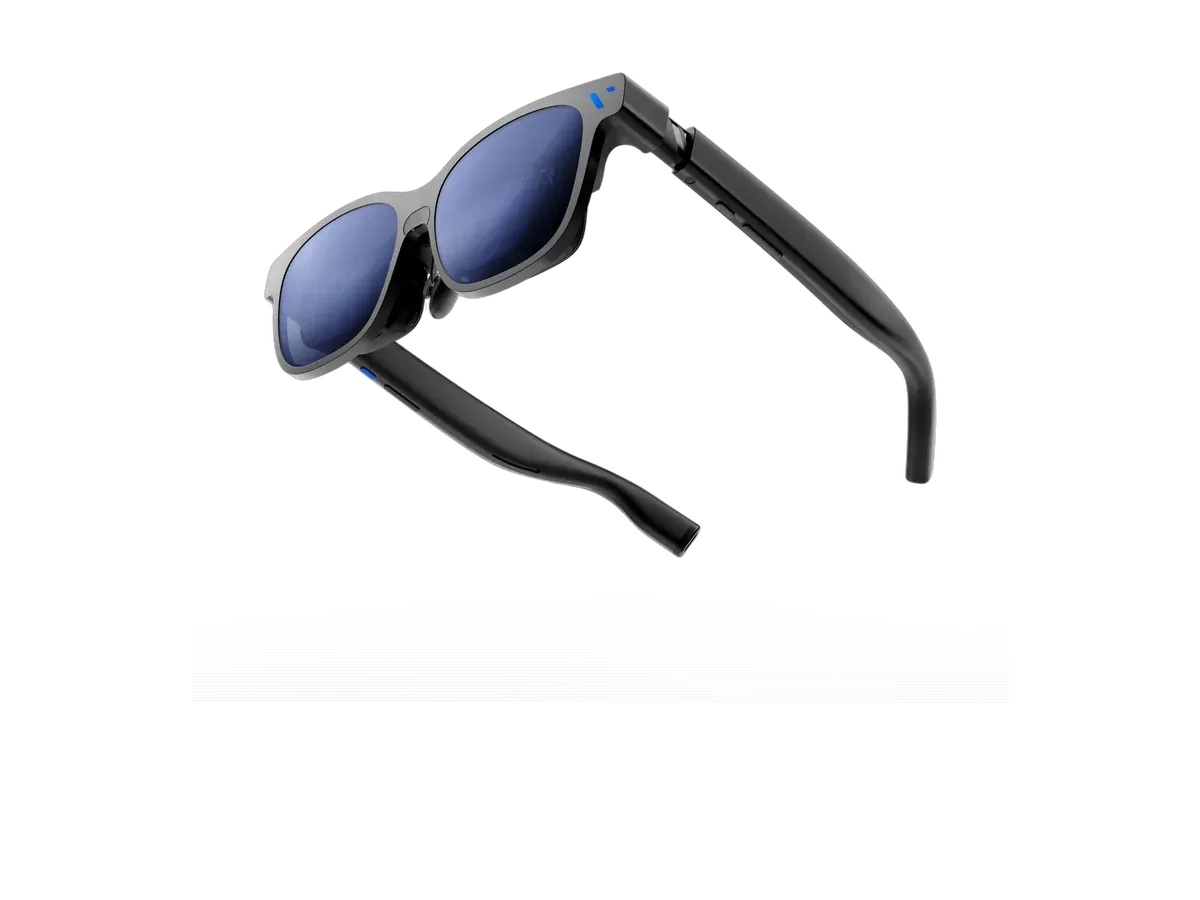
The XREAL Air 2 Ultra is XREAL's most advanced display glasses, adding dual 6DoF tracking cameras to the Air 2 platform for spatial computing capabilities. With Sony Micro-OLED displays delivering 1080p per eye at 120Hz, a 52-degree FOV, and 3-level electrochromic dimming, it bridges the gap between display glasses and true AR at $699.
Our review
By AR Compare Team ·
According to the aggregated consensus of reviewers, the XREAL Air 2 Ultra was the most promising AR glasses hardware of its launch window -- and a spatial computing platform that never received its software. Tom's Guide called it the most promising VR/AR glasses yet, crediting the titanium build and the wider field of view, and Wareable found the clarity of the visuals the standout of its demo, while Engadget's session exposed imperfect hand tracking and warned that everything depended on an app ecosystem which never arrived -- the one flagship partner device built around these glasses was cancelled within the year. At $699 it was a developer bet, and AR Compare's record now marks it discontinued. Scores below are an editorial aggregate of that cited coverage, not AR Compare hands-on measurements.
- Display quality
- 8/10
- Comfort
- 7.5/10
- Battery life
- 5/10
- Value for money
- 5.5/10
- Build quality
- 8/10
- Software
- 5/10
The XREAL Air 2 Ultra is XREAL’s spatial computing play: the Air 2 display-glasses platform with two 3D environment sensors added to the frame for full positional tracking, announced at CES in January 2024 and shipped that March at $699. AR Compare’s record marks it discontinued, and this review treats that status honestly throughout. The readable record is launch-window coverage, so this review aggregates Tom’s Guide’s hands-on review, Engadget’s CES demo report, Wareable’s hands-on, and UploadVR’s launch and ecosystem reporting. AR Compare has not performed hands-on testing of this device; every observation below is attributed to the cited sources, and the category scores are an editorial aggregate of cited reviewer sentiment. Product facts were cross-checked against AR Compare’s spec record for the Air 2 Ultra (Sony Micro-OLED panels at a recorded 1920x1080 per eye and a recorded 120Hz, a recorded 52-degree field of view, a recorded 500 nits, roughly 80 grams, USB-C tethered with no onboard battery or compute, $699).
How This Review Was Compiled
The entire readable record is launch-window hands-on coverage from CES 2024 — no long-term scored review of the Air 2 Ultra was reachable for this aggregation, so the sources below are demos, not lived-with verdicts. Tom’s Guide’s Jason England published the fullest hands-on and the most optimistic one. Engadget’s Richard Lai logged roughly 20 minutes across the demo stations and is the most critical on tracking, while Wareable’s James Stables covered a shorter Pepcom demo. UploadVR’s David Heaney did not go hands-on; his launch and follow-up reporting supplies the compatibility limits and the fate of the one flagship partner product. Where the sources disagree — chiefly on how well hand tracking worked — both readings are reported below rather than smoothed over.
Six Degrees of Freedom: Why the Ultra Exists
Every source frames the Ultra the same way: the return of true positional tracking to XREAL for the first time since the old Nreal Light, per UploadVR, via two 3D environment sensors built into the frame. That upgrade moves the glasses from a head-fixed virtual screen to real spatial computing — UploadVR notes the sensors mesh the actual geometry of a room where the Nreal Light could only detect flat planes, alongside hand tracking, permanent spatial anchors, and image tracking. The room-scale half of that promise demoed well. Engadget reports the tracking ran smoothly, including walking right up to large virtual avatars, and Tom’s Guide calls the anchored-workspace demo seriously impressive, but not perfect.
Hand tracking is where the record genuinely splits. Tom’s Guide judged it good but inconsistent: practically flawless with palms up, yet hands often disappear when flipped over, and the reviewer’s tattoos and even the table color interfered. Engadget is harsher, reporting a struggle to pinch a light-bar color slider that landed on the wrong hue several times, laggy interactions, and one outright crash during which the tethered phone got worryingly warm — issues XREAL’s CEO acknowledged seeing on the show floor. Wareable sits between the two: the skeletal rendering of the hands felt a little jarring, but pinch controls worked far more accurately than expected. The aggregate reading is a sensing platform that was real but rough at launch.
The Display: The Air Platform at Its Widest
The display drew the least argument and the most praise. The recorded 52-degree field of view was the widest of the Air line — up from the recorded 46 degrees of the XREAL Air 2 and Air 2 Pro — a step Tom’s Guide calls small but important as spatial computing grows. Behind it sit the same Sony Micro-OLED panels at a recorded 1920x1080 per eye, a recorded 120Hz, and a recorded 500 nits, with the Air 2 Pro’s electrochromic dimming carried over so the lenses tint at a button press. In Wareable’s words, it was the clarity of the on-screen visuals that impressed, and the dimmed demo worlds felt genuinely immersive. The one hardware complaint is sound — the directional audio is a little louder than before but still pretty tinny, in Tom’s Guide’s judgment, because the frame only fits tiny tweeters.
Comfort, the Titanium Frame, and the Tether
Comfort holds up despite the added sensors. At a recorded 80 grams the Ultra runs 5 grams heavier than the Air 2 Pro, per Engadget, and the titanium frame is what keeps the gain that small — Tom’s Guide adds that it gives the rim around the lenses a nice metallic look and feel, and reports wearing the glasses for long stretches without strain. Wareable calls the wayfarer design a little chunky yet still on the more comfortable and wearable end of the AR scale. The structural trade-off is the tether: there is no onboard battery or compute, so the glasses draw power over USB-C from whatever runs them, and the battery score of 5 follows this site’s category convention for tethered display glasses rather than any standalone runtime.
Compatibility was the quiet catch in the record. The full spatial stack required a Samsung Galaxy S22 or S23 at launch — and not the European Exynos S22 — per UploadVR’s reporting, with a compute puck promised for everyone else but never given a date or price. As a plain virtual display the reach was wider: Engadget lists iPhone 15 handsets plus Windows and Mac machines through XREAL’s Nebula software, and AR Compare’s record adds the XREAL Beam accessory as a host. Buyers outside the Samsung path, in other words, got Air 2 Pro behavior from a more expensive product.
The Ecosystem That Never Arrived
XREAL said the quiet part at launch: these were positioned as a developer device, mainly intended, per UploadVR, for people building against an SDK that would receive significant upgrades in the coming months. Engadget’s demo reel makes the gap concrete — a virtual desktop, a three-movie cinema, smart-light control, and virtual pets, all first-party concepts with no third-party apps behind them — and its headline warning was that success would ultimately depend on the app ecosystem. Tom’s Guide reached the same conclusion, advising that ordinary buyers could not yet do much more with the Ultra than with a standard pair of Air 2 glasses.
The ecosystem bet then failed in public. The Spacetop G1, a $1,900 screenless laptop with the Air 2 Ultra built in, was cancelled in October 2024, with maker Sightful exiting hardware entirely and pivoting to Windows software for XREAL glasses, per UploadVR. AR Compare’s record now marks the Air 2 Ultra itself discontinued: the catalog buy slot sits out of stock, and the maker’s own product page no longer resolves. The 6DoF hardware story continued in XREAL’s later flagships instead, including the XREAL One Pro.
Value at $699
At $699, the Ultra asked a steep premium over the mainstream Air line — quite a hefty jump, in Tom’s Guide’s words — while Engadget records XREAL pitching it as the affordable alternative to the $3,499 Apple Vision Pro and a near-peer in price to the $499 Quest 3. On pure hardware the case was real: these were the lightest and cheapest true 6DoF glasses of their generation. Tom’s Guide’s advice at the time was to buy only as an investment in a future meeting point of VR capability and AR portability, and that future went to other products. Given the discontinued status, the aggregate treats the Ultra as a benchmark of what its generation achieved rather than a current purchase recommendation.
Who Should Buy the XREAL Air 2 Ultra
Per the aggregated consensus: almost nobody today — the honest launch-era answer was developers building 6DoF experiences on XREAL’s SDK with a supported Samsung flagship in hand, plus collectors of a genuinely important piece of AR hardware history. Who should skip: buyers who want current display glasses, who are better served by XREAL’s supported One-series line; anyone expecting a working app catalog, which never arrived; iPhone and PC owners, who only ever got virtual-display duty from it; and anyone unwilling to buy discontinued hardware with no remaining first-party purchase path.
Scores are aggregates of the cited reviews and hands-on reports, not AR Compare hands-on results.
Sources
- Tom’s Guide — Xreal Air 2 Ultra hands-on review: The most promising VR/AR glasses yet
- Engadget — Xreal Air 2 Ultra hands-on: Next-gen AR glasses in need of killer apps
- Wareable — Hands on: Xreal Air 2 Ultra AR smartglasses review
- UploadVR — Xreal Air 2 Ultra Are AR Glasses Powered By Samsung Galaxy S Phones Via USB-C
- UploadVR — Sightful Cancels Spacetop, Will Release Windows Software For Xreal Air 2 Ultra Instead
Pros & cons
Pros
- Full 6DoF positional tracking via dual 3D cameras
- 52-degree FOV -- widest in the XREAL Air series
- Sony Micro-OLED 1080p per eye at 120Hz for sharp visuals
- 3-level electrochromic dimming for environment adaptability
- Only 80g -- lightest 6DoF-capable glasses available
- Display clarity that launch reviewers consistently singled out, with the sharpness of on-screen visuals called the standout of the demos
- Room-scale tracking that demoed smoothly, mapping real surfaces and letting wearers walk right up to anchored virtual characters
- A titanium frame credited by reviewers with keeping the weight gain over the standard Air line barely noticeable
- Comfortable across long demo stretches, with hands-on coverage judging it far more wearable than the headsets of its generation
Cons
- Tethered via USB-C -- no standalone operation
- $699 is a significant premium over Air 2 Pro ($399)
- 500-nit brightness limits outdoor visibility
- No built-in microphone limits communication use cases
- Spatial computing software ecosystem still maturing
- Hand tracking that launch demos exposed as imperfect, losing flipped-over hands and misfiring on pinch selections
- Full spatial mode required a recent Samsung flagship at launch, with other hosts limited to plain virtual-display duty
- The promised app catalog never materialized, and the flagship partner device built around these glasses was cancelled
- Audio a hands-on review called tinny, limited by the tiny tweeters the frame can fit
- Discontinued in AR Compare's record, with the catalog buy slot out of stock and the maker's product page no longer resolving
Full specifications
Specs last verified
| Display | |
|---|---|
| Display type | Sony 0.55-inch Micro-OLED |
| Resolution | 1920x1080 |
| Pixels per degree | 42 |
| Field of view (°) | 52 |
| Refresh rate (Hz) | 120 |
| Brightness (nits) | 500 |
| Virtual screen size (in) | 385 |
| HDR support | ✕ No |
| Color support | Full color |
| Optics | |
| Optics type | birdbath |
| Dimming control | ✓ Yes |
| Transparency level | 3-level electrochromic dimming |
| Prescription support | ✓ Yes |
| Prescription options | Inserts / lens frame |
| Physical | |
| Weight (g) | 80 |
| Frame style | wraparound |
| Color options | Dark Gray |
| Foldable | ✕ No |
| Not published: IP rating | |
| Connectivity | |
| Connectivity | USB-C |
| Tethered | ✓ Yes |
| Compatible devices | Android, PC, Mac, XREAL Beam |
| Computing | |
| Processing type | tethered |
| Operating system | NRSDK/XREAL SDK hosts: select Samsung Android phones, XREAL Beam Pro, Windows/Mac as display |
| Chipset | None on-device (compute on tethered host: Samsung Galaxy S23+, Beam Pro, PC) |
| Sensors & input | |
| Camera | ✓ Yes (2×) |
| Speakers | open-ear · spatial audio |
| Tracking | 6DoF |
| Not published: Microphones, Gesture control, Voice control | |
Prescription options
The documented prescription routes for the XREAL Air 2 Ultra, from the maker and named-partner documentation recorded in our database.
- Inserts / lens frame — range not published by the maker Source: us.shop.xreal.com documentation
Maker documentation as recorded 2026-09-17. Ranges are the maker's published limits, not medical advice — confirm your exact prescription with your optician before ordering.
Read the XREAL prescription guide for every documented option, model by model.
Where to buy
XREAL Air 2 Ultra specs: quick answers
- What is the XREAL Air 2 Ultra's field of view?
- The XREAL Air 2 Ultra has a 52-degree field of view.
- What is the XREAL Air 2 Ultra's display resolution?
- The XREAL Air 2 Ultra's recorded per-eye display resolution is 1920x1080.
- How bright is the XREAL Air 2 Ultra's display?
- The XREAL Air 2 Ultra has a rated peak brightness of 500 nits.
- How much does the XREAL Air 2 Ultra weigh?
- The XREAL Air 2 Ultra's glasses weigh 80g according to the manufacturer specification.
- Does the XREAL Air 2 Ultra have a camera?
- Yes, the XREAL Air 2 Ultra has 2 built-in cameras.
- How much does the XREAL Air 2 Ultra cost?
- The XREAL Air 2 Ultra costs $699.
XREAL Air 2 Ultra: FAQs
How much does the XREAL Air 2 Ultra cost?
The XREAL Air 2 Ultra costs $699 (USD). It is available from 1 retailer listed on this page.
What field of view does the XREAL Air 2 Ultra have?
The XREAL Air 2 Ultra has a recorded field of view of 52 degrees.
How much does the XREAL Air 2 Ultra weigh?
The XREAL Air 2 Ultra weighs 80g according to the manufacturer specification.
Can I use the XREAL Air 2 Ultra with prescription lenses?
Yes, the XREAL Air 2 Ultra supports prescription lenses. The recorded diopter range is Prescription lens inserts (dedicated frame, incompatible with Air/Air 2 inserts; discontinued — availability uncertain).
Does the XREAL Air 2 Ultra have a camera?
Yes, the XREAL Air 2 Ultra has a built-in camera.
What devices work with the XREAL Air 2 Ultra?
The XREAL Air 2 Ultra lists compatibility with: Android, PC, Mac, XREAL Beam.
What resolution does the XREAL Air 2 Ultra have?
The XREAL Air 2 Ultra has a recorded per-eye resolution of 1920x1080. It refreshes at 120Hz.
Are the XREAL Air 2 Ultra good for gaming?
The XREAL Air 2 Ultra runs at a recorded 120Hz refresh rate with a 52-degree field of view -- the display specs that matter most for gaming. It is tethered, drawing video from a connected phone, PC, or console rather than running games on its own.
Is the XREAL Air 2 Ultra worth it?
The XREAL Air 2 Ultra is priced at $699 (USD). For that you get a 52-degree field of view, 500 nits of brightness, and a 1920x1080 per-eye resolution. It weighs 80g. It is tethered, so it needs a connected phone, PC, or console to run rather than working on its own. The full spec breakdown on this page shows what the price includes.
Similar products
What shoppers cross-check with the XREAL Air 2 Ultra — from our navigation records and closest spec matches.

Related Comparisons
XREAL Air 2 Ultra vs XREAL One Pro
XREAL
XREAL Air 2 Ultra vs XREAL Air 2 Pro
XREAL
XREAL Air 2 Ultra vs XREAL Aura
XREAL
XREAL Air 2 Ultra vs Magic Leap 2
XREAL vs Magic Leap
XREAL Air 2 Ultra vs ASUS AirVision M1
XREAL vs ASUS
XREAL Air 2 Ultra vs Snap Spectacles Gen 5
XREAL vs Snap
XREAL Air 2 Ultra vs ASUS ROG XREAL R1
XREAL vs ASUS
XREAL Air 2 Ultra vs Dream Glass Flow
XREAL vs Dreamworld
XREAL Air 2 Ultra vs GOOVIS G3 Max 3D Head Mounted Display
XREAL vs Goovis
XREAL Air 2 Ultra vs INAIR 2 Pro
XREAL vs INAIR
XREAL Air 2 Ultra vs Lenovo Legion Glasses 2
XREAL vs Lenovo
XREAL Air 2 Ultra vs RayNeo Air 2
XREAL vs RayNeo
XREAL Air 2 Ultra vs RayNeo Air 3s Pro AR/XR Glasses
XREAL vs RayNeo
XREAL Air 2 Ultra vs RayNeo Air 3s
XREAL vs RayNeo
XREAL Air 2 Ultra vs RayNeo Air 4 Pro
XREAL vs RayNeo
XREAL Air 2 Ultra vs RayNeo GT Max
XREAL vs RayNeo
XREAL Air 2 Ultra vs RayNeo GT
XREAL vs RayNeo
XREAL Air 2 Ultra vs Rokid Max 2
XREAL vs Rokid
XREAL Air 2 Ultra vs Rokid Max
XREAL vs Rokid
XREAL Air 2 Ultra vs Rokid Station 2 Spatial Computing Host
XREAL vs Rokid
XREAL Air 2 Ultra vs Shadow Creator Honghu MR
XREAL vs Shadow Creator
XREAL Air 2 Ultra vs TCL NXTWEAR S+ AR Glasses
XREAL vs TCL
XREAL Air 2 Ultra vs TCL NxtWear S
XREAL vs TCL
XREAL Air 2 Ultra vs VITURE Beast XR Glasses
XREAL vs VITURE
XREAL Air 2 Ultra vs VITURE Luma Pro
XREAL vs VITURE
XREAL Air 2 Ultra vs VITURE Luma Ultra XR/AR Glasses
XREAL vs VITURE
XREAL Air 2 Ultra vs VITURE Luma XR
XREAL vs VITURE
XREAL Air 2 Ultra vs VITURE One Lite
XREAL vs VITURE
XREAL Air 2 Ultra vs VITURE One XR Glasses
XREAL vs VITURE
XREAL Air 2 Ultra vs VITURE Pro 2 XR Glasses
XREAL vs VITURE
XREAL Air 2 Ultra vs VITURE Pro XR
XREAL vs VITURE
XREAL Air 2 Ultra vs XREAL 1S
XREAL
XREAL Air 2 Ultra vs XREAL Beam
XREAL
XREAL Air 2 Ultra vs XREAL One
XREAL
XREAL Air 2 Ultra vs XREAL xbx a01+
XREAL
XREAL Air 2 Ultra vs XREAL Air 2
XREAL