Snap Spectacles Gen 5 Review: The AR Future Is Here (For 45 Minutes at a Time)
By AR Compare Team ·
Snap Spectacles Gen 5: full specs & pricesThe Snap Spectacles Gen 5 are the device that finally answers the question every AR skeptic has been asking for a decade: can you build real augmented reality glasses that work without looking like a science experiment? The answer is a qualified yes. After three weeks of development and daily testing, the Spectacles have shown me experiences that feel genuinely transformative — and limitations that keep them firmly in “developer preview” territory.
AR Display: Waveguide Magic with Real Trade-Offs
The full-color Micro-LED waveguide display is the star feature, and it earns its billing. Unlike display glasses that project a virtual screen in front of your eyes, the Spectacles overlay digital content directly onto the real world. You can pin a 3D model to your desk, place a virtual scoreboard on your wall, or have animated characters walk across your coffee table — and the real world remains visible through and around the content.
AR Display Specs
Display: Full-color Micro-LED waveguide
Field of View: 46 degrees (widest standalone AR)
Tracking: 6DoF + hand tracking + head tracking
Processing: Qualcomm Snapdragon AR2 Gen 1 (on-device)
Battery: ~45 minutes active AR use
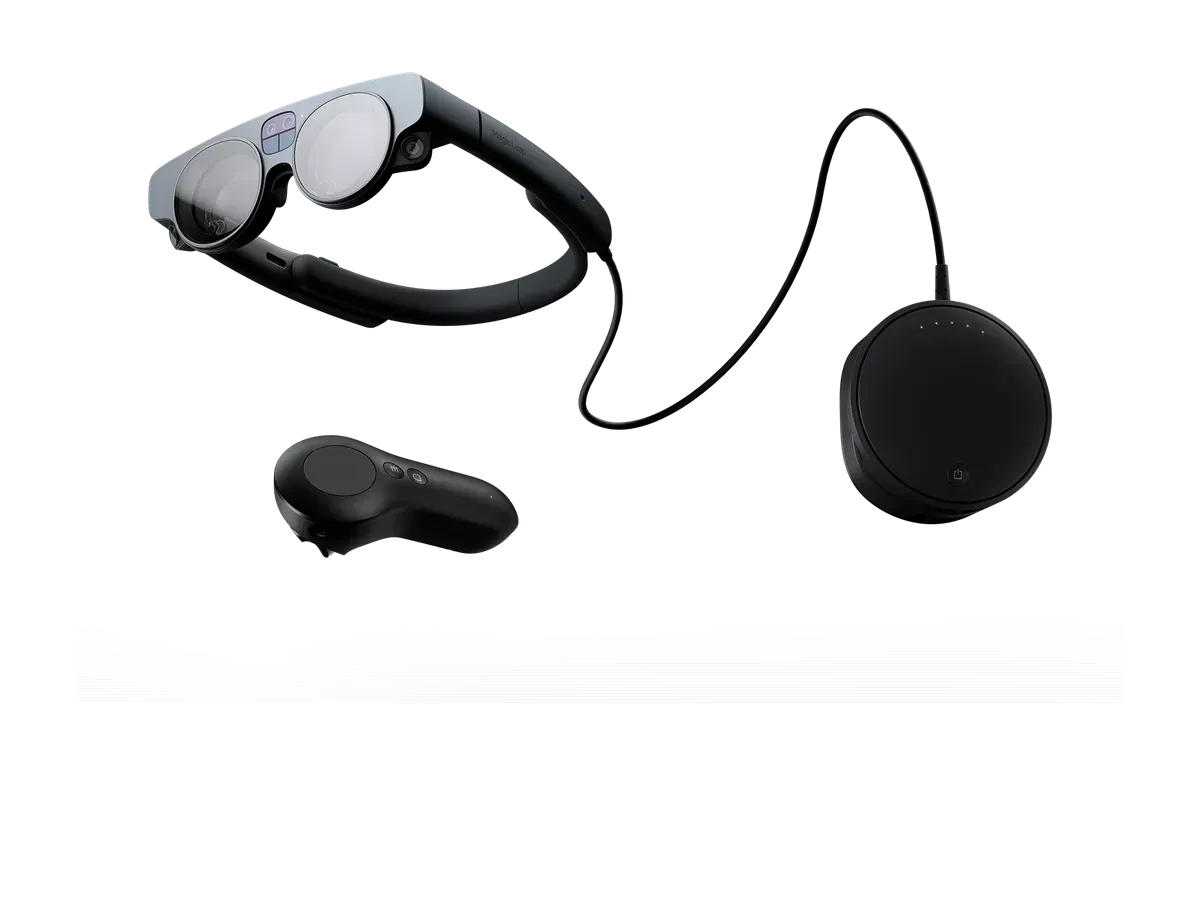
The 46-degree field of view is legitimately impressive for a standalone AR device. It is wider than the Magic Leap 2’s effective consumer viewing area in a dramatically smaller form factor. Content fills enough of your peripheral vision that AR experiences feel immersive rather than like peering through a postage stamp. That said, 46 degrees still means visible edges where the digital world ends and unaugmented reality begins. You are always aware you are wearing AR glasses.
Color accuracy and brightness are acceptable but not exceptional. The waveguide approach inherently sacrifices some vibrancy compared to the deep blacks and saturated colors you get from Micro-OLED display glasses. In bright outdoor light, AR content can wash out. Indoors and in moderate lighting, the visuals are convincing enough to sustain immersion.
The Weight Problem
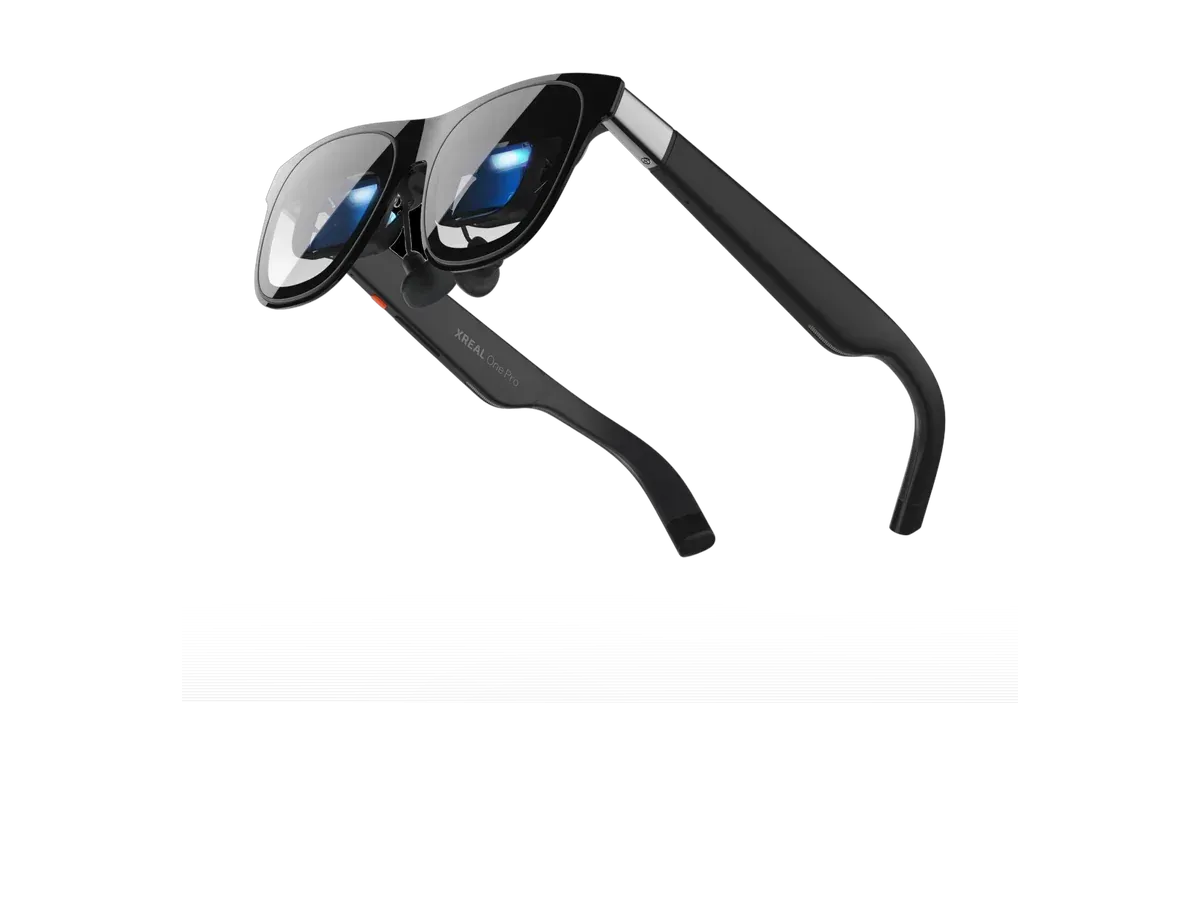
At 226 grams, the Spectacles are roughly five times the weight of the Even Realities G1 and nearly three times the weight of the XREAL One Pro. You notice this immediately. The frames sit heavily on the nose and ears, and within 30 minutes there is a persistent pressure that ranges from noticeable to uncomfortable depending on your head shape and sensitivity.
Snap has clearly optimized the weight distribution as much as the current hardware allows. The battery, processors, and cameras all need to fit in a glasses-adjacent form factor, and 226 grams is an engineering achievement for what these glasses contain. But physics does not care about engineering achievements. Wearing these for extended periods is not pleasant, and the practical session length is limited as much by comfort as by battery life.
Battery: The Achilles Heel
There is no gentle way to put this: 45 minutes of active AR use is not enough. In practice, with the display active and hand tracking running, I consistently got between 40 and 50 minutes before the low battery warning appeared. Lighter use cases like notification viewing can stretch this somewhat, but any meaningful AR experience drains the battery rapidly.
The USB-C charging case provides additional charges on the go, and a full recharge takes about 90 minutes. But the start-stop rhythm of charge, use for 40 minutes, recharge, use again is fundamentally different from how people wear glasses. This is a session device, not an all-day wearable. For development and testing purposes, the battery is workable. For any imagined consumer scenario, it is a dealbreaker in its current form.
Snap Lens Studio: The Real Competitive Advantage
The software platform is where the Spectacles justify their existence. Snap Lens Studio is arguably the most mature AR content creation platform available, and the Spectacles are its first true hardware canvas. Over 375,000 AR experiences built by Snap’s global creator community are compatible, and the development tools for building new Spectacles-native experiences are genuinely excellent.
Hand tracking is responsive and accurate enough for most interaction patterns. Pinching to select, swiping to scroll, and pushing to activate feel natural after a short learning curve. The 6DoF spatial tracking keeps virtual objects anchored to real-world positions with minimal drift during typical use sessions. Walking around a virtual object and seeing it maintain its position in space is the “it just works” moment that separates true AR from the virtual screen projection of display glasses.
The Spectacles OS is clean and purpose-built. Unlike attempts to retrofit smartphone interfaces into AR, Snap designed the spatial UI from scratch. App selection, settings, and content management all feel native to the medium. The learning curve is shallow for anyone familiar with VR interfaces, and the hand-tracking-first approach eliminates the need for a separate controller.
The Subscription Question
The $99/month subscription model is polarizing, and rightfully so. Over a year, you will spend $1,188 for a device you do not own — there is no purchase option. Snap frames this as lowering the barrier to entry for developers who want to experiment with AR without a large upfront investment. The counterargument is that $1,188 annually for a 45-minute-battery developer kit is steep regardless of how it is structured.
The subscription does include hardware replacements for defects and access to Snap’s developer support channels. And for professional developers whose companies are funding the subscription, the monthly cost is trivial compared to the value of early access to a maturing AR platform. For independent developers and hobbyists, the calculation is harder.
Who Are These For — Right Now?
The Spectacles Gen 5 are explicitly and correctly positioned as a developer product. If you are building AR experiences, evaluating spatial computing platforms for your company, or creating content for the emerging AR ecosystem, these are the most capable standalone AR glasses you can get your hands on today. The Lens Studio ecosystem, hand tracking, and spatial awareness combine to offer genuinely unique creative possibilities.
If you are a consumer looking for AR glasses to use daily, these are not for you. The battery life, weight, subscription cost, and developer-focused app library all point to a product that is still one or two generations away from mainstream readiness. Snap clearly knows this, which is why they spun off the AR glasses division into Specs Inc. as a dedicated subsidiary — a signal that they are playing the long game.
The Bigger Picture
What makes the Spectacles Gen 5 significant is not what they are today but what they prove is possible. True see-through AR in a glasses form factor, with spatial tracking and gesture control, running on a chip small enough to fit in the frame — this was science fiction five years ago. The path from here to lightweight, all-day AR glasses is a matter of battery chemistry, thermal management, and waveguide efficiency improvements. The fundamental interaction model works.
out of 10
Our Verdict
The Snap Spectacles Gen 5 are the most compelling true AR glasses available to developers today. The combination of see-through waveguide display, hand tracking, 6DoF spatial awareness, and the massive Lens Studio ecosystem delivers experiences no other consumer-form-factor device can match. But the 45-minute battery life and 226-gram weight make them a demo device, not a daily driver. The $99/month subscription model adds ongoing cost that will give many developers pause. These are glasses for people building the AR future, not people living in it -- yet.