VITURE Pro XR Review: The Display Glasses That Solved Outdoor Visibility
By AR Compare Team ·
VITURE Pro XR: full specs & pricesEvery display glasses maker will tell you their product looks great. They are all telling the truth — in a dark room. Take most display glasses outside, into a coffee shop, or onto a plane with the window shade up, and the image washes out to the point of uselessness. The VITURE Pro XR is the first display glasses that genuinely solved this problem, and that one achievement makes it arguably the most practical option in the entire category.
Brightness That Actually Matters
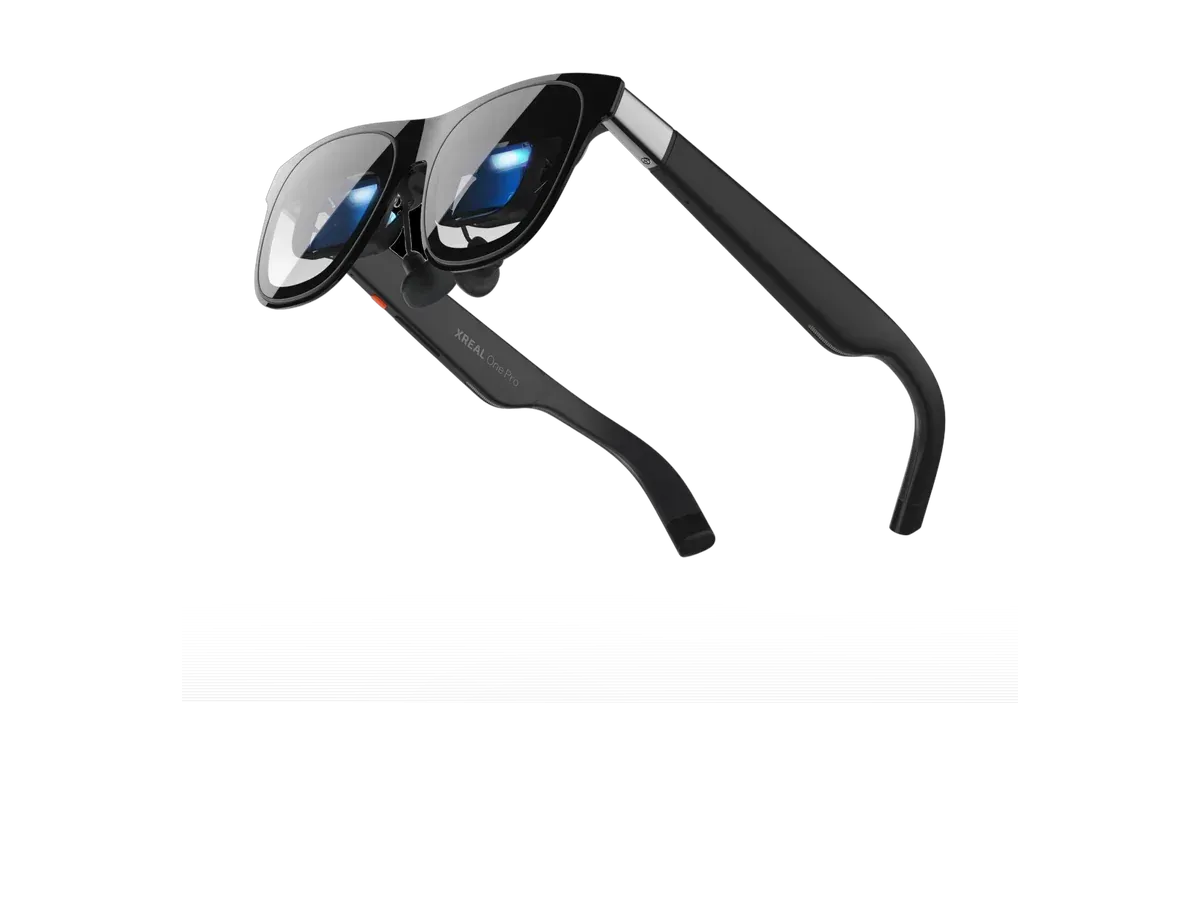
The headline spec is 4000-nit peak brightness, and it is not marketing fluff. In direct comparison with the XREAL One Pro (600 nits) and the RayNeo Air 4 Pro (1200 nits), the VITURE Pro XR maintains visible, contrasty image quality in lighting conditions that render competitors unwatchable. Sitting by a window on a sunny afternoon, the Pro XR displays remain legible and enjoyable. The XREAL One Pro in the same conditions requires the electrochromic dimming cranked to maximum and even then struggles with bright ambient light bleeding through.
Display Highlights
Panel: Micro-OLED, 1920x1080 per eye
Peak Brightness: 4000 nits (industry-leading)
Contrast Ratio: 100,000:1
Color Gamut: 108% sRGB
Refresh Rate: 120Hz
The 100,000:1 contrast ratio and 108% sRGB color gamut mean the brightness does not come at the expense of image quality. Colors are accurate and rich, blacks are deep, and the overall image has a punch that makes content pop. Watching Dolby Vision content (converted to SDR) still looks excellent, even if the Pro XR lacks native HDR support — one of the few areas where the XREAL One Pro pulls ahead.
The 120Hz refresh rate matches the current standard set by premium display glasses. Gaming at 120Hz feels smooth and responsive, and the difference from 60Hz displays is immediately perceptible. Fast camera pans in movies also benefit from the higher refresh rate, reducing the motion blur that makes lower-refresh displays fatiguing during long viewing sessions.
Built-In Myopia: An Underrated Feature
VITURE’s integrated diopter adjustment wheel (0 to -5.0D) is one of those features that sounds incremental on paper and feels transformative in practice. If your prescription falls within the -5.0D range, you twist a wheel on each temple arm and the display snaps into sharp focus. No ordering custom prescription inserts. No waiting days for delivery. No extra cost. No swapping lenses between family members who want to try them.
This matters more than most reviewers acknowledge. Prescription inserts for the XREAL One Pro cost $50-80 depending on the provider, take days to arrive, and must be ordered for each user. The VITURE approach means one pair of Pro XR glasses works for anyone in the household with mild to moderate myopia. For a device that often gets passed around during movie nights or gaming sessions, this is a genuine quality-of-life advantage.
The limitation is the -5.0D cap. Users with stronger prescriptions or astigmatism still need external solutions. But VITURE estimates this range covers roughly 70% of myopic users, which makes it a smart design decision for mass-market appeal.
Comfort and Portability
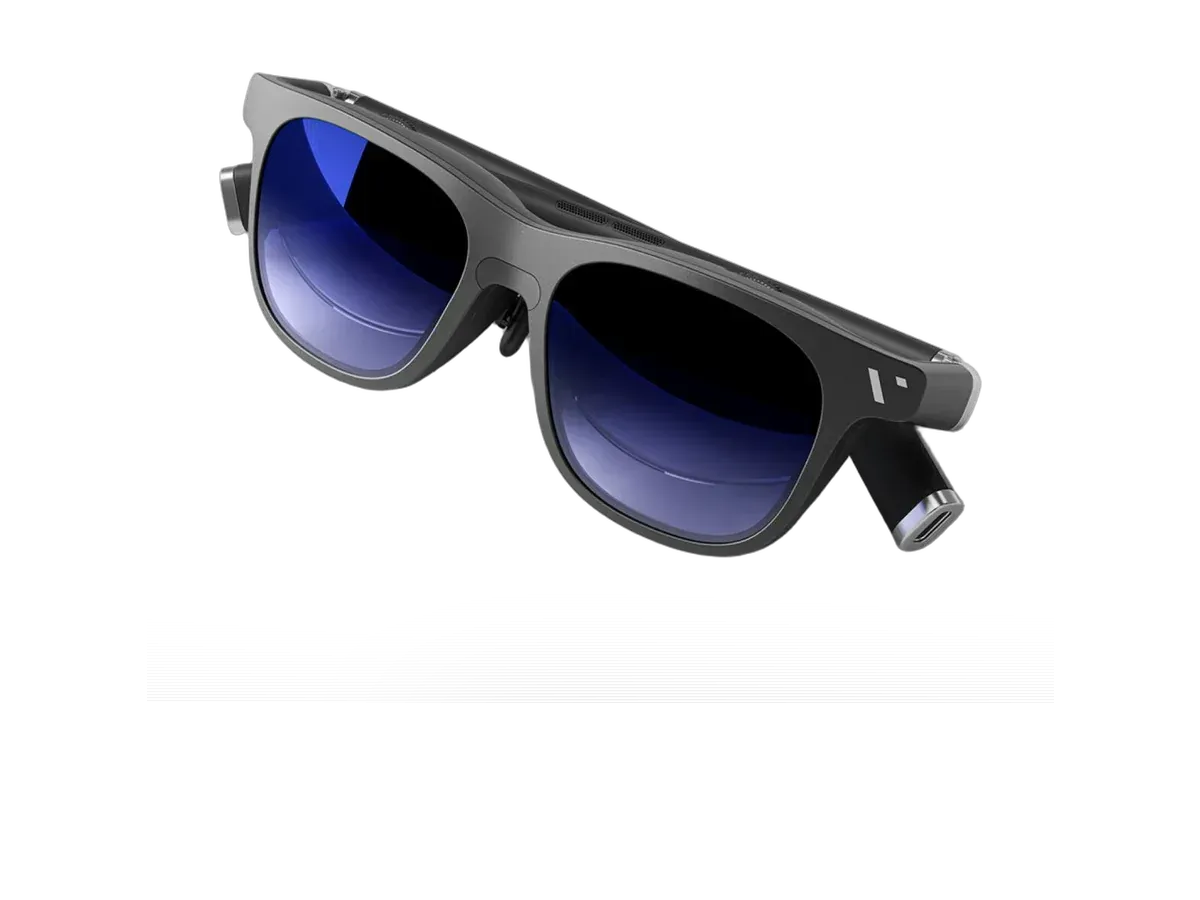
At 77 grams, the Pro XR is meaningfully lighter than the XREAL One Pro (82g) and dramatically lighter than the Snap Spectacles (226g). Five grams may not sound like much, but on a device balanced on your nose, every gram matters during extended sessions.
The weight distribution is excellent. VITURE has balanced the optics and frame so that pressure is evenly split between the nose bridge and the ears. During my testing, two-hour movie sessions and 90-minute gaming sessions were consistently comfortable without the need for breaks. The folding design allows the Pro XR to collapse into a compact form that fits in a standard glasses case, making it genuinely pocketable for travel.
The 2-level electrochromic dimming offers a transparent mode for ambient awareness and an immersive dark mode that blocks most external light. The lack of a middle setting is a minor annoyance — sometimes you want partial dimming without full immersion — but the two extremes cover the most common use cases adequately.
Gaming: The Sweet Spot
Connected to a Steam Deck, the VITURE Pro XR transforms portable gaming. The 135-inch virtual screen equivalent provides an immersive field of view that makes the Deck’s built-in display feel cramped by comparison. The 120Hz support means compatible games run smooth, and the low-latency USB-C connection ensures no perceptible input lag.
The HARMAN-engineered speakers deserve particular mention for gaming. The reverse sound field design directs audio toward your ears while minimizing leakage outward. In a quiet room at moderate volume, someone sitting two feet away hears very little. This is a meaningful advantage for gaming on planes, in shared spaces, or anywhere you do not want to broadcast your audio. Spatial audio positioning is noticeable in games that support it — directional cues in shooters come through clearly enough to be useful.
Nintendo Switch, PlayStation (via Remote Play), Xbox (via streaming), and ROG Ally are all compatible. The broad device support means the Pro XR serves as a universal portable gaming display regardless of which ecosystem you are invested in.
Streaming and Entertainment
Movie watching is the second core use case, and the Pro XR handles it well. The high brightness means plane movie sessions are viable without needing to close the window shade or crank brightness to battery-destroying levels on your source device. The speakers provide adequate audio for casual viewing, though audiophiles will want earbuds for the best experience.
The 46-degree field of view creates a 135-inch virtual screen that feels cinematic without being overwhelming. This is narrower than the XREAL One Pro’s 57 degrees and 201-inch equivalent, and the difference is noticeable in direct comparison. Whether it matters depends on personal preference — some users find the wider FOV more immersive, while others prefer the more natural viewing angle of a smaller virtual screen.
What It Lacks
The Pro XR has no spatial computing chip, which means no native 3DoF head tracking for screen stabilization. The virtual screen moves with your head rather than staying anchored in space. For gaming and movies where you are generally stationary, this is a non-issue. For productivity use where you might glance between the virtual screen and your physical surroundings, the lack of stabilization is more noticeable.
The software experience is functional but thin. VITURE’s companion app handles basic settings and firmware updates, but there is no equivalent to XREAL’s Nebula spatial computing platform. What you see is a virtual screen — no virtual desktop extensions, no multi-window arrangements, no AR overlay capabilities. The Pro XR does one thing, but it does that one thing very well.
No HDR support is a notable omission at this price point, particularly as the RayNeo Air 4 Pro offers HDR10 at $299. For content-heavy users who prioritize HDR, this is a meaningful gap. For gaming-focused users, the raw brightness advantage of the Pro XR compensates.
The Value Calculation
At $459, the VITURE Pro XR undercuts the XREAL One Pro ($599) by $140. For that savings, you get superior brightness, lighter weight, built-in myopia adjustment, and better speaker engineering. You give up 11 degrees of FOV, HDR support, and the X1 spatial computing chip. For most buyers focused on gaming and entertainment, the VITURE trade-offs favor the Pro XR.
Against budget options like the RayNeo Air 4 Pro at $299, the Pro XR’s premium buys you dramatically higher brightness, built-in myopia correction, and HARMAN audio. Whether that $160 premium is worth it depends on how much you value outdoor visibility and the prescription convenience.
out of 10
Our Verdict
The VITURE Pro XR is the best display glasses for people who use their devices outside the house. Its 4000-nit peak brightness, built-in myopia adjustment, and HARMAN audio engineering solve three real problems that plague competitors. At $459, it undercuts the XREAL One Pro by nearly $200 while offering superior brightness, lighter weight, and the convenience of built-in prescription correction. The narrower FOV and lack of a spatial computing chip are genuine trade-offs, but for gaming, streaming, and travel use, the Pro XR delivers outstanding value.