Even Realities G1 Review: The Smart Glasses You Will Actually Wear Every Day
By AR Compare Team ·
Even Realities G1: full specs & pricesEvery smart glasses review eventually arrives at the same tension: impressive technology that nobody wants to wear in public. The Even Realities G1 takes a radical approach to that tension. It asks: what if smart glasses just looked like glasses? The published record — Engadget, Tom’s Guide, TechRadar, and 9to5Mac all ran the G1 through extended wear — is unusually consistent about the answer. This review aggregates that record. AR Compare has not performed hands-on testing of this device; every experience claim below is attributed to the cited sources, and the category scores are an editorial aggregate of cited reviewer sentiment.
How This Review Was Compiled
Four full published reviews anchor this page: Engadget’s review by Daniel Cooper, Tom’s Guide’s month-long wear test, TechRadar’s review, and 9to5Mac’s two-week daily-wear report. Recorded specifications (weight, resolution, field of view, battery rating, price) come from the product record on this site; every subjective observation is attributed to the outlet that made it. One pricing note: all four outlets reviewed the G1 at its $599 launch price, while the recorded price on this site is now $499 — the value section below uses the current figure.
Design: Disappearing Technology
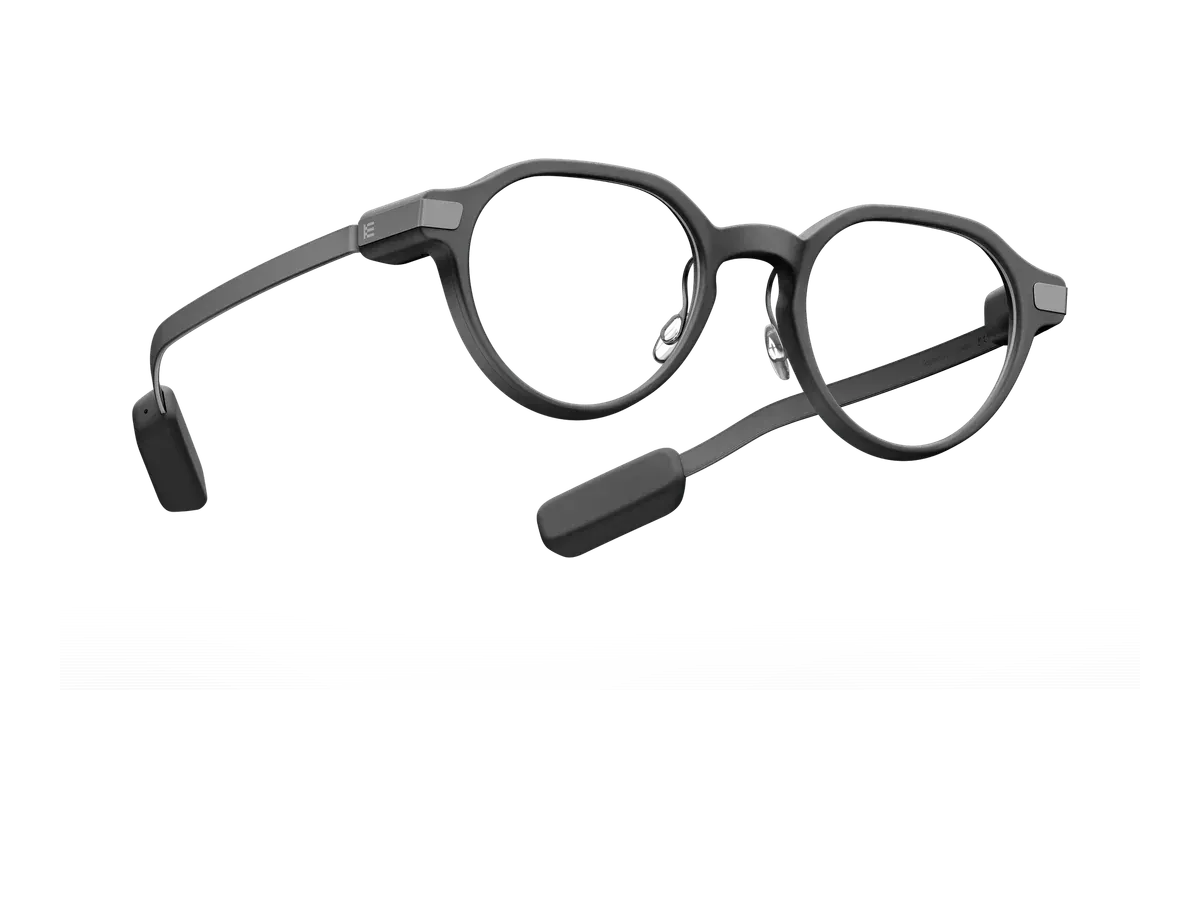
The G1 weighs 44 grams. That is heavier than ordinary eyewear — Engadget’s reviewer compared it against his 26-gram everyday frames and still called the G1 chunky but not burdensome, and “hardly an embarrassment” on the face. Tom’s Guide adored the comfortable, lightweight feel and premium, minimalist look, crediting the magnesium and titanium alloy frames, flexible temples, and snug nosepads, and treated the G1 as the glasses to wear while working or traveling around the city.
Design Specs
Weight: 44g (magnesium + titanium frame)
Frame Styles: Panto (G1A) and Rectangular (G1B)
Colors: Grey, Green, Brown
Prescription: Single vision and progressive lenses available
Passthrough: 98% optical transparency
Even Realities offers two frame styles — the G1A panto (rounded) and G1B rectangular — in Grey, Green, and Brown colorways. None of them scream “tech product,” which is precisely the point. The 98% optical passthrough means the waveguide is virtually invisible when the display is off; Engadget noted only a slight gold tint from the prisms up close, and Tom’s Guide’s reviewer reported never feeling paranoid about wearing them in public. That social invisibility is the single most important design decision Even Realities made, and it shapes the entire product experience.
Prescription Support: The Killer Feature
The G1 supports real single vision and progressive prescription lenses fitted to the waveguide-embedded frames, so it can serve as your primary eyeglasses — not “tech glasses you swap in for smart features,” but your actual everyday corrective lenses. For glasses wearers this consolidates two purchases into one device, which is the value framing the cited reviews keep returning to: Tom’s Guide’s summary is that these are “the smart specs you’d actually reach for to wear daily — and yes, they come with a prescription.” Engadget reports prescription lenses add $150 to the order.
The Display: Minimal by Design
The green monochrome micro-LED waveguide display is simultaneously the G1’s most limiting and most honest feature. With a 640x200 resolution across a 25-degree field of view, it is not trying to be a screen. It is a heads-up display — a notification ticker, a navigation arrow, a translation feed, a teleprompter line. TechRadar calls it a good, clear display, and 9to5Mac found navigation visuals “extremely crisp” with no pixelation or blur. Readability has limits in harsh light: Engadget found you need everything the display can give to see it on a bright day.
The 20Hz refresh rate is the weakest display spec. For static notifications and navigation arrows it is fine; for anything with motion, the limitation is apparent. The consensus is that the display works for reading short text strings, which is exactly what it is for.
Battery Life: The Quiet Revolution
The G1’s recorded battery rating is 36 hours, and the cited reviews back the number: Engadget’s reviewer, self-described as a heavy user, got about a day and a half per charge, and 9to5Mac likewise reports 1.5-day battery life. The wireless charging case extends that further — Engadget measured the case’s 2,000mAh capacity as good for roughly two and a half recharges before it needs a wall socket.
This battery life fundamentally changes the relationship with the device. Reviewers describe putting the glasses on in the morning and taking them off at night, same as regular glasses, with the case topping them up between days. Engadget’s one power-related complaint is telling: the G1 has no off switch, which the review found vexing precisely because there is so rarely a reason to take the glasses off.
AI and Software: Functional, Not Flashy
The Even AI assistant processes through the companion phone app, routing queries through cloud AI services; answers come back as text on the HUD, in three to six seconds per 9to5Mac. The feature set that works, per the record: real-time translation displayed as subtitles, turn-by-turn navigation prompts, meeting transcription and notes, notification management, and a teleprompter mode.
The teleprompter is the consensus standout. Engadget called it “a staggeringly good idea” for presentations, videos, and acting; Tom’s Guide counts it as an outright win; 9to5Mac’s reviewer — a YouTuber — found the scroll speed matches your reading pace and viewers cannot tell. TechRadar filed the one dissent: on camera it can make you look cross-eyed or vacant, and its reviewer advises bullet points over full scripts.
Navigation and transcription earn similar marks — TechRadar rates both superb, Engadget called walking directions supremely effortless, and 9to5Mac tested about 30 destinations and reports all of them appeared. Translation is more qualified: Engadget measured a two-to-three-second delay, and notes it transcribes everything it hears, including your own replies, while TechRadar points out that Translate requires an additional Pro subscription.
The limitation running through every review is that everything depends on your phone. Engadget’s verdict phrasing is blunt: the G1 is “far more reliant on your phone than it should be” — switching translation languages needs the app, notifications can only be viewed, never answered, and there is no on-device processing or offline capability. TechRadar adds that Even AI seemed sporadic and US-centric in its testing, and Tom’s Guide agrees the assistant can be clunky. Firmware updates are actively improving the software — TechRadar’s review period included one that added scrolling through longer notes.
What Is Missing — And Why
No camera. No speakers. No video recording. No photo capture. No music playback through the frames. These omissions are deliberate, and they define the G1’s identity.
The lack of a camera means the G1 can go where camera-equipped smart glasses create tension: courtrooms, locker rooms, classified workplaces, and any social situation where someone might object to being recorded. The privacy-first positioning is the through-line of the entire published record — reviewers consistently frame the G1 as the smart glasses that do not make bystanders uncomfortable.
The lack of speakers means audio feedback requires paired earbuds or a separate device. For notification text that appears visually, this is rarely an issue; for AI responses that might benefit from voice output, you need earbuds. It is the one deliberate omission the record treats as an occasional inconvenience.
Value at $499
The recorded price is $499 (down from the $599 launch price the cited reviews were written against — price was every outlet’s biggest reservation). The money buys light weight (see where it lands among the lightest smart glasses), the long battery, prescription integration, and the camera-free privacy story.
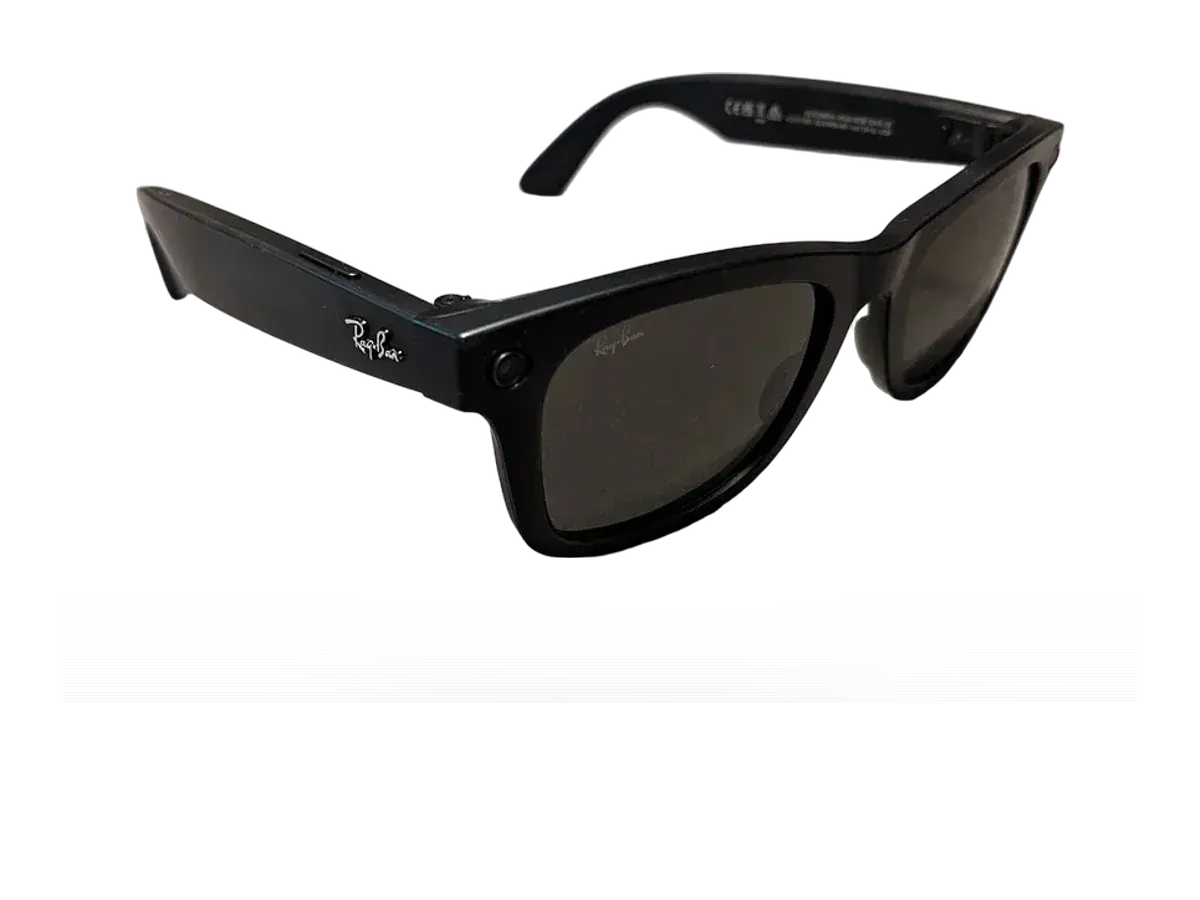
If you already wear prescription glasses and want to consolidate into one device, the G1 offers a value proposition few competitors match. If you have perfect vision and want rich multimedia features, the Ray-Ban Meta Gen 2 offers more functionality for less money — which is essentially Tom’s Guide’s caveat: with cheaper options delivering more features, whether a camera or audio, the G1 is not everyone’s go-to choice.
Who Should Buy the Even Realities G1
Per the aggregated consensus: prescription glasses wearers who want notifications, navigation, translation, and a teleprompter in frames nobody will clock as smart; privacy-conscious buyers who specifically want no camera; and professionals in camera-restricted environments — courtrooms, healthcare, government — where every camera-equipped alternative is off the table. Who should skip: anyone who wants photos, video, music, or calls from their glasses, and anyone unwilling to live with a phone-tethered assistant.
The G2 Exists: Who Should Still Buy the G1?
Even Realities has since released the Even Realities G2 (November 2025, a recorded $599), which upgrades the formula on the recorded specs: a binocular waveguide display in place of the G1’s single-eye module, a lower 36-gram weight, a 48-hour battery, and a documented -12.00 to +12.00 prescription range. At the G1’s current $499, the decision comes down to $100 and the display: buyers who mainly want the camera-free everyday formula — notifications, navigation, translation on real prescription lenses — keep most of it at the lower price, while buyers who care about the display itself get the meaningful upgrade in the G2. The spec-by-spec breakdown lives in Even Realities G1 vs G2.
Scores are aggregates of the cited reviews, not AR Compare hands-on measurements.
out of 10
Our Verdict
The Even Realities G1 is the smartest smart glasses design on the market, not because of what it includes but because of what it deliberately omits. By removing the camera, speakers, and heavy processing hardware that make other smart glasses conspicuous and short-lived, Even Realities created a device that weighs 44 grams, lasts 36 hours, and looks like ordinary eyeglasses. The green monochrome HUD is limited but sufficient for the core use cases of notifications, navigation, translation, and AI prompts. If you have been waiting for smart glasses you can wear to a business meeting, a dinner date, or a job interview without drawing stares, the G1 is the first device that genuinely qualifies.
Sources
- Engadget — Even Realities G1 review: Limited but effective smart glasses
- Tom’s Guide — Even Realities G1 smart glasses review: The everyday (pricey) AI glasses you’ll want to wear
- TechRadar — Even Realities Even G1 AR glasses review
- 9to5Mac — Even Realities G1 Full Review: What Smart Glasses Should Be